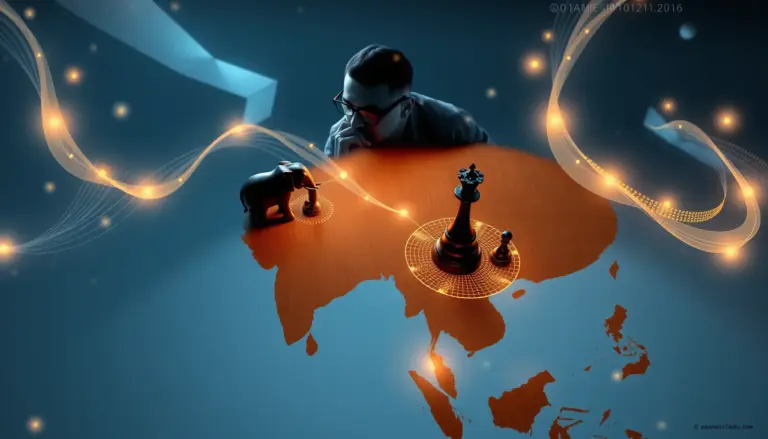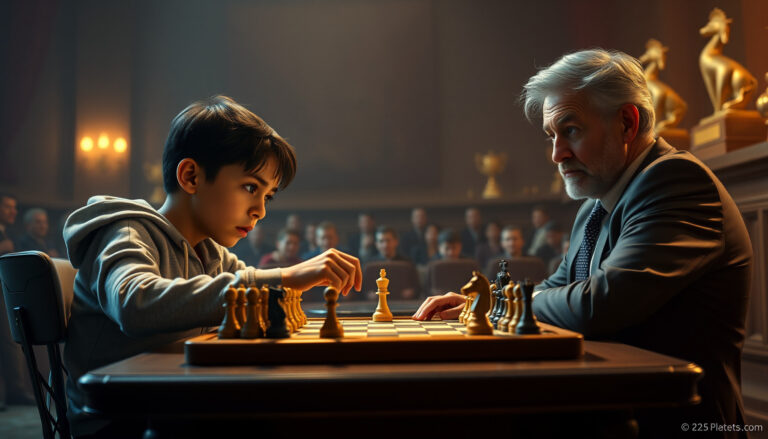
chess, an ancient game of strategy and intellect, transcended its status as a pastime during the Cold War to become a symbolic setting for the confrontation between the United States and the Soviet Union. In a world divided by opposing ideologies, The board was transformed into a battlefield where no blood was shed., but the prestige was disputed, cultural supremacy and even the superiority of political systems. This article explores how chess was integrated into the dynamics of the Cold War, analyzing its role as a propaganda tool, its influence on international diplomacy and its ability to reflect the geopolitical tensions of the time. Through legendary games, iconic figures and historical events, We will discover how a game of 64 Casillas became a symbol of the fight for global dominance.
Chess as a weapon of ideological propaganda
During the Cold War, chess was not just a sport, but a propaganda instrument that both superpowers used to demonstrate the superiority of their respective systems. The Soviet Union, in particular, invested massive resources in developing elite players, presenting them as examples of the success of the communist model. The Soviet State created specialized schools, like the famous Botvinnik Chess School, where young prodigies were trained under the tutelage of the great teachers. This strategy not only sought to dominate the board, but also send a message to the world: Socialism was capable of producing brilliant and disciplined minds.
For your part, USA, although less focused on chess as a tool of State, he also used it to counter the Soviet narrative. Bobby Fischer's victory in the Match of the Century of 1972 against Boris Spassky was not only a sporting triumph, but a propaganda coup that resonated throughout the world. The Western press presented Fischer as the individualist hero who defeated the collectivist system., reinforcing the idea that freedom and creativity triumphed over Soviet rigidity. This event, broadcast globally, It became a symbol of the fight between capitalism and communism.
Beyond the results, The media coverage of these meetings was carefully orchestrated. The Soviet media highlighted the discipline and teamwork of its players, while Westerners emphasized individual genius and innovation. So, Each game became a microcosm of the Cold War, where the pieces were not just wooden figures, but representations of two worldviews in conflict.
Board diplomacy: chess and international relations
Chess also served as a diplomatic bridge in a context of mutual distrust.. At a time when direct conversations between leaders were rare, Chess matches offered a platform for indirect dialogue. A notable example was the Match for Peace of 1959 between the Soviet Mikhail Tal and the American Bobby Fischer, held in Yugoslavia. Although the event failed to alleviate political tensions, showed that chess could be a neutral space where ideological rivals faced each other without violence.
Another emblematic case was the Chess Olympiad 1976, boycotted by the USSR and its allies in protest of Israel's participation. This act reflected how chess aligned with the geopolitical interests of the superpowers.. The USSR, who dominated world chess, He used his influence to isolate his adversaries, while the West promoted inclusion as a democratic value. These symbolic gestures revealed that, even in a seemingly innocent game, the rules were dictated by international politics.
Besides, Chess facilitated cultural exchanges that, otherwise, would have been impossible. Soviet players traveled abroad to compete, carrying with him a controlled image of his country, while Westerners had the opportunity to closely observe life in the USSR. These meetings, although supervised by governments, allowed a minimum of human interaction in a world divided by the Iron Curtain.
The games that defined an era
Some chess games during the Cold War transcended sports to become historical milestones. The most famous, definitely, was the Match of the Century of 1972 between Bobby Fischer and Boris Spassky in Reikiavik, Iceland. This duel was not only a confrontation between two chess geniuses, but also a reflection of the tension between the United States and the USSR. Fischer, an eccentric american, challenged the Soviet champion at a time when the USSR dominated world chess. Your victory, after a series of controversies and lawsuits, was celebrated as a triumph of individualism over collectivism.
Another legendary game was Meeting of the Four Horses of 1961 entre Mikhail Tal and Mikhail Botvinnik. Of, Known for his aggressive and creative style, represented the new generation of Soviet players, while Botvinnik, more methodical, embodied the old guard. This duel symbolized the transition within Soviet chess, but also the capacity of the system to renew itself and maintain its hegemony.
These games were not only sports competitions, but also carefully constructed narratives. every movement, each strategy, was analyzed not only for its chess value, but for its political significance. Soviet commentators highlighted the scientific preparation of their players, while Westerners highlighted Fischer's spontaneous genius. So, Chess became a universal language to express the ideological differences of the Cold War.
The legacy of chess in the Cold War
The impact of chess during the Cold War endures to this day, both in the sporting and cultural fields. The USSR consolidated its dominance in world chess, producing a generation of great teachers who are still references today. This legacy is reflected in the current Russian hegemony in chess., with players like Garry Kasparov and Vladimir Kramnik, who inherited the Soviet tradition of excellence.
On the other hand, chess became global thanks to these confrontations. The popularity of the game grew in the West, especially after Fischer's triumph, and became an educational and cognitive development tool. Hoy, programs like Chess in Schools They seek to take advantage of the benefits of chess, an indirect legacy of its role during the Cold War.
Besides, Chess remains a symbol of rivalry between systems. In the digital age, platforms like Chess.com y Lichess they have democratized the game, but they have also revived debates about the influence of technology and artificial intelligence, themes reminiscent of Cold War tensions. So, chess was not only a reflection of its time, but also a precursor to the challenges of the 21st century.
Conclusions: more than a game, a mirror of history
Chess during the Cold War was much more than a sport or a hobby: It was a symbolic battlefield where two worldviews clashed. Through legendary games, iconic figures and historical events, the board became a reflection of the geopolitical tensions of the time. The USSR used it as a propaganda tool to demonstrate the superiority of its system, while the United States used it to promote the values of individualism and freedom. These encounters not only defined an era, but they also left a legacy that lasts in the culture, education and sports.
Beyond the results, chess offered a space for dialogue in a divided world. Although the games were loaded with political symbolism, They also allowed cultural and human exchanges that, otherwise, would have been impossible. Hoy, when we look back, we can see how a strategy game became a mirror of history, reflecting the ambitions, the fears and contradictions of the Cold War. In a world where geopolitical tensions persist, chess remains a reminder that, even in the darkest moments, intelligence and creativity can find a way to express themselves.