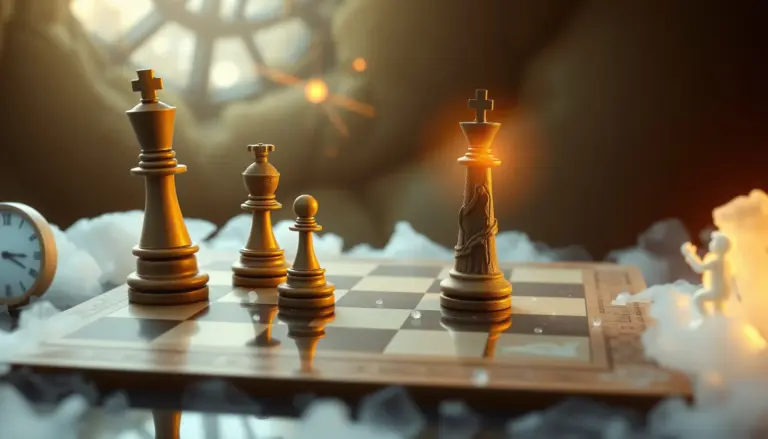
Therapeutic chess has emerged as an innovative and powerful tool in the field of mental health and personal development.. Unlike traditional chess, that focuses on competition and strategy, This modality uses the game as a means to promote cognitive skills, emotional and social. Its application ranges from the rehabilitation of patients with neurological disorders to the improvement of well-being in people with anxiety or depression.. In this article, We will explore in depth what therapeutic chess is, its scientific foundations, its practical applications and the benefits it offers to different population groups. Besides, We will analyze how this discipline can be integrated into conventional therapies to enhance its effects., as well as the challenges and limitations faced in its implementation.
The fundamentals of therapeutic chess
Therapeutic chess is based on the premise that the game, due to its structured and symbolic nature, can act as a mirror of the mental and emotional processes of those who practice it. Unlike other therapies based on art or music, Chess offers a logical and predictable framework that allows therapists to observe thought patterns, decision making and stress management in real time. Neuroscience studies have shown that playing chess activates multiple areas of the brain, including the prefrontal cortex (associated with planning and impulse control), the hippocampus (related to memory) and the amygdala (involved in emotional regulation).
This brain activation not only improves cognitive functions such as attention and working memory., but also facilitates the expression of emotions that are difficult to verbalize. For example, A patient with depression can project his feeling of blockage on the immobility of the pieces, while someone with anxiety might reflect their impulsivity in hasty movements. The therapist, When analyzing these dynamics, can guide the patient toward greater self-awareness and coping strategies.
Besides, Therapeutic chess incorporates principles of cognitive-behavioral psychology, how to restructure negative thoughts. For example, If a patient interprets a defeat as a personal failure, The therapist can work with him to reframe that experience as a learning opportunity., then applying that same logic to real life situations.
Applications in different areas of health
Therapeutic chess has been shown to be effective in a wide variety of clinical and educational contexts.. In the field of mental health, It is used as a complement in the treatment of disorders such as ADHD, autism, schizophrenia and anxiety disorders. For example, in children with ADHD, Chess helps improve concentration and patience, as the game requires sustained focus and anticipation of consequences. In adults with schizophrenia, It has been observed that regular chess practice reduces symptoms of thought disorganization, by providing a structured framework for decision making.
In the field of neurology, Therapeutic chess is used in the rehabilitation of patients with brain damage, such as those who have suffered a stroke or suffer from neurodegenerative diseases such as Alzheimer's. In these cases, the game acts as a cognitive stimulation exercise, slowing the deterioration of functions such as memory and language. A study published in the journal *Neuropsychologia* found that Alzheimer's patients who participated in chess sessions showed significant improvements in their problem-solving ability and short-term memory., compared to those who did not receive this intervention.
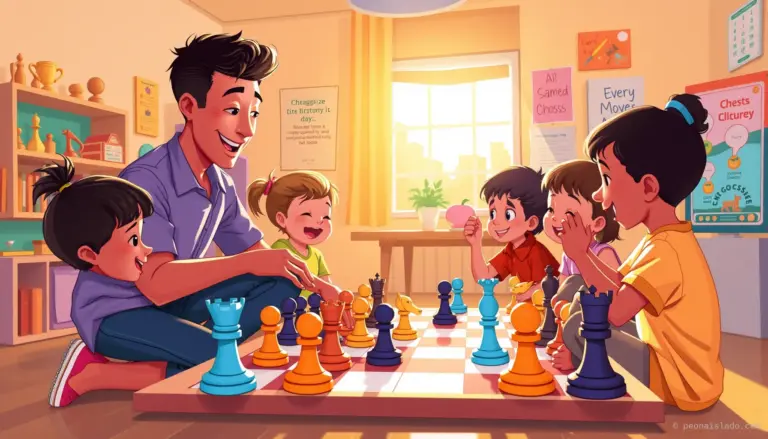
In the educational field, Therapeutic chess is used to develop social-emotional skills in children and adolescents. Programs like “Chess in Schools” have shown that gaming not only improves academic performance, but also promotes values such as empathy, resilience and teamwork. For example, in a classroom with children with socialization difficulties, chess can serve as a bridge for interaction, since the game requires communication and cooperation, even in a competitive context.
Intervention methodologies and techniques
The implementation of therapeutic chess requires a personalized approach, adapted to the specific needs of each patient or group. One of the most used methodologies is *chess-based therapy*, that combines game sessions with guided reflection techniques. During these sessions, the therapist not only observes how the patient plays, but also intervenes with strategic questions, as: “What were you thinking when you made that move??” o “How did you feel when your opponent captured your piece??”. These questions help the patient connect their actions on the board with their emotions and thoughts in everyday life..
Another effective technique is *collaborative chess*, in which two or more patients work together to solve a problem on the board, how to find the best play in a given position. This approach encourages communication, negotiation and conflict resolution, essential skills for daily living. In group settings, as workshops for adolescents with behavioral problems, Collaborative chess can reduce aggression and improve group cohesion.
For patients with severe motor or cognitive difficulties, adaptations of chess have been developed, such as boards with magnetic or larger pieces, or even digital versions with accessible interfaces. These adaptations allow people with physical or intellectual disabilities to fully participate in therapy., thus expanding the scope of therapeutic chess.
Challenges and limitations of therapeutic chess
Despite its numerous benefits, therapeutic chess faces several challenges that limit its mass adoption. One of the main obstacles is the lack of specialized training among health professionals.. Although chess is an accessible game, Its therapeutic application requires knowledge in psychology, neuroscience and pedagogy, what makes it necessary to train therapists, psychologists and educators in this discipline. At the moment, There are few certified training programs, making it difficult to standardize practices.
Another challenge is cultural resistance and the perception of chess as an elitist or complex game.. many people, especially those with low educational levels or in disadvantaged socioeconomic contexts, They may feel intimidated by chess, which limits their participation. To overcome this barrier, It is essential to develop dissemination strategies that present chess as an inclusive and accessible tool, highlighting its benefits regardless of skill level.
Besides, scientific evidence on therapeutic chess, although promising, is still limited compared to other more established therapies. Many studies have small samples or lack control groups, which makes it difficult to generalize their results. To consolidate therapeutic chess as an evidence-based practice, more rigorous research is needed, with solid methodologies and representative samples.
Finally, the implementation of therapeutic chess in public institutions, like hospitals or schools, faces logistical and economic barriers. The acquisition of materials, Training staff and integrating chess into existing programs requires resources that many institutions cannot afford.. However, Initiatives such as alliances with local chess clubs or the use of free digital platforms can help overcome these limitations..
Conclusions
Therapeutic chess represents an innovative fusion between game and science, offering a unique approach to addressing cognitive challenges, emotional and social. Throughout this article, we have explored its scientific foundations, demonstrating how chess activates key areas of the brain and facilitates the expression of complex emotions. We have also analyzed its applications in various areas, from mental health to neurological rehabilitation, highlighting its versatility and potential to improve the quality of life of different population groups.
Intervention methodologies and techniques, such as chess-based therapy and collaborative chess, show how this game can be adapted to individual needs, even in cases of disability. However, We have also identified significant challenges, such as lack of specialized training, cultural barriers and the need for more scientific research. These obstacles should not be underestimated, but they should not discourage the exploration of this promising tool either..
In conclusion, therapeutic chess is not a magic solution, but it is a valuable tool that, when applied with rigor and creativity, can complement and enrich traditional therapies. Its greatest strength lies in its ability to combine entertainment with learning, making the therapeutic process more accessible and motivating. For those looking for innovative alternatives in mental health care or personal development, therapeutic chess offers a path full of possibilities, where every move on the board can become a step towards well-being.