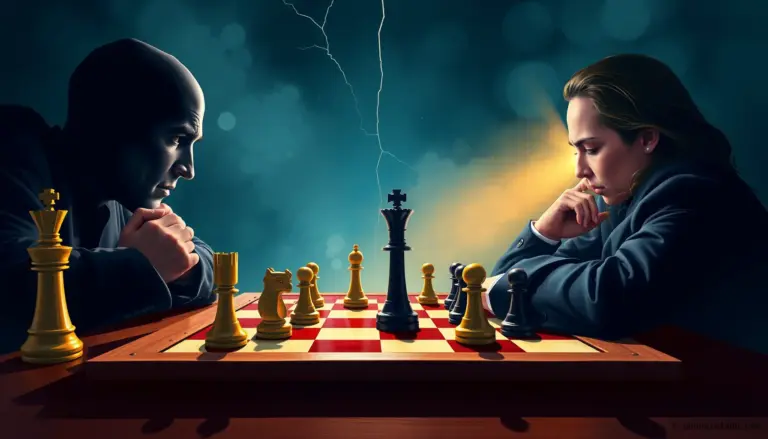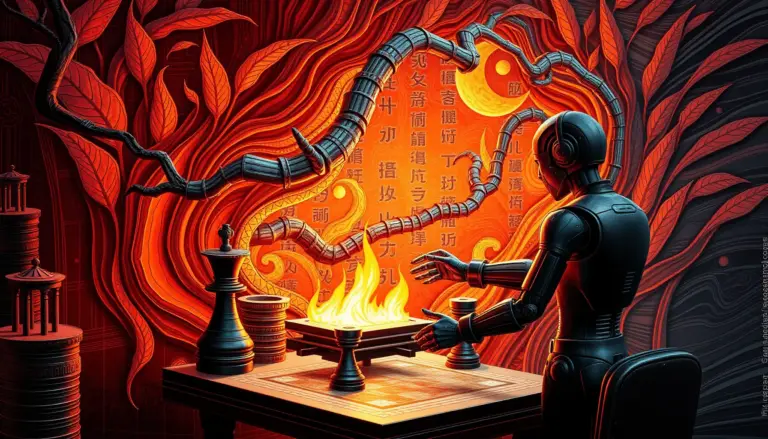
In the heart of East Asia, North Korea stands as a political and social enigma, where Kim Il-sung's legacy transcends time to become a meticulously designed control system. More than just a leader, Kim Il-sung was a strategist who understood the power of chess as a metaphor for his regime: every calculated move, every piece in its place, and every opponent neutralized before they could threaten the board. But this game is not limited to military or diplomatic tactics.; extends to the manipulation of perception, the creation of myths and the hiding of talents that, in other circumstances, they could have changed the course of history. This article explores how propaganda, Absolute control and the existence of hidden geniuses – from scientists to artists – have shaped North Korea under the mantle of a political chess where only the regime knows the rules.. What secrets are hidden behind the North Korean Iron Curtain?? And how does an isolated country manage to maintain its influence in a globalized world??
Chess as a metaphor for North Korean power
Chess is not just a game in North Korea; It is a philosophy of government. Kim Il-sung, and later his dynasty, adopted this metaphor to illustrate how each decision, from foreign policy to education, must be calculated with surgical precision. On the North Korean board, the pieces are not simple pawns, but tools of a system where control is absolute. For example, the doctrine of Juche —self-sufficiency—is not just a slogan, but a strategy to avoid external dependencies, like a player who rejects alliances so as not to reveal his weaknesses.
But North Korean chess goes beyond theory. In practice, every move has real consequences: the purge of dissidents, the manipulation of information and the creation of a cult of personality so ingrained that even children learn to worship the Kims as demigods. This system not only eliminates opposition, but also ensures that any emerging talent—whether in science, art or sport—is co-opted by the State. Like in a chess game, where the king never falls but the pawns are sacrificable, North Korea has perfected the art of maintaining power at the expense of its citizens.
The propaganda: checkmate to reality
If chess is the strategy, propaganda is the movement that ensures victory. North Korea not only controls information; rewrites it completely. From state media to textbooks, The official narrative presents the regime as a beacon of prosperity and resistance, while hiding the famines, summary executions and systematic repression. A paradigmatic example is the Korean Central News Agency (KCNA), that spreads news as surreal as the supposed invention of the “miracle medicine” by Kim Jong-il or the exaggerated sporting achievements of North Korean athletes.
But propaganda is not limited to blatant lies. Also uses symbols and rituals to reinforce loyalty. The cult of the Kims, For example, manifests itself in giant statues, ubiquitous murals and mandatory ceremonies where citizens must pay homage to their leaders. Even language is controlled: terms like “Great Leader” o “Eternal President” They are not mere formalities, but tools to depersonalize individuals and turn them into pieces of the system. In this context, reality becomes malleable, and the truth, a relative concept.
However, North Korean propaganda would not be as effective without a key component: the fear. The constant threat of labor camps, Mass surveillance and denunciation between neighbors create an environment where dissent is unthinkable. So, The regime not only controls what people know, but also what cree who knows.
The hidden geniuses: talent in the shadow of the regime
Behind the North Korean Iron Curtain, There are brilliant minds whose potential has been stifled by the system. North Korea does not lack talent; he simply hides it or uses it for his own purposes. One of the best known cases is that of hackers North Koreans, like the group Lazarus, responsible for cyber attacks on banks and companies around the world. These computer experts, trained in state universities, They are an example of how the regime channels talent into illicit activities to finance its nuclear program..
But not all North Korean geniuses are at the service of crime. In the scientific field, North Korea has made surprising advances in missile and nuclear weapons technology, despite international sanctions. This suggests the existence of highly trained engineers and physicists, many of whom were educated abroad before being repatriated to work on secret projects. Even in art, There are examples of creators who, under strict state guidelines, have produced quality works, like the propaganda films directed by Shin Sang-ok, a South Korean filmmaker kidnapped by the regime.
The problem is not a lack of talent, but its lack of freedom. In North Korea, genius is not recognized for its merit, but for its usefulness for the State. Those who stand out are co-opted, and those who try to excel outside the system are punished. So, the country loses the opportunity to develop its human potential, While the world ignores the geniuses who languish in darkness.
The future of North Korean chess: check or draw?
The North Korean regime has demonstrated an astonishing ability to adapt to global changes without giving up an iota of control.. However, The cracks in your system are becoming more evident. The economy, suffocated by sanctions, increasingly dependent on smuggling and humanitarian aid. The youth, although educated in loyalty to the regime, is exposed to external information through USB flash drives and mobile phones smuggled from China. Even within the circle of power, purges and infighting suggest the board is not as stable as it seems.
But North Korea's biggest challenge is not external., but internal: the survival of the system in a world where information can no longer be completely controlled. The regime has responded with a mix of repression and selective opening, such as the creation of special economic zones or participation in international events, like the olympic games. However, These concessions are limited and always calculated so as not to threaten the status quo..
The future of North Korea will depend on whether the regime manages to maintain its political chess in an increasingly interconnected world.. If control weakens, hidden talent could emerge, but so would internal tensions. For now, the game continues, and the world watches, wondering if the next move will be a checkmate or a silent surrender.
North Korea remains an enigma, but his strategy is clear: maintain control at all costs, even if it means sacrificing the potential of his people. From propaganda that rewrites reality to hidden talent that will never see the light, The Kim regime has turned the country into a board where only they know the rules. However, like in any chess game, Even the most calculated moves can lead to an unexpected end. The challenge for the world is to crack the game before it's too late, while for the North Koreans, The hope is that one day the board will break and the pieces can move on their own..
In this political chess, the question is not just who will win, but what will be left of North Korea when the game ends. Will it be a country freed from its chains, or a system that managed to survive at the expense of its own people? The answer, as always in North Korea, It is hidden behind a veil of secrecy and control.