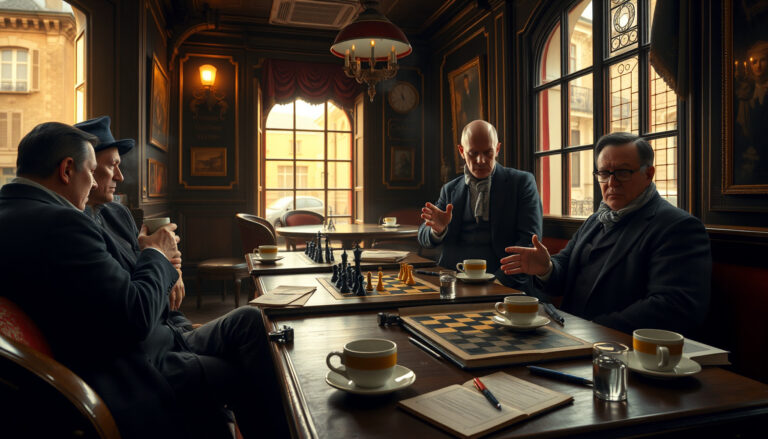
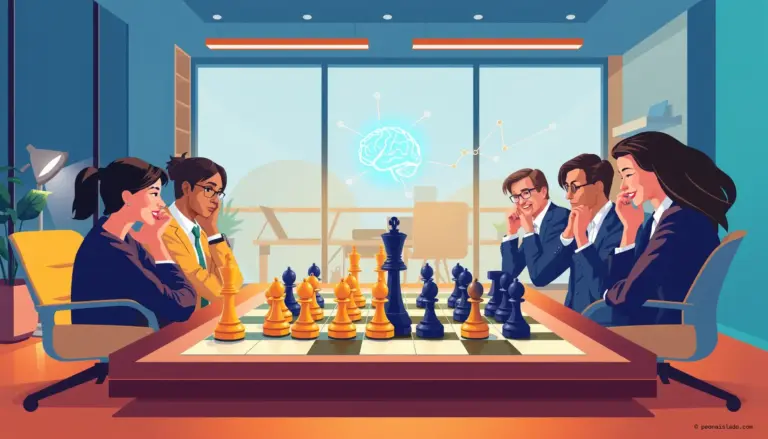
Imagine a board 64 squares where each movement does not only move a piece, but it reconfigures mental patterns, relieves accumulated tension and rebuilds neuronal connections. chess, that ancient game that has served as a mirror of military strategy, diplomacy and even philosophy, It has become such a powerful therapeutic tool that psychologists and psychiatrists integrate it into their consultations to treat anxiety.. This is not a fad, but rather a methodology supported by neuroscientific studies that demonstrate how the game activates brain areas related to planning., memory and emotional regulation. In this article, We will explore how therapeutic chess is transforming lives, from clinical offices to prisons and hospitals, and why its symbolic structure makes it an unexpected ally against anxiety disorders.
Chess as a mirror of the mind: neuroscience behind the board
When a patient sits in front of a board, He is not playing against a rival, but against himself. Every decision—from sacrificing a pawn to calculating a five-move variation—activates the prefrontal cortex., the brain region responsible for decision making and impulse control. A study published in *Frontiers in Psychology* (2020) revealed that chess players exhibit greater connectivity in neural networks associated with sustained attention and cognitive flexibility, critical skills for anxiety sufferers. But the most fascinating thing is how chess simulates, in a controlled environment, real life challenges: the uncertainty, time pressure and the need to anticipate consequences.
For therapists, this is a key advantage. Instead of approaching anxiety from an abstract approach, chess offers a “emotional laboratory” where patients can experience failure—like losing a game—and learn to manage it without the consequences transcending the board. As clinical psychologist Vladimir Rašković explains, pioneer in therapeutic chess, “the game forces the mind to focus on the present, breaking the cycle of rumination that characterizes anxiety disorders”. Raskovic, who worked with patients in psychiatric hospitals, observed how chess reduced cortisol levels (the stress hormone) in a 30% after only eight sessions.
From theory to practice: therapeutic protocols with chess
Chess therapy is not a simple hobby; follows structured protocols that vary by diagnosis. In cases of generalized anxiety, For example, therapists often use slow games (30 minutes per player) to encourage reflection and patience. Instead, for panic disorder, exercises are used “checkmate in one”, where the patient must solve tactical problems under pressure, replicating—and desensitizing—the sense of urgency that triggers attacks.
An emblematic case is that of the Belgrade Psychiatric Hospital, where Rašković implemented a program with adolescents with post-traumatic stress disorder (expected). The results, published in *Journal of Traumatic Stress*, showed a reduction in 40% in hypervigilance symptoms after three months of therapy. “Chess gave them a language to express what they could not verbalize.”, the study points out. This idea of “alternative language” es crucial: in contexts like refugee camps or shelters, where trauma limits communication, the board becomes a silent bridge.
Another innovative approach is “narrative chess”, where patients assign symbolic meanings to the pieces. For example, a pawn can represent a specific fear, and your progress on the board symbolizes the progress in overcoming it. This technique, inspired by cognitive-behavioral therapies, It has been shown to be especially effective in children with social anxiety, as documented by a study from the University of Cambridge (2021).
Chess in extreme environments: prisons, wars and hospitals
If chess can heal in offices, Its impact is even more profound in environments where anxiety is a constant.. In the prisons of Argentina, the program “Chess for Freedom” has reduced recidivism rates by 25%. Inmates learn that every move has consequences, a lesson that transcends the board. “This is not about winning, but to understand that decisions matter”, comments an inmate from the Devoto prison, where chess is taught as part of rehabilitation.
In conflict zones, as Mosul (Irak), chess has become a symbol of resistance. After the ISIS occupation, who banned the game because he considered it “non islamic”, the boards reappeared in the streets as an act of rebellion. Organizations like *Chess for Peace* have brought workshops to children who lost their families in war, using play to rebuild your ability to focus and hope. “Chess gives them back control over something, even if he is a pawn”, explains a volunteer.
In pediatric hospitals, therapeutic chess has proven to be an ally against chronic pain. A studio at the Sant Joan de Déu Hospital (Barcelona) revealed that children with cancer who played chess during their chemotherapy treatments reported a 50% less anxiety. The reason, according to researchers, is that the game acts as a “cognitive analgesic”: distracts the brain from physical pain by requiring intense mental effort.
The limits of therapeutic chess: for everyone?
Although the benefits are obvious, therapeutic chess is not a panacea. Its effectiveness depends on factors such as age, the type of disorder and, above all, the guidance of a trained professional. In cases of severe depression, For example, the game can be overwhelming if it does not adapt to the patient's pace. “It's not magic; It is a tool that requires context”, warns clinical psychologist María Fernández, specialized in chess therapy for ADHD.
Besides, there is a risk that chess will be used as a “escape” instead of a means to deal with problems. Some patients may take refuge in gaming to avoid social situations., aggravating your anxiety. That's why, therapists insist on combining chess with other techniques, such as meditation or exposure therapy, to ensure a comprehensive approach.
Another challenge is accessibility. Although chess is an economic game, Its therapeutic application requires adapted materials (such as braille boards for the visually impaired) and trained professionals. Initiatives such as *Chess in Schools* in Armenia or the Spanish model of chess in rural towns they are democratizing its use, but there is still a way to go.
The future: IA, virtual reality and personalized chess
Technology is revolutionizing therapeutic chess. Platforms like *Chessable* or *Lichess* already offer training modules designed to improve memory and concentration, but the real leap will come with artificial intelligence. Companies like *DeepMind* are developing algorithms that analyze a patient's playing style and generate personalized exercises to work on their emotional weaknesses.. For example, if a player tends to give up at the first difficulty, The AI can propose games where the “jack dead” only possible after a long sequence of movements, strengthening resilience.
virtual reality (RV) It also promises to transform therapy. Imagine an environment where a patient with social phobia can practice games in a “virtual chess club” without the pressure of a physical space. Or a child with autism who interacts with pieces that respond to his emotions, changing color depending on your stress level. These advances, although still in experimental phase, could make chess an even more precise and accessible tool.
However, the essence of therapeutic chess remains human. As Grandmaster Garry Kasparov said: “Chess is life in miniature”. In a world where anxiety has become a silent epidemic, This ancient game reminds us that, sometimes, the best strategy to heal is to stop, breathe and move one piece at a time.
Chess does not cure anxiety on its own, but it offers something equally valuable: a space where the mind can train its ability to adapt, where every mistake is a lesson and where, in the end, Even defeat can be a step towards victory. On a board 64 casillas, Psychologists have found a microcosm of the human experience, and in every game, an opportunity to rewrite the script of one's life.
Are you ready to make your first move?