Chess is much more than just a strategy game.; It is a reflection of cultural evolution, intellectual and social of humanity. From its enigmatic origins to its global expansion, This ancient pastime has transcended borders, adapting to each civilization that adopted it. Its story not only tells the development of a game, but also the way in which societies reinterpreted it, turning it into a symbol of power, art and even philosophy. through the centuries, chess has witnessed wars, scientific revolutions and advances, consolidating itself as a tool for critical thinking and creativity. In this article, We will explore his fascinating journey through world history, from the first pieces found in archaeological excavations to its transformation into a modern phenomenon, analyzing how each era left its mark on this eternal game.
The mysterious origins: Where and when was chess born??
Chess didn't come out of nowhere, but is the result of a gradual evolution of older board games. The most accepted theories place its birth in the 6th century India, under the name of Chaturanga, a game that simulated battles between four military divisions: infantry, chivalry, elephants and cars. However, some historians suggest its roots could be even older, linked to Persian or even Egyptian games, although archaeological evidence is scarce.
He Chaturanga It was played on a board of 8×8 casillas, similar al actual, but with different rules: the movements of the pieces were more limited, and the objective was not to checkmate the king, but eliminate all the opponent's pieces. This game arrived in Persia around the 7th century, where it became shatranj, incorporating terms like “shah” (rey) y “shah mat” (the king is trapped), word origin “jack dead”.
A key finding to understand its origins is the Afrasiab chess set, discovered in Uzbekistan and dated between the 7th and 8th centuries. These pieces, carved in ivory, show human and animal figures, suggesting a strong cultural influence on its design. Besides, Persian texts such as Chatrang-namak (siglo IX) describe games between kings, confirming his popularity in the royal courts.
Islamic expansion and arrival in Europe
With the spread of Islam in the 8th century, he shatranj spread throughout North Africa and the Iberian Peninsula, where the Arabs introduced it to Al-Andalus. This period was crucial, since the Muslims not only preserved the game, but they enriched it with theoretical treatises. One of the most important was the book of games (1283) by Alfonso X the Wise, which compiled chess rules and strategies, backgammon and dice, showing its integration into European culture.
In Europe, chess was adapted to medieval customs. The pieces acquired names and shapes linked to feudal society: he bishop (originally “elephant” in it shatranj) became a bishop, reflecting the influence of the Church; the agitate (formerly a vizier or advisor) gained power, symbolizing the rise of female figures such as Isabel la Católica. These modifications were not merely aesthetic.: in the 15th century, revolutionary rules were introduced, like the expanded queen and bishop move, that sped up the game and made it more dynamic.
The Catholic Church, initially skeptical, ended up accepting chess as an educational tool. In it book of games, It was argued that chess taught patience, strategy and morality, values aligned with Christian doctrine. For the Renaissance, the game was already a status symbol among the nobility, and its practice spread to universities and cafes, laying the foundations for its mass popularization.
Chess in the modern era: from elite game to global phenomenon
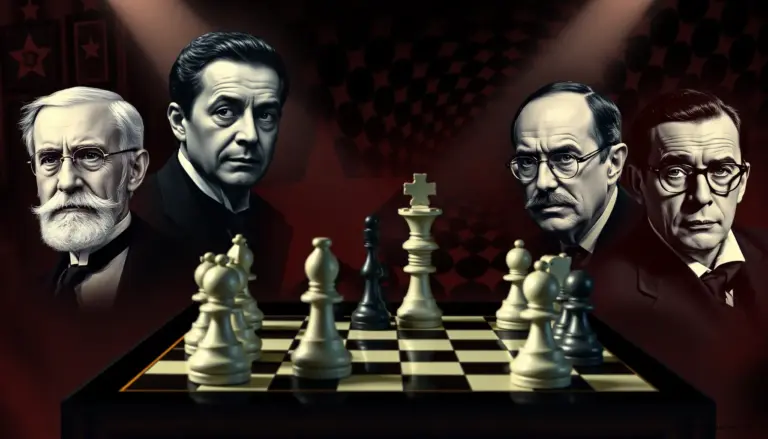
The 19th century marked a turning point in the history of chess.. The creation of international tournaments, like the one in London 1851, and the foundation of the International Chess Federation (FIDE) in 1924, they professionalized the game. Figures like Wilhelm Steinitz, first official world champion, y Emanuel Lasker They raised chess to a scientific level, analyzing openings and endings with mathematical rigor.
The Industrial Revolution and the printing press facilitated the dissemination of books and specialized magazines, as Chess Player’s Chronicle (1841), who democratized chess knowledge. Besides, chess became a symbol of the cold war: The rivalry between the United States and the USSR was reflected in the duels between Bobby Fischer and Boris Spassky in 1972, an event that transcended sports to become a media spectacle.
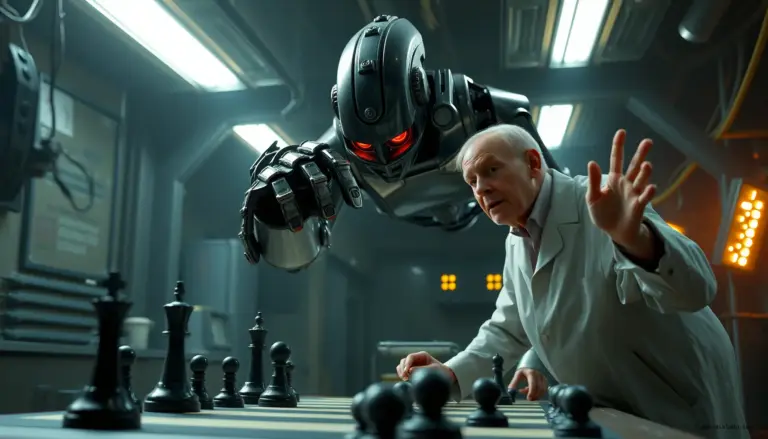
In the 20th century, Chess was also linked to artificial intelligence. In 1997, the computer Deep Blue of IBM defeated champion Garry Kasparov, a milestone that redefined the boundaries between the human mind and the machine. Hoy, platforms like Chess.com y Lichess They have brought the game to millions of people, combining tradition and technology.
Chess as a cultural mirror: symbolism and regional adaptations
Beyond its competitive aspect, chess has been a vehicle of cultural expression. In Japan, he shogi (japanese chess) allows captured parts to be reused, reflecting the philosophy of recycling and adaptation. In Mongolia, he shatar incorporates pieces such as “camel” and the “leopard”, linked to nomadic life. Even in art, chess has inspired works such as The chess game de Sofonisba Anguissola (16th century) or movies like The seventh seal de Ingmar Bergman, where it symbolizes the fight between life and death.
in literature, chess appears as a metaphor for political strategy. Machiavelli mentioned it in The prince as an example of long-term planning, while authors such as Stefan Zweig in chess novel explored its psychological impact. Even in music, Composers like Prokofiev included games in their operas, as in The love of three oranges.
This diversity shows that chess is not a static game., but a universal language that each culture has reinterpreted. From the ivory boards of ancient Persia to the online games of today, its essence remains the same: an intellectual challenge that unites humanity.
Conclusions: chess as an eternal legacy
Chess' journey through history is a testament to its ability to adapt and endure.. From its humble origins in India as a war game to its transformation into a global phenomenon, It has been much more than a hobby: has been a mirror of civilizations, reflecting your values, conflicts and advances. Each era left its mark, whether through the carved pieces of the Persians, the revolutionary rules of the European Renaissance or the professionalization of the 19th century.
Hoy, chess continues to evolve. Artificial intelligence has changed the way we study it, online tournaments have broken geographical barriers, and its inclusion in educational programs demonstrates its pedagogical value. However, its essence remains unchanged: a game that challenges the mind, encourages creativity and, above all, connects people across cultural or linguistic differences.
In an increasingly fragmented world, chess reminds us that, despite everything, we share the same story. Whether as a tool of power, object of art or simple entertainment, his legacy will live on, why, after all, chess is not just a game: es a dialogue between the past and the future.