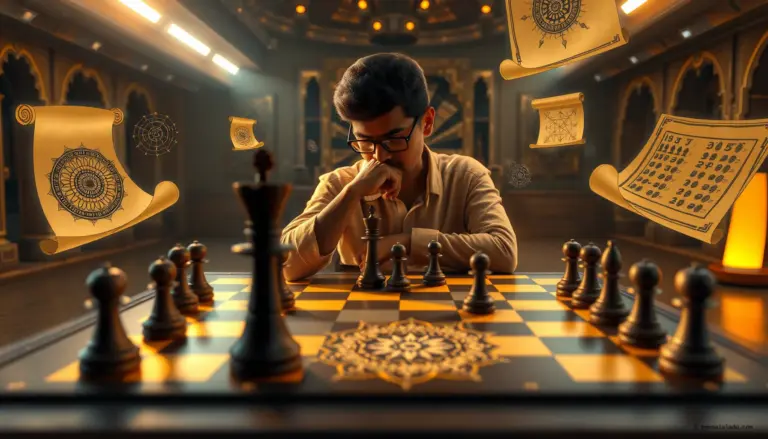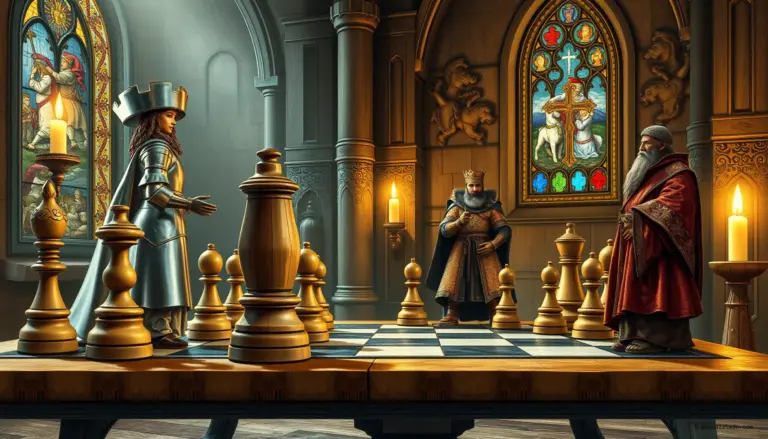
chess, more than just a strategy game, has been for centuries a mirror of the human mind. From the calculated moves of grandmasters to the improvised games of beginners, Each play seems to reveal something about whoever executes it.. But, Can chess really predict your personality? Is there a connection between your playing style and your psychological traits? throughout history, psychologists, neuroscientists and even philosophers have explored this relationship, looking for patterns that link the way we think on the board with how we deal with life off it.
In this article, We will analyze if chess is a reflection of our personality or if, on the contrary, This is a baseless myth.. We will explore scientific studies that support this idea, We will break down the most common playing styles and their possible correlation with psychological traits, and we will examine how factors such as experience, age and context influence this dynamic. In the end, not only will you understand the game better, but also how the way you play could be revealing more than you think.
Chess as a psychological tool: beyond the board
Chess has been used in psychology as a tool to evaluate cognitive abilities., decision making and even personality traits. One of the best-known studies in this field is the one carried out by the Dutch psychologist Adriaan de Groot in the 1970s. 1940, who analyzed how chess players process information and make decisions under pressure. Although his research focused on memory and perception, laid the groundwork for exploring how play style could reflect deeper aspects of personality.
In the decade of 1970, Soviet psychologist Vladimir Zakharov took this idea one step further.. in his book Chess psychology, proposed that players could be classified into four basic types based on their approach to the board: he tactical (impulsive, creative, risk lover), he positional (methodical, patient, long-term strategy oriented), he defensive (cautious, reagent, focused on avoiding mistakes) and the aggressive (dominant, competitive, with a tendency to attack). According to Zakharov, These styles not only determined success in the game, but also revealed how a person faces challenges in real life.
Most recent studies, such as those carried out by the University of Liverpool in 2015, have used chess to analyze personality traits according to the model of the Big Five (openness to experience, responsibility, extraversion, kindness and neuroticism). The results suggested that the players with the highest score in openness to experience tended to prefer innovative and risky openings, while those with high responsibility They opted for more conservative and structured strategies. However, These findings are not conclusive., since personality is a complex construct influenced by multiple variables.
The key question here is: Does chess shape personality or does personality shape chess? The answer probably lies somewhere in between.. The game acts as a stage where pre-existing traits manifest themselves, but it can also influence the development of certain skills, like patience or creativity, which then move to other areas of life.
Playing styles and their possible correlation with personality
If chess can reflect personality, It is crucial to understand the most common playing styles and how they relate to psychological traits. Although there is no universal classification, Experts often group players into categories based on their strategic and emotional approach during the game..
1. The tactical player: This style is characterized by quick movements, Ingenious combinations and a preference for attack. Tactical players tend to be creative, impulsive and enjoy the thrill of risk. In terms of personality, could be associated with traits such as high openness to experience y low risk aversion. However, their approach can lead them to make mistakes due to overconfidence, which would reflect a tendency to neuroticism in pressure situations.
2. The positional player: Unlike the tactical, the positional player prioritizes structure, space control and long-term planning. They tend to be patient, methodical and less likely to take unnecessary risks. In the Big Five model, this style could be linked with high responsibility y low impulsivity. His approach reflects an analytical mindset, but it can also indicate a more reserved or even perfectionist personality..
3. The defensive player: This type of player focuses on neutralizing the opponent's threats, avoiding mistakes and waiting for opportunities to counterattack. They tend to be cautious, observant and with a high tolerance for frustration. Psychologically, could be associated with low extraversion y high friendliness, since they prioritize harmony (even on the board) about direct confrontation. However, Your style may also reflect an anxious or avoidant personality..
4. The aggressive player: Dominant and competitive, This style focuses on imposing your will on the opponent from the first move. Aggressive players tend to be extroverted, self-confident and with a high need for control. In terms of personality, could score high on extraversion y low kindness, since its approach is less collaborative and more confrontational. Nevertheless, Their aggressiveness may also be a mechanism to compensate for underlying insecurities..
It is important to note that these styles are not static.. A player can switch between them depending on the context, your emotional state or even the level of your opponent. Besides, experience plays a crucial role: a tactical beginner can become more positional over the years, suggesting that chess not only reflects personality, but also shapes it.
What does science say? Studies and limitations
Although the idea that chess reveals personality is attractive, science offers nuanced answers. Several studies have attempted to establish a correlation between playing style and psychological traits., but the results are inconsistent due to the complexity of the topic.
One of the most cited studies is the one carried out by the University of Konstanz in 2017, where the behavior of 500 players on online platforms. The researchers found that those who preferred aggressive openings (like the king's gambit) They tended to score higher on extraversion y sensation seeking, while those who opted for solid defenses (like the Sicilian Defense) they showed greater responsibility y emotional stability. However, The study also warned that these correlations were weak and that factors such as experience or skill level could distort the results..
Another relevant research is that carried out by the Max Planck Institute in 2019, that used artificial intelligence to analyze millions of online games. Algorithms identified patterns of play that could be associated with personality traits, such as the tendency to repeat movements (linked to the cognitive rigidity) or the preference for risky plays (associated with the impulsiveness). Nevertheless, The study authors themselves acknowledged that these patterns were not enough to accurately predict personality., since chess is a closed system with fixed rules, while personality operates in a much broader and more dynamic context.
One of the main limitations of these studies is that they are based on observational data., making it difficult to establish causal relationships. For example, Is an aggressive player aggressive because his personality drives him to attack?, or because you have learned that this is the best strategy to win? Besides, chess is a game of acquired skill, meaning that experience and training can modify playing style over time, regardless of underlying personality.
Another factor to consider is the opponent effect. A positional player can become more aggressive if his opponent makes mistakes, o a tactician may adopt a defensive approach if facing a superior opponent. This shows that chess is not a pure reflection of personality., but a complex interaction between individual traits, context and learning.
Chess as a mirror or as a mold: what influence does it have?
The relationship between chess and personality raises a fundamental question: Does the game act as a mirror that reflects who we are, or like a mold that transforms us? The answer, as usually happens in psychology, It is not binary, but it depends on multiple factors.
On the one hand, chess can function as a mirror of personality to the extent that it reveals pre-existing tendencies. For example, a person with high tolerance for ambiguity You will probably enjoy complex and unbalanced positions, while someone with low tolerance will prefer clear and predictable structures. In the same way, an individual with high need for achievement you might feel more motivated to improve your game, while someone with low perseverance could give up at the first difficulties.
However, chess also has the power to mold the personality. Studies in neuroscience have shown that playing chess regularly can improve cognitive skills such as working memory, the planning and the mental flexibility. These skills, in turn, can influence how a person faces challenges off the board. For example, A player who learns to think through multiple plays in advance can develop a greater ability to anticipate consequences in his daily life..
Besides, chess teaches values that transcend the game. Patience, Discipline and resilience are qualities that are reinforced with constant practice. A study published in Frontiers in Psychology in 2020 found that children who received chess lessons showed significant improvements in their self control y decision making, suggesting that play can have a positive impact on personality development, especially in early stages.
Nevertheless, It is important not to exaggerate this effect. Chess does not radically transform personality, but acts as a catalyst which enhances or moderates existing tears. For example, A naturally impulsive person can learn to be more thoughtful over time., but it is unlikely that he will become someone completely opposite to his nature. In the same way, Someone with high anxiety may find chess a tool to manage stress, but it will not eliminate your genetic or environmental predisposition.
Ultimately, The influence of chess on personality depends on how to play. A competitive and obsessive approach can lead to stress and frustration, while a playful and reflective approach can encourage personal growth. That's why, more than predicting personality, Chess offers an opportunity to explore it and, in some cases, transform it.
Conclusions: Can chess reveal who you are?
Chess is much more than a strategy game: It is a microcosm where the mind intertwines, emotions and personality. Throughout this article, We have explored whether it can actually predict psychological traits, analyzing scientific studies, Play styles and the complex relationship between the board and real life. The answer is not absolute, but revealing.
On the one hand, chess acts as a mirror reflecting personality tendencies. tactical players, positional, Defensive or aggressive players do not just adopt a style by chance, but this usually aligns with how they process information, manage risk and face challenges. Studies such as those from the University of Liverpool or the Max Planck Institute suggest that there are correlations between playing style and traits such as openness to experience, responsibility or extraversion. However, These connections are weak and are influenced by factors such as experience, context and motivation.
On the other hand, chess also works as a mould that can change personality. Constant practice not only improves cognitive skills such as memory or planning, but also encourages values such as patience, discipline and resilience. This is especially true in early stages of development., where play can have a significant impact on character formation. Nevertheless, its influence is not magical: chess enhances or moderates existing traits, but it rarely transforms them completely.
So, Can chess predict your personality? The answer is Yeah, but with nuances. It's not an exact science, not even an infallible psychological test, but it is a tool that offers valuable clues about how you think, you feel and act. More than a predictor, chess is a laboratory where you can observe your mind in action, identify patterns and, if you want, work on them. In the end, The true value of the game is not in what it reveals about you, but in what you can learn about yourself through it.
So next time you sit in front of the board, pay attention not only to your movements, but also what they say about you. You may discover that, without realizing it, chess has already told you more than you thought.