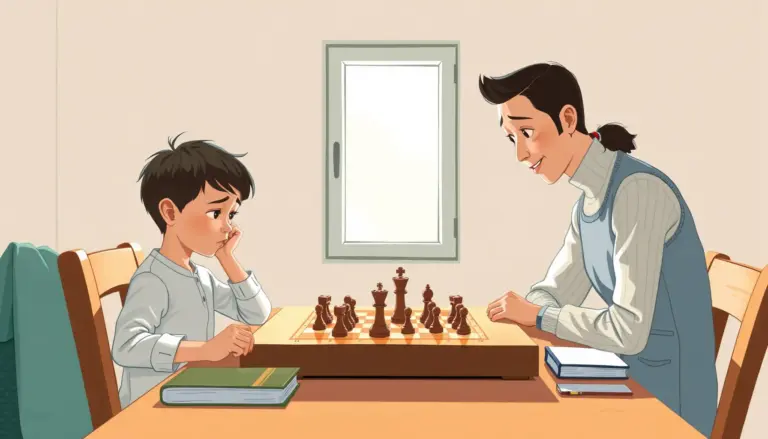
Returning to chess after years can be an exciting experience and, at the same time, overwhelming. Whether you left the board due to lack of time, motivation or simply because life took you on other paths, Returning to this ancient game is not just a matter of remembering moves. Chess is a mental sport that requires patience, strategy and adaptation, and when you return after a long hiatus, It is normal to feel that you have lost fluency, that the openings are no longer familiar to you or that your calculation skills have become rusty. However, This reunion can also be an opportunity to rediscover the game from a new perspective, with more maturity and tools that you didn't have before. In this article, We will explore how to approach this return effectively, from the initial challenges to the strategies to recover—and even surpass—your previous level. Because chess, like life, It's not just about remembering what you knew., but about learning to play with what you have now.
The first obstacles: why is it so hard to come back?
The first obstacle when resuming chess is not technical, but psychological. The human mind tends to idealize the past, and it's easy to fall into the trap of comparing your current level to what you had at your peak.. However, The brain is not a hard drive that stores information statically.: chess skills, like any other cognitive skill, they degrade with disuse. Studies in neuroscience show that brain plasticity allows us to recover knowledge, but the process is not instantaneous. Muscle memory of movements, the ability to visualize variants or even the intuition to evaluate positions are affected.
Besides, modern chess has evolved. If you stopped playing a decade or more ago, you are likely to encounter openings, defenses and theoretical concepts that did not exist or were not popular before. For example, lines like the Berlin Defense in Ruy López or King's Indian Defense with hypermodern structures have gained ground, while some classic variants have fallen into disuse. This can create a feeling of disorientation., as if the game had changed the rules without telling you.
Another key factor is the performance anxiety. many players, upon returning, they feel the pressure of “demonstrate” que no han perdido su habilidad, which leads to hasty errors or avoiding games for fear of failure. This excessive self-criticism is counterproductive: Chess is more enjoyed when approached with curiosity, no con la obsesión de recuperar un nivel pasado.
Rebuilding the foundation: cómo recuperar la fluidez
El regreso al ajedrez debe ser gradual, like an athlete returning to training after an injury. It's not about jumping into tournament games right away., sino de reconstruir los pilares básicos: tactic, strategy and calculation. These three elements are the basis of any level, and working on them systematically will allow you to regain confidence.
Comienza con ejercicios de tactic. Platforms like Chess.com, Lichess o Chess Tempo ofrecen problemas clasificados por dificultad, from dives and hairpins to more complex combinations. Dedicate at least 15-20 minutes a day to solve these puzzles. The tactic is like the “muscle” of chess: the more you exercise it, the faster you will recognize patterns in your games. A common mistake is jumping to advanced problems too soon; instead, focus on the basics until you solve them fluently.
The next step is review openings, but with a practical approach. Don't memorize endless variants; instead, choose 1-2 openings for each color (white and black) and deepen your strategic ideas. For example, if you play the Italian with white, study why the center is controlled, when to advance pawns and how to develop pieces harmoniously. Tools like Chessable or books like “Modern chess openings” by Nick Firmian may be helpful, but avoid saturating it: the goal is to understand, do not accumulate information.
Finally, he works calculation. An effective technique is to analyze games of players of your level (the slightly higher) and try to predict their moves before they happen. This trains your ability to visualize variants and evaluate positions.. También puedes usar el método de post-mortem analysis: after each game, revisa los momentos críticos y pregunta: “What would have happened if I had played X instead of Y?”. This exercise reinforces the connection between theory and practice.
La mentalidad del jugador que regresa: patience and adaptation
One of the biggest mistakes when returning to chess is underestimating the mental factor. Many players get frustrated when losing games that, at the time, habrían ganado con facilidad. However, The key is not to recover the previous level, but in adapt to the present. chess, like life, it is not static: your way of thinking, Your patience and even your tolerance for stress have changed over the years..
First of all, accept that defeats are part of the process. Every lost game is an opportunity to identify weaknesses. For example, If you notice that you lose pieces due to tactical oversights, reinforce that aspect with more exercises. And, instead, failures in the end, studies basic positions such as towers end or the mate with bishop and knight. The humility to recognize mistakes is what separates players who improve from those who stagnate.
Another crucial aspect is manage time. If before you played quick games without problem, now you might feel overwhelmed by the pressure of the clock. One solution is to start with longer games (as 30+0 o 15+10) to give you space to think. You can also practice with blitz o bullet only when you feel comfortable, not as a starting point. Chess is a game of precision, and haste is the enemy of good decision making.
Finally, do not neglect the social aspect of chess. Join a local club, Participating in in-person tournaments or even playing online games with friends can renew your motivation. Chess is also a community, and sharing experiences with other players—especially those who are also picking up the game—will remind you why you fell in love with it in the first place..
Tools and resources to accelerate your progress
In the digital age, Chess has more resources than ever to improve. However, The abundance of information can be overwhelming. The key is to select tools that suit your learning style and goals.. Here we present the most effective, classified by category:
Training platforms:
- Lichess: Free and with an intuitive interface, offers game analysis, interactive lessons and an active community. Your section studies allows you to create or follow custom guides.
- Chess.com: Ideal for players looking for a more structured approach. Your courses, as “Chess for beginners” o “Opening Mastery”, They are excellent for refreshing concepts.
- Chessable: Based on spaced repetition, This platform is perfect for memorizing openings and endings. Your method “MoveTrainer” strengthens long-term retention.
Recommended books:
- “It fixes me up” de Aron Nimzowitsch: A classic that explains fundamental strategic concepts, such as prophylaxis or blocking, in a clear and applicable manner.
- “Chess Fundamentals” by José Raúl Capablanca: Ideal for recovering positional intuition. Capablanca breaks down complex ideas into simple examples.
- “Silman’s Complete Endgame Course” the Jeremy Silman: An essential book to master endings. It is organized by levels, making it accessible to any player.
Game analysis:
- Use engines like Stockfish o Leela Chess Zero to analyze your games, but in moderation. These programs are useful for identifying errors, but they should not replace your own reasoning.
- Follow grandmaster games on platforms like Chess24 o Twitch. Observe how they handle openings, transitions to the middle game and endings will give you ideas to apply in your games.
Communities and tournaments:
- Join chess groups on social networks, as Facebook o Reddit (r/chess), where you can ask questions, share games and receive feedback.
- Participate in online or in-person tournaments. Platforms like Chess.com They organize events for all levels, and many local clubs have categories for players who are picking up the game.
Remember: It's not about using all these tools at the same time., but to find the ones that best suit you. For example, if you are more visual, the videos of Agadmator o GothamChess on YouTube can be more useful than a book. If you prefer practice, focus on solving puzzles and playing games. The important thing is to remain consistent and enjoy the process.
Conclusions: chess as a journey, not like a destination
Returning to chess after years is not just a reunion with a game, but with a wiser and more patient version of yourself. Throughout this article, We've explored the initial challenges—from frustration over losing fluidity to adapting to new gaming trends—, as well as strategies to rebuild your skills: work the tactics, review openings with a practical approach, train calculation and, above all, cultivate a resilient mindset.
Chess is not about recovering a past level, but to rediscover it from the present. Every match, Every mistake and every success are opportunities to learn, not to judge you. Digital tools, books and communities are there to accompany you, but true progress comes from perseverance and curiosity. It doesn't matter if your goal is to compete again, enjoy casual games or simply keep your mind active: The essential thing is that the board continues to be a space for growth, not pressure.
In the end, chess is like life: It's not about reaching a destination., but to enjoy the road. every movement, Every decision and every game are a reflection of who you are at that moment.. So, when you sit in front of the board after so long, remember: you're not starting from scratch, but continuing a story that only you can write. and that, maybe, It's the most important move of all..