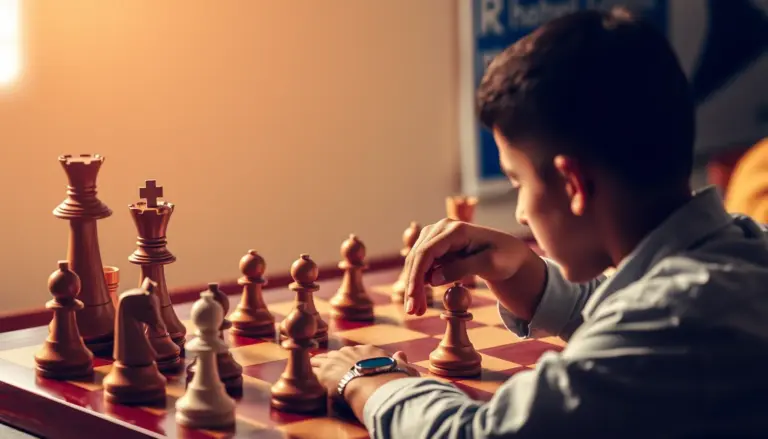
In the heart of Southeast Asia, where traditions intertwine with modernity, rises Brunei, a small sultanate that has turned chess into a unique cultural phenomenon. Under the reign of Sultan Hassanal Bolkiah, This ancient game is not only a hobby, but a reflection of national identity, political strategy and social cohesion. From the golden halls of the royal palace to local schools and cafes, Chess has infiltrated the daily lives of Bruneians, becoming a symbol of prestige, discipline and community connection. But, How did a country with less than half a million inhabitants manage to position chess as an essential part of its cultural DNA?? This is the story of a “ajedrez real” that goes beyond the board, where every movement reflects the story, the values and aspirations of a nation.
The sultan as architect of Bruneian chess
Sultan Hassanal Bolkiah's interest in chess is not a passing whim, but a passion cultivated for decades that has transcended the limits of his palace. Since the years 80, the monarch has actively promoted this game, not just for entertainment, but as a tool for intellectual development and diplomacy. His influence is so profound that, in 2015, Brunei became the first Southeast Asian country to host an international chess tournament featuring grandmasters, an event that had his personal sponsorship.
But their role goes beyond patronage. The Sultan has integrated chess into education and public administration, presenting it as a strategic thinking model applicable to governance. In his speeches, He often compares the management of the country to a game of chess, where every decision must anticipate long-term consequences. This philosophy has permeated the Bruneian elites, who see in the game a metaphor for the political and economic life of the country.
Besides, The sultan has used chess as a cultural bridge with other nations. In 2019, during an official visit to Russia, participated in a friendly game with President Vladimir Putin, a gesture that strengthened the ties between both countries and positioned Brunei as a relevant actor on the international chess stage.. This diplomatic approach has made the sultanate an attractive destination for tournaments and matches., attracting elite players and consolidating its reputation in the chess world.
Chess as a tool for social cohesion
And Brunei, Chess is not a game reserved for the elites, but an activity that unites all layers of society. From street markets to community centers, It is common to see people of all ages gathered around a board, sharing strategies and anecdotes. This democratization of gaming has its roots in public policies promoted by the government, that have promoted its practice in schools, universities and public spaces.
One of the most successful programs is “Chess in Schools”, implemented in 2010, that has integrated the game into the educational curriculum since primary school. Students not only learn the basic rules, but they develop skills such as critical thinking, patience and problem solving. According to studies carried out by the Ministry of Education, Students who participate in these programs show better academic performance, especially in mathematics and science, which has led to an expansion of the program nationwide.
Besides, chess has served as a catalyst for social inclusion. In a country where ethnic and religious diversity is notable, The game acts as a universal language that transcends differences. For example, in Tutong district, malay communities, Chinese and indigenous people meet weekly in interethnic tournaments, where respect and camaraderie are as important as victory. These spaces have strengthened the social fabric, promoting values such as fair play and tolerance.
The economics of chess: a growing niche
The rise of chess in Brunei has not only had a cultural and social impact, but also economic. The country has been able to capitalize on its growing reputation in the world of chess to diversify its economy., traditionally dependent on oil and gas. In recent years, Initiatives have been developed ranging from the manufacture of artisanal boards to the organization of international tournaments., generating employment and attracting specialized tourism.
One of the most promising sectors is chess-related products.. Local businesses, as Brunei Chess Craft, produce high quality boards and parts, using native woods such as meranti and keruing. These products are not only sold in the local market, but they are also exported to countries like Malaysia, Singapore and United Arab Emirates, where they are appreciated for their craftsmanship and design. Besides, The government has encouraged the creation of manufacturing workshops, providing training and financial support to entrepreneurs.
Another area of growth is chess tourism. Brunei has begun to position itself as a destination for players and fans, offering packages that include tournaments, workshops with great teachers and visits to historical places. In 2022, the country organized the Brunei Chess Open, an event that attracted more than 200 participants of 15 countries and generated significant revenue for the hotel and service industry. These types of events not only boost the local economy, but also projects a modern and culturally rich image of Brunei abroad.
Challenges and the future of chess in Brunei
Despite the advances, Chess in Brunei faces challenges that could limit its long-term growth. One of the main obstacles is competition with other sports and forms of entertainment, especially among young people. In an era dominated by video games and social networks, Capturing the attention of new generations requires innovative strategies, such as the integration of chess into digital platforms or the creation of online leagues.
Another challenge is the lack of specialized infrastructure. Although the country has community centers and schools that promote chess, There are still no high-performance academies or professional clubs that can train elite players.. To compete internationally, Brunei needs to invest in creating training centers and hiring foreign coaches who can raise the level of its players. Until now, Bruneians have stood out in regional tournaments, but they have not yet managed to position themselves on the world stage.
However, the future of chess in Brunei is promising. The government has announced plans to build a National Chess Center, which will serve as a venue for tournaments, game training and promotion. Besides, alliances with international federations are being explored, like FIDE, to obtain technical and financial support. If these projects materialize, Brunei could become a chess benchmark in Asia, not only because of its tradition, but for its ability to innovate and adapt to new times.
Final thoughts: chess as a mirror of Brunei
Chess in Brunei is much more than a game; It is a microcosm that reflects the essence of this sultanate. From the royal palace to the humblest streets, Each game tells a strategy story, patience and unity. Sultan Hassanal Bolkiah has not only promoted chess as a hobby, but as a governance model, an instrument of social cohesion and economic opportunity. His vision has transformed an ancient game into a pillar of national identity, proving that, even in a globalized world, traditions can adapt and flourish.
However, The path is not without challenges.. To keep chess relevant, Brunei must face obstacles such as competition with other forms of entertainment and the need for specialized infrastructure. But if this country has shown anything, it is its ability to reinvent itself.. With strategic investments and a determined commitment to innovation, Chess could become a lasting symbol of Brunei's greatness, a legacy that transcends generations.
In the end, he “ajedrez real” Brunei is a metaphor for life itself: a game where every move counts, where patience and strategy are as important as passion, and where, in the end, We are all players on a much bigger board.. May this story inspire not only Bruneians, but to any nation that seeks in its traditions the path to a brighter future.