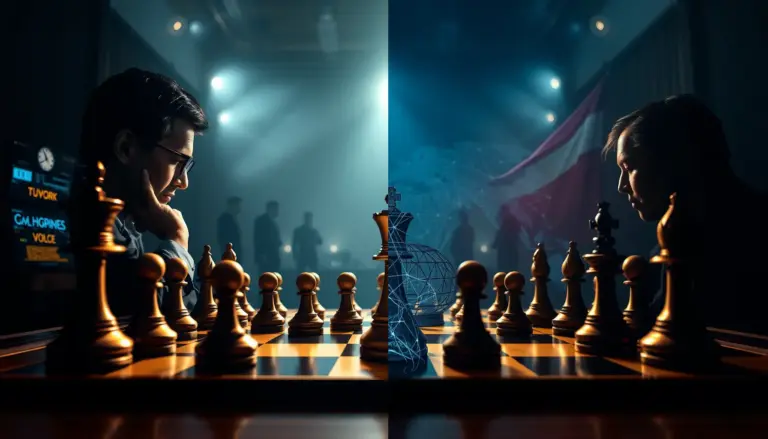
In recent years, chess has experienced an unprecedented renaissance, becoming a global phenomenon that transcends ages, cultures and borders. What was previously considered a niche game, reserved for intellectuals or enthusiasts in specialized clubs, Today it attracts millions of people around the world. Digital platforms, television series, Social networks and even celebrities have contributed to this explosion of popularity, but what is behind this collective obsession? Why in 2026 Chess has established itself as one of the most practiced and followed activities on the planet?
Beyond its competitive aspect, Chess has become a reflection of the social and technological changes of our era. Your ability to combine strategy, creativity and accessibility has positioned it as an educational tool, a mental escape and even a cultural phenomenon. In this article, We will explore the deep reasons behind this boom, from its digital transformation to its impact on mental health, passing through its role in education and its influence on pop culture. We will find out why, in an increasingly accelerated and fragmented world, Chess offers something that few other hobbies can match.: an intellectual challenge that unites people.
Chess in the digital age: how technology democratized gaming
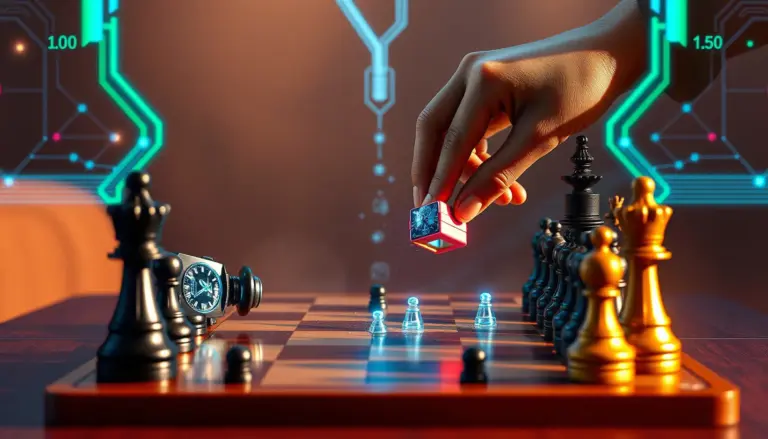
Chess has always been a universal game, but its massive expansion in 2026 cannot be understood without the key role of technology. Platforms like Chess.com, Lichess y Chess24 have broken the geographical and economic barriers that previously limited their practice. Hoy, Anyone with a smartphone or computer can play against opponents from all over the world, learn from great masters through interactive tutorials or even compete in online tournaments with million-dollar prizes.
But the digital revolution goes beyond accessibility. artificial intelligence, with engines like Stockfish y Leela Chess Zero, has changed the way players learn and improve. Before, Progressing in chess required years of study with books and the guidance of a coach. Now, algorithms analyze games in real time, identify errors and suggest improvements with a precision unattainable by a human. This has allowed amateur players to reach levels that were previously only available to professionals..
Besides, Social networks have played a fundamental role in the viralization of chess. Streamers like Hikaru Nakamura o GothamChess They have turned the games into a spectacle, attracting millions of viewers who not only enjoy the game, but also the entertainment that surrounds it. TikTok and Instagram are full of short videos with brilliant plays, chess memes and challenges that capture the attention of new generations. In 2026, chess is no longer just a game: it's a content phenomenon.
Chess as an educational and cognitive development tool
One of the factors that has contributed most to the popularity of chess in recent years is its recognition as a first-rate pedagogical tool.. Scientific studies have shown that playing chess improves cognitive abilities such as memory, the concentration, logical thinking and problem-solving skills. In a world where traditional education often focuses on memorization, Chess offers a practical and dynamic approach to developing critical thinking.
In 2026, many countries have incorporated chess into their educational programs, especially in primary and secondary schools. For example, in Spain, Argentina and several European countries, Chess is an optional or even mandatory subject at some levels. The results are remarkable: Students who practice chess regularly show improvements in mathematics, reading comprehension and even their ability to work as a team. This is because the game teaches planning, anticipate consequences and adapt to changing situations, essential skills in real life.
But its impact is not limited to classrooms.. Companies like Google and Microsoft have adopted chess as part of their employee training programs., arguing that it improves decision making under pressure. Even in the military field, Chess is used to train tactical thinking strategies. In an increasingly complex world, where the ability to analyze information quickly is crucial, chess has become a mental training accessible to everyone.
Chess as an escape and refuge in times of uncertainty
The COVID-19 pandemic marked a before and after in people's relationship with chess. During the confinements, Millions of individuals looked for activities that allowed them to disconnect from stress and anxiety. chess, with its combination of intellectual challenge and simplicity of access, It became a perfect refuge. Did not require expensive equipment, could be played online and offered a sense of control in a time of global chaos.
In 2026, This trend not only continued, but it deepened. Chess has established itself as a form of mental therapy. Psychologists and therapists recommend it as a tool to manage stress, depression and even attention deficit disorder. Unlike video games or social networks, which often generate overstimulation, chess requires concentration and patience, which helps calm the mind.
Besides, the game has served as a social bridge in an increasingly digitalized world. Online communities, Virtual clubs and friendly tournaments have allowed people of different cultures and ages to connect over a common passion. In a context where loneliness and isolation are growing problems, chess offers a form of meaningful interaction, regardless of physical distance.
The influence of pop culture: How chess became a mainstream phenomenon
While chess has always had a place in culture, his leap into the mainstream in 2026 is due in large part to his presence in entertainment. The series Queen's Gambit (2020) it was just the beginning. In the following years, chess appeared in movies, series, documentaries and even in music. Celebrities like Magnus Carlsen, the former world champion, They became media figures, while influencers and streamers integrated it into their content.
But beyond fame, Chess has been adopted by pop culture as a symbol of intelligence and strategy. in the cinema, movies like The game of fear (2021) o The Queen of Katwe (2016) They showed chess as a metaphor for life, where every move has consequences. in music, artists like Logic o J. Cole They have made references to the game in their lyrics, associating it with personal improvement and decision making.
This media exposure has had a domino effect. The young people, especially, They have adopted chess as part of their identity, seeing it as something “cool” instead of boring. fashion brands, as Gucci o Nike, have launched collections inspired by chess, and even esports have incorporated variants of the game, like him Chess960 or speed chess. In 2026, chess is no longer just a game: it's a lifestyle.
Conclusions: why chess is here to stay?
Chess has ceased to be a minority pastime and has become a global phenomenon that unites people of all ages and origins.. Its rise in 2026 it's not a coincidence, but the result of a combination of factors that have positioned it as a unique activity of its kind. Technology made it accessible, education validated it as a development tool, Pop culture popularized it and its ability to offer a mental escape made it a refuge in difficult times..
But beyond practical reasons, Chess has triumphed because it satisfies fundamental human needs: the desire for challenge, the search for connection and the need for meaning in an increasingly automated world. Unlike other games or social networks, chess is not only entertaining, but transform. Improve the mind, teaches patience and strategy, and creates communities where there were none before.
In a future where artificial intelligence and automation will redefine many aspects of life, chess remains a reminder of what makes us human: the ability to think, create and connect. That's why, millions of people in 2026 they don't just play chess, but they live through it. And chances are this obsession won't go away anytime soon., but keep growing, evolving and adapting to new times. Chess is not a fad; It is a silent revolution that is here to stay.