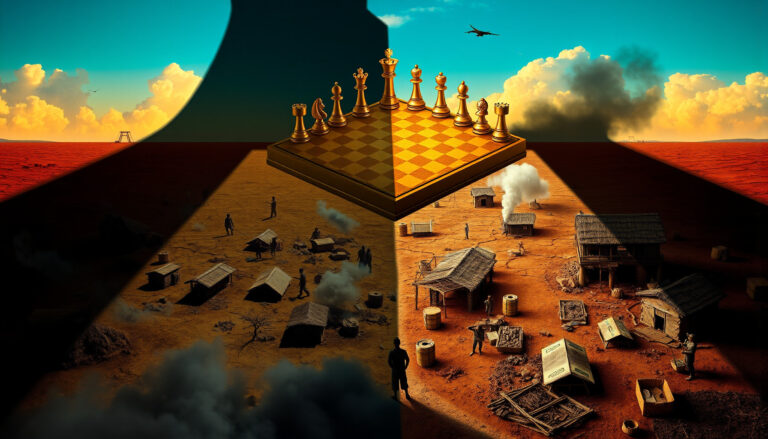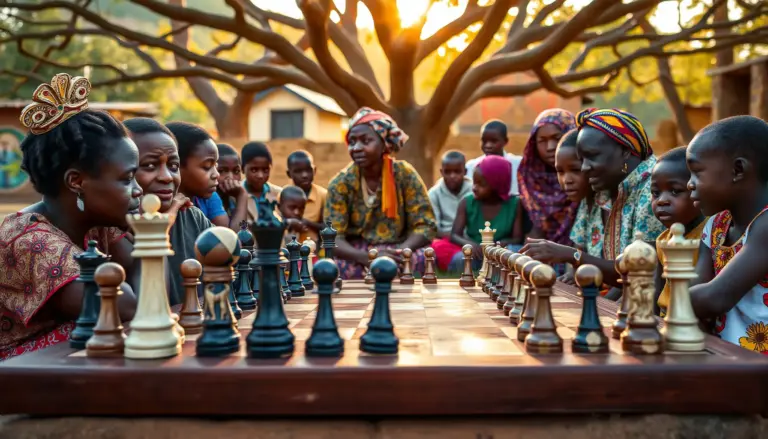
Chess is much more than a strategy game: It is a mirror of life. From the first plays, Every movement reflects decisions we make daily, where the calculation, patience and adaptability determine our success or failure. But, What does this board really teach us? 64 boxes without us realizing? Beyond the rules and openings, Chess is a powerful metaphor for how we face challenges, we manage time and accept uncertainty. In this article, We will explore the hidden lessons that chess offers about life, from the importance of planning to resilience in the face of defeat. Why, in the end, each game is a reflection of how we live: with strategy, but also with passion and, above all, with the humility to learn from every mistake.
The board as a decision scenario: the weight of each movement
in chess, each piece has a value and a purpose, but none acts in isolation. An advanced pawn can change the course of a game, while a poorly positioned bishop can become a weakness. This dynamic reflects how our daily decisions, no matter how small they may seem, have long term consequences. Studies in cognitive psychology, as those carried out by the researcher Gary Klein, show that humans tend to underestimate the impact of our immediate choices, especially under pressure. in chess, An error in the opening can cost you the game hours later, something similar to what happens when we postpone a financial decision or ignore a red flag in our relationships.
The fascinating thing is that chess forces us to think about chains of consequences. An experienced player not only evaluates the current move, but how it will affect the next five or ten plays. This ability, known as systems thinking, It is key in real life. For example, Choosing a university degree not only defines our first job, but also our future opportunities, our network of contacts and even our mental health. The board teaches us that there are no trivial decisions: each step builds or weakens the path towards our goals.
However, there is an important nuance: in life, unlike chess, We don't always have all the pieces in sight.. The uncertainty is greater, and that leads us to another fundamental learning: the importance of flexibility. A player who sticks to a rigid plan, without adapting to the opponent's movements, is doomed to failure. The same thing happens when we become obsessed with a goal without considering the changes in our environment.. Chess reminds us that strategy must be dynamic, not dogmatic.
Time as a finite resource: the clock that marks our existence
In chess games, the watch is as crucial an element as the parts. Each player has a limited time to make decisions, and exhausting it means losing, regardless of position on the board. This time pressure is a perfect metaphor for how we manage our time in life.. According to data from the World Health Organization (OMS), Chronic stress related to poor time management affects more than 30% of the population in developed countries. Chess teaches us that time is not just a resource, but a ally or an enemy, depending on how we use it.
There are two common mistakes in time management, both in chess and in life:
- procrastination: Postpone critical decisions, how to move a key piece, can lead to a desperate position. in real life, This translates into leaving for “tomorrow” important projects, which generates accumulated stress and lost opportunities.
- The precipitation: Make hasty decisions, without analyzing the consequences, It's just as dangerous. in chess, An impulsive move can cost you a valuable piece; in life, It can mean taking a low-paying job or ending a relationship because of an emotional outburst..
Chess also shows us that time is not distributed equally.. In the openings, players tend to spend more minutes planning, while in the end, every second counts. This variability reflects how, in life, There are stages where we must be more reflective (like when choosing a partner or a career) and others where quick action is key (as in a work or health crisis). The lesson here is clear: It's not about time management., but to prioritize it.
A revealing piece of information comes from a study of the Harvard University, who analyzed the performance of chess players under time pressure. The results showed that those who divided their time into blocks of deep analysis (instead of reacting instinctively) they had a 40% more likely to win. This suggests that, in life, dedicating specific moments to reflection—without distractions—can make the difference between success and failure.
Defeat as a silent master: what failure reveals to us
Nobody wins all their chess games., not even the great masters. In fact, the world champion Magnus Carlsen has lost more than 200 games in official tournaments, and the legendary Garry Kasparov He admitted that he learned more from his defeats than from his victories.. This reality clashes with current culture, that glorifies success and stigmatizes failure. However, chess teaches us that defeat is not the end, but a diagnosis.
When we lose a game, the dashboard offers us valuable information: did the opening fail? Was there a tactical oversight? Do we underestimate the rival? These questions are equivalent to those we should ask ourselves after a failure in life.. For example, if a business goes bankrupt, analyze the causes - poor management, lack of market, competition—is the first step to avoid repeating the same mistakes. Chess forces us to be self-critical, but also to separate the result from our identity. Losing a game does not make us bad players, just as a job failure does not define us as people.
A fascinating aspect is how professional players review their lost games. They use tools like retrospective analysis, where they reconstruct each move to identify the exact moment when the game went wrong. This exercise is similar to what is known in psychology as metacognitive reflection, a process that improves future decision making. in life, This translates into carrying a error diary or seek feedback from trusted people after a failure. The key is to transform the pain of defeat into actionable knowledge.
But there is an even deeper nuance: chess teaches us to accept defeat with dignity. in life, It is easy to blame others or circumstances when things go wrong. However, in chess, there are no excuses: the rival does not “he was lucky”, but he executed his strategy better. This mentality encourages personal responsibility, a scarce value in a society that rewards victimization. As the philosopher said Seneca: “It's not that we have little time, but we lose a lot”. Chess reminds us that every defeat is an opportunity to correct course.
The rival as a mirror: empathy in competition
in chess, the rival is not an enemy, but a mirror. Every movement you make reveals your intentions, your fears and your strengths, and vice versa. This dynamic is a metaphor for how we interact with others in life.: our relationships, whether personal or professional, They are a constant exchange of strategies, where empathy and observation are key tools.
A study published in the journal Psychological Science showed that chess players develop a superior ability to read the mind of his opponents, anticipating their movements not only based on logic, but also his style of play. This ability, known as theory of mind, It is essential in real life. For example, in a labor negotiation, understand the motivations of others (are you looking for security? recognition?) It can be the difference between closing a deal or failing.. Chess trains us to see beyond superficial actions and decipher the hidden intentions.
However, there is a danger: confuse competition with hostility. in chess, Respect for your opponent is an unwritten rule. It is not insulted, not belittled, and after the game, both players usually analyze the movements together. This attitude contrasts with current culture, where competition is often associated with the disqualification of the other. Chess teaches us that success does not require the defeat of others. As the great teacher said José Raúl Capablanca: “Chess is a game of ideas, not of strength”. in life, This translates into collaborating with those who challenge us, instead of seeing them as obstacles.
Another key aspect is how chess reflects the information asymmetry. In a game, we do not know the opponent's thoughts, but we can infer them from their movements. The same thing happens in life: we never have all the information about others, but we can observe their actions to understand their priorities. For example, a boss who always postpones meetings may be avoiding conflict, or a friend who repeatedly cancels plans could be having a hard time. Chess teaches us to interpret signs without falling into assumptions.
Finally, The board shows us that healthy competition is not a zero-sum game.. in chess, a game can end in a draw, where both players recognize that the effort was equitable. in life, This translates into searching win-win results, where all parties benefit. The lesson is clear: the rival is not an obstacle, but a catalyst that forces us to improve.
Conclusions: the board as a school of life
Chess is much more than a game: is a school of life disguised as entertainment. Throughout this article, We have seen how its lessons apply to our daily existence, from decision making to time management, going through resilience in the face of failure and empathy in competition. Each game is a microcosm where the same patterns that we face off the board are repeated.: the uncertainty, the pressure, the need to adapt and, above all, the importance of learning from each experience.
Perhaps the most valuable lesson is this: life, like chess, It's not about always winning, but to play well. A player who only seeks victory at any cost ends up getting burned, just like a person obsessed with material success without considering their emotional well-being. Chess teaches us to value the process as much as the result, to enjoy the journey even when the destination is uncertain. As the writer said Stefan Zweig in his novel chess novel: “Chess is the gymnastics of the spirit”.
In the end, the board leaves us a question: Are we playing our lives with strategy?, or simply reacting to what is presented to us? The answer is not in the pieces, but in how we move them. And you, what move will you make today?