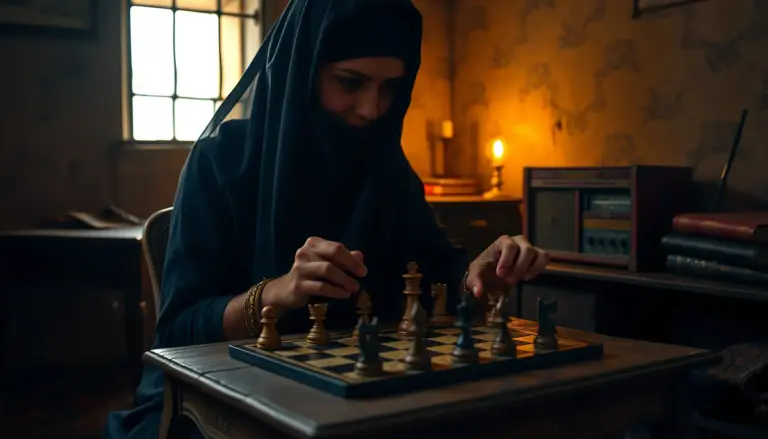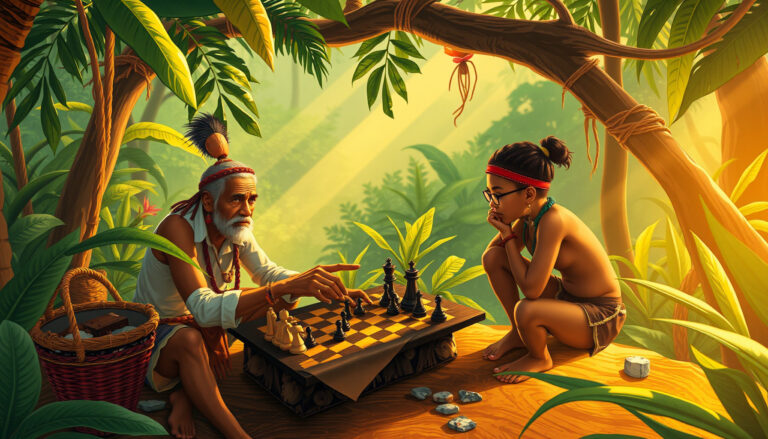
In the remotest corners of Bangladesh, where tradition intertwines with everyday life, There is an art that defies the passage of time: handmade chess. Far from industrial factories and plastic boards, Bangladeshi people preserve an ancestral technique that turns clay and bamboo into unique pieces, loaded with history and symbolism. This job, passed down from generation to generation, It is not just a form of entertainment., but also a reflection of the country's cultural identity. Through your hands, craftsmen mold not only figures, but narratives that speak of kings, strategies and the resistance of a people to modernity. In this article, We will explore how traditional Bangladeshi chess becomes a bridge between the past and the present, analyzing its creation process, its cultural significance and the challenges it faces in a globalized world.
mud and bamboo: materials that tell stories
Bangladeshi chess is not a simple game; It is an artistic manifestation that is born from the earth itself. The boards, made with baked clay, They are the canvas on which the games are displayed. It is material, abundant in rural areas, It is collected from river beds or the banks of rice fields, where the clay is purest and most malleable. The artisans, many of them farmers who dedicate their free hours to this profession, They mix mud with water and straw to give it resistance, creating a paste that they then mold with precision. The sun drying process, that can last for days, es crucial: a mistake in this step can crack the board, ruining weeks of work.
The pieces, for his part, They are carved in bamboo, a material that symbolizes flexibility and strength in Bangladeshi culture. bamboo, that grows in abundance in the forests of the country, cut into segments and sanded to a smooth surface. Each piece—from pawns to kings—is carved by hand with rudimentary tools, like knives and gouges, following designs that vary by region. In some towns, The kings have crowns made with geometric details, while in others, the pieces are more minimalist, with shapes reminiscent of ancient temples. The fascinating thing is that no two games are identical.: each artisan prints his personal style, turning each board into a unique work.
This use of local materials is not accidental. Mud and bamboo are accessible and sustainable resources, allowing communities to keep tradition alive without depending on expensive imported inputs. Besides, These materials have deep cultural meaning. The mud, For example, It is linked to fertility and connection to the land, while bamboo represents adaptability, an essential quality in a country hit by floods and cyclones. So, chess becomes a symbol of resilience, where each game is also a tribute to nature and the human capacity to create beauty from the simple.
The job that refuses to disappear: artisans and their legacy
Behind every Bangladeshi chess board there are stories of entire families who have dedicated their lives to this craft.. In towns like Kushtia, Jessore o Bogra, It is common to find improvised workshops in homes, where parents and children work together under the light of a kerosene lamp. These artisans, many of them illiterate, They have learned the trade orally, observing and repeating the movements of their ancestors. There are no schools or manuals: Knowledge is transmitted through practice and patience.
One of the most fascinating aspects of this legacy is the specialization. In some communities, certain families are dedicated exclusively to carving the pieces, while others focus on the creation of the boards. This division of labor not only optimizes the process, but also creates a collaboration network where each artisan depends on the other. For example, in the district of Natore, Bamboo carvers exchange their pieces for clay boards with the potters of Pabna, in a barter that has lasted for centuries. This interdependence strengthens community ties and ensures that the craft is not lost., even in times of crisis.
However, The future of these artisans is not without challenges. Globalization and competition in industrial chess games, cheaper and more accessible, have reduced the demand for handmade pieces. many young people, attracted by opportunities in cities, They leave the profession in search of better paying jobs. To counter this trend, Some non-governmental organizations and local cooperatives have begun to promote traditional chess as a tourist and cultural product.. Craft fairs, workshops for visitors and collaborations with international designers have helped give visibility to these artisans, although the road ahead is still long.
What is at stake is not just the survival of a profession, but the preservation of a way of life. These artisans don't just create games; They keep an essential part of Bangladeshi identity alive. Each piece carved, each molded board, It is a testimony of human creativity and the ability to adapt without losing the essence. In a world where artisanal is often replaced by mass, Bangladeshi clay and bamboo chess stands as a reminder that true wealth is not always in speed, but in dedication and love for what is handmade.
Chess as a mirror of Bangladeshi culture
Beyond its aesthetic or recreational value, Bangladeshi traditional chess is a deep reflection of the country's worldview. In a society where hierarchy and respect for elders are fundamental pillars, the game acquires a meaning that transcends the recreational. The pieces, For example, They are not mere objects: embody social roles and cultural values. the king, carved with greater detail and height than the rest, symbolizes authority and wisdom, while the pawns, although small, They represent the collective strength of the people. This hierarchy on the board is an echo of the Bangladeshi social structure, where each individual has a place and a function within the community.
The very act of playing chess in Bangladesh is surrounded by rituals. In many towns, The games do not begin without first offering a prayer or a gesture of respect to the board, considered a sacred object. In some regions, as Sylhet, It is believed that playing chess on certain dates—such as during the Eid or the Pohela Boishakh (Bengali New Year)— attracts good luck and prosperity. Even the strategies used during the game reflect local philosophies. For example, Patience and long-term planning, skills valued in Bangladeshi culture, They are essential to win a game. In contrast, Impulsive movements are usually punished with defeat, a metaphor for how haste can lead to failure in real life.
Chess also serves as a space for socialization and learning.. in the villages, It is common to see the elderly teaching children the rules of the game under the shade of a tree. banyan, while the other members of the community observe and comment on the plays. These sessions not only transmit knowledge about chess, but also life lessons: how to think before acting, how to anticipate the consequences of decisions and how to respect the opponent. In a country where formal education is not always available to everyone, Chess becomes an invaluable pedagogical tool, accessible and deeply rooted in culture.
Besides, the game has historically been a symbol of resistance. During the Bangladesh Liberation War in 1971, chess boards became a means of maintaining high morale among combatants. In the refugee camps and in the trenches, The games served as a reminder of normality and hope in the midst of chaos.. Hoy, in a different but equally challenging context, chess continues to be a refuge for many communities. In areas affected by poverty or natural disasters, Artisans find in this profession a form of dignity and autonomy, while the players see a space on the board where, at least for a moment, They can be kings and strategists.
Between tradition and modernity: the future of bangladeshi chess
Handmade chess in Bangladesh is at a crossroads. On the one hand, Globalization and digitalization have opened new opportunities to make this art known to the world.. Platforms like Etsy o Amazon Handmade have allowed some artisans to sell their products to international buyers, while social networks like Instagram y Facebook have helped create communities of enthusiasts who value craftsmanship. In 2020, For example, a Bangladeshi chess board was displayed at a design fair in Milan, attracting the attention of collectors and specialized media. These advances suggest that traditional chess could find a niche in the global market, especially among those looking for products with history and authenticity.
However, This exhibition also poses challenges. International demand can lead to product standardization, where artisans are forced to adapt their designs to Western tastes, thus losing the unique essence of their creations. Besides, competition with industrial products, cheaper and faster to produce, remains a difficult obstacle to overcome. A Bangladeshi, A handmade chess board can cost up to five times more than one made in China, which limits its access to a mass audience. For many artisans, The solution has been to focus on quality and the narrative behind each piece, highlighting its cultural and emotional value as a key differentiator.
Another important challenge is the sustainability of the profession.. Deforestation and scarcity of natural resources, like high quality bamboo, threaten the material basis of this tradition. Some local initiatives have begun to address this problem by creating community nurseries and reforestation programs., but a coordinated effort is needed between the government, NGOs and the artisans themselves to ensure that materials remain accessible. In addition, Lack of institutional support is a recurring obstacle. Unlike other countries, where traditional crafts receive subsidies or legal protection, In Bangladesh this sector usually operates informally, without access to credits or technical training.
Despite these challenges, there are reasons for optimism. In recent years, Interest in chess as an educational and social tool has grown in Bangladesh. Programs like “Chess in Schools”, powered by Bangladesh Chess Federation, have brought the game to thousands of children in rural areas, using handmade boards as part of your strategy. These projects not only promote chess, but they also generate a new generation of consumers who value artisanal products.. Besides, Cultural tourism has begun to include visits to artisan workshops, creating an additional source of income for communities.
The future of Bangladeshi chess will depend, to a large extent, of the ability to balance innovation with preservation. It is not about rejecting modernity, but to find ways to integrate it without losing the essence of the traditional. Perhaps the solution lies in turning the clay and bamboo chess into a symbol of national pride, a product that is not only sold, but also celebrated as part of the country's cultural heritage. In an increasingly homogeneous world, Bangladesh has a chance to show that authenticity and craftsmanship can be as powerful as any technology.
Handmade chess in Bangladeshi villages is much more than a game: It's a legacy, a form of resistance and a bridge between generations. Through the mud and bamboo, Bangladeshi artisans have turned a universal pastime into a unique expression of their culture, where each piece tells a story and each board is a canvas of ancestral traditions. However, This art faces significant challenges in a world that values speed over patience and the mass over the individual..
The survival of this profession will depend on several factors: institutional support, innovation in marketing and, above all, recognition of its cultural value. In a country where identity is built between floods and festivals, Traditional chess remains a reminder that beauty and wisdom are often found in the simple. For the craftsmen, Every game played on one of its boards is a victory; for Bangladesh, Preserving this tradition is a way to honor your past while building a future where handmade is not a luxury., but a legacy.
In a globalized world, where cultural differences often blur, Bangladeshi clay and bamboo chess stands as a symbol of authenticity. It's not just a game, but a statement: that tradition can be modern, that the local can be universal and that, even in the digital age, The hands that shape clay still have the power to create magic.