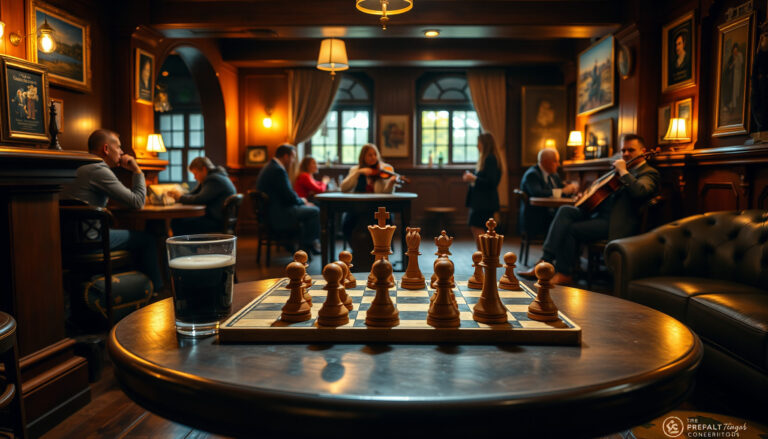
Medellín, known as the “City of Eternal Spring”, not only stands out for its culture, innovation and landscapes, but also for its growing chess scene. In recent years, Chess has gained an important space in the lives of its inhabitants, becoming a tool for social transformation, education and intellectual development. From traditional clubs to community initiatives, The city is home to a variety of spaces where both beginners and experts can hone their skills, compete and share your passion for this ancient game.
Among the most prominent clubs, some have managed to transcend the borders of the board to positively impact communities, especially in vulnerable areas. One of the names that resonates strongly is Isolated Pawn, a project that has brought chess to all the communes of Medellín, democratizing access to this mental sport and promoting values such as discipline, strategic thinking and inclusion. In this article, we will explore the best chess clubs in the city, with special emphasis on the innovative work of Peón Aislado and his work in the different communes, demonstrating how chess can be a bridge to equity and social development.
The chess scene in Medellín: a growing landscape
Medellín has established itself as one of the cities with the greatest chess activity in Colombia, thanks to a combination of factors that include the support of public institutions, private initiative and the commitment of non-profit organizations. According to data from the Colombian Chess Federation, The city has more than 50 registered clubs, many of whom actively participate in local tournaments, national and even international. This dynamism is not accidental: responds to a strategy to promote chess as a pedagogical and inclusion tool, especially in contexts where education and sport can be a lifeline for young people at risk.
Among the most recognized clubs are:
- Medellín Chess Club: Founded in 1985, It is one of the oldest and most prestigious in the city. It has trained multiple national champions and has hosted important events, like the National Chess Championship. Their focus is on high performance competition, although it also offers training programs for beginners.
- Antioquia Chess Academy: Winner of the Liga Antioqueña de Ajedrez, This academy specializes in the detection and training of young talents. It has a team of certified coaches and has participated in the organization of intercollegiate tournaments, encouraging the practice of chess from an early age.
- University of Antioquia Chess Club: This space, located on the university campus, It not only serves as a meeting point for students, but also for the community in general. Offers free workshops and internal tournaments, promoting chess as a complement to academic training.
- Isolated Pawn: Although it is not a traditional club, Its impact on the city is undeniable. This project, born in 2015, has taken chess to more than 20 communes of Medellín, working with vulnerable populations and using play as a tool for social transformation. Its innovative approach differentiates it from other spaces, as we will see later.
The growth of chess in Medellín has also been driven by events such as the Medellín International Chess Festival, that attracts players from all over the world and positions the city as a benchmark in the Latin American chess field. However, beyond the competition, What really stands out is the commitment of these clubs and projects to the community, especially in areas where access to extracurricular activities is limited.
Isolated Pawn: chess as a tool for social transformation
If there is a project that has revolutionized the way of understanding chess in Medellín, that is Isolated Pawn. Founded by a group of chess enthusiasts and social workers, This group has managed to take the game to places where it was previously unthinkable, as peripheral neighborhoods, community centers and even detention centers. your name, inspired by a seemingly weak but strategically valuable piece, reflects his philosophy: demonstrate that even in adverse conditions, chess can be an engine of change.
The work of Peón Aislado is based on three fundamental pillars:
- Education and training: Through free workshops, the project teaches the fundamentals of chess to children, young and old, with a pedagogical approach that goes beyond the rules of the game. Skills such as concentration are worked on, patience, decision making and critical thinking, essential skills for everyday life.
- Inclusion and equity: Peón Aislado has prioritized its work in communities with high vulnerability rates, like the Commune 13, at the Commune 8 (Beautiful Villa) and the Commune 1 (Popular). In these territories, Chess becomes an alternative to violence and negative leisure, offering young people a safe space to develop their skills.
- Competition and motivation: Although the approach is not competitive, the project organizes internal tournaments and participates in local events to motivate its participants. Many of the young people who have passed through Peón Aislado have managed to stand out in regional tournaments, proving that talent has no socioeconomic boundaries.
One of the most innovative aspects of Peón Aislado is its teaching methodology, that combines chess with other disciplines such as art, music and literature. For example, In some workshops, stories or songs are used to explain strategic concepts, making learning more dynamic and accessible. Besides, The project has developed alliances with public schools to integrate chess into the school curriculum, with notable results in the academic performance of students.
The impact of Peón Aislado has been recognized nationally and internationally. In 2019, the project received the award “Social Innovation” awarded by the Mayor's Office of Medellín, and in 2021 was selected as one of the most outstanding initiatives in the World Forum of Cities for Peace. These recognitions not only validate their work, but also inspire other clubs and organizations to adopt similar models of social intervention through chess.
Chess in the communes: stories of improvement and hope
The work of Peón Aislado and other clubs in the communes of Medellín has left stories that deserve to be told. In a city marked by inequality and violence, chess has proven to be a catalyst for change, especially for young people who find on the board an escape route and an opportunity to dream big.
In the common 13, one of the most stigmatized territories of Medellín, Peón Aislado has worked with more than 500 children and young people in the last five years. One of the most emblematic cases is that of John David*, a teenager who, after joining the workshops, managed to improve his school performance and win an intercollegiate tournament. “Before I only thought about going out, but chess taught me to think before acting”, comments Juan David, who today is a project monitor and helps other young people discover the game.
In the common 8 (Beautiful Villa), Chess has served as a tool to rebuild the social fabric. After years of armed conflict, Many young people from this area found a space for reconciliation in the Peón Aislado workshops. Maria Camila*, a young woman from 16 years, reports: “Here it doesn't matter what neighborhood you come from or what you've done before. On the board we are all equal, and that has given me confidence to move forward.” María Camila today is one of the best players in her commune and dreams of representing Colombia in an international tournament.
These stories are not isolated. In the common 1 (Popular), he Medellín Chess Club has implemented a scholarship program for talented young people who do not have the resources to pay for private classes. Thanks to this support, several of them have managed to qualify for national tournaments and obtain federative titles. “Chess saved my life”, says Carlos*, a young man who, after losing his brother in an act of violence, He found in the club a refuge and a reason to move forward.
The success of these projects in the communities would not be possible without the support of the community and institutions.. The Medellín Mayor's Office, through programs like “Medellín City of Chess”, has allocated resources for the creation of public spaces with chess boards and the holding of neighborhood tournaments. Besides, private companies like EPM y Bancolombia have sponsored initiatives to bring chess to vulnerable areas, recognizing its potential as a tool for social transformation.
Challenges and opportunities for the future of chess in Medellín
Despite the advances, chess in Medellín still faces significant challenges. One of the main ones is the lack of infrastructure in some communities. Although there are clubs and projects that reach these territories, many young people do not have access to boards, pieces or spaces suitable for practicing. Peón Aislado has attempted to mitigate this problem by donating materials and creating “street chess”, but a greater effort is required on the part of the public and private sector to guarantee that all children and young people in the city can enjoy the game.
Another challenge is the sustainability of projects. Many clubs and organizations depend on volunteers and donations, which hinders its long-term growth. Isolated Pawn, For example, has managed to maintain itself thanks to alliances with companies and foundations, but its model could be replicated in other communities if there was greater institutional commitment. The creation of a municipal chess fund could be a solution, allowing projects to have stable resources to operate.
Regarding opportunities, Chess in Medellín has enormous potential to continue growing. The city could become a chess hub of Latin America, attracting international tournaments and positioning itself as a destination for players and tourists interested in the game. To achieve this, would be key:
- Strengthen training of coaches: Having more professionals trained in chess pedagogy would allow expanding teaching programs and improving the quality of workshops.
- Encourage female participation: Although chess has historically been dominated by men, In Medellín there is a growing interest on the part of women. Projects like “Chess for them”, promoted by the Antioquia Chess League, They seek to close this gap and encourage female participation in tournaments and clubs..
- Integrate chess into public policies: That chess is recognized as a pedagogical and inclusion tool in the city's development plans would allow more resources to be allocated to its promotion.. Countries like Spain and Argentina have already included chess in their school curricula, and Medellín could follow this example.
- Create a network of clubs and projects: Greater coordination between the different chess actors in the city (clubs, gyms, social projects) would facilitate the exchange of experiences and the creation of joint programs. Isolated Pawn has already taken steps in this direction, collaborating with other clubs to organize tournaments and workshops.
The future of chess in Medellín also depends on technological innovation. Platforms like Chess.com y Lichess have gained popularity among young people, and some clubs are already using these tools to complement their in-person classes. However, It is important to ensure that access to technology is not a privilege, but a right for all the young people of the city.
Conclusions: chess as a bridge to a more equitable Medellín
Medellín has shown that chess is much more than a game: It is a powerful tool for education, inclusion and social transformation. Through traditional clubs such as Medellín Chess Club and innovative projects such as Isolated Pawn, the city has managed to bring chess to every corner, especially to those where it is needed most. The stories of improvement of young people like Juan David, María Camila and Carlos are a testimony of the impact that this mental sport can have on people's lives., breaking cycles of violence and opening doors to new opportunities.
However, the path is not complete yet. So that chess continues to grow in Medellín, it is necessary to overcome challenges such as lack of infrastructure, the sustainability of the projects and the integration of the game in public policies. The city has the potential to become a chess benchmark at the Latin American level, but this will require a joint effort between institutions, companies, clubs and the community in general. Projects like Peón Aislado have shown that, with creativity and commitment, It is possible to use chess as a bridge to a more equitable and just society.
For chess lovers, Medellín offers a unique setting: a city where the game is not only played in luxury halls, but also in the streets, in parks and community centers. A city where every game is an opportunity to learn, to compete and, above all, to grow. If chess is the “sport of the mind”, Medellín is showing that it can also be the sport of the heart, capable of uniting people beyond their differences and building a better future for all.