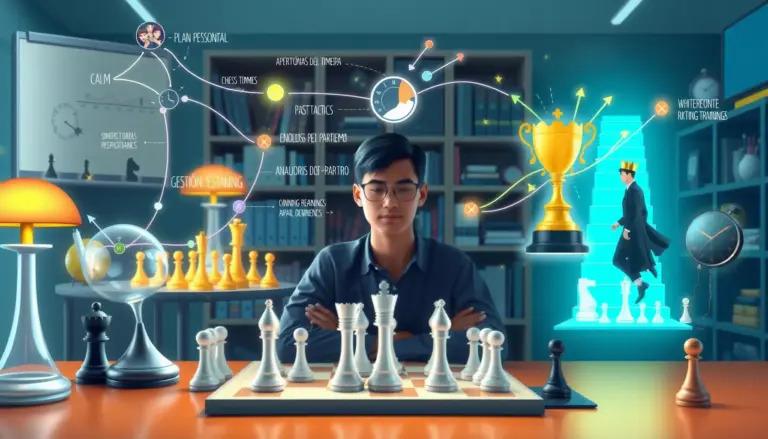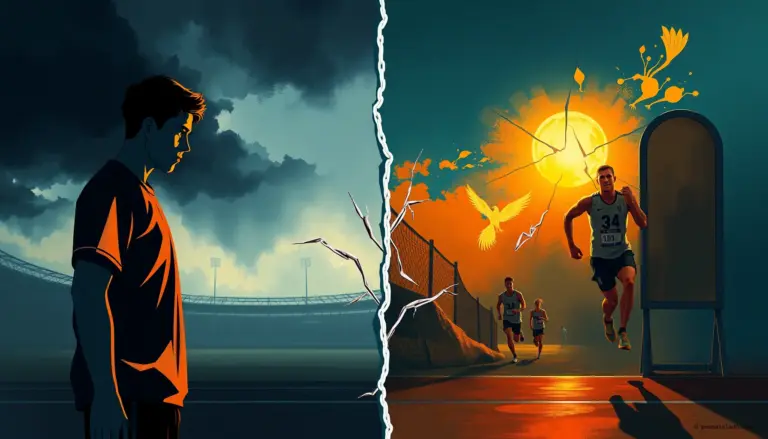
In the shadows of the prison walls, where time seems to stand still and hope often fades, Chess has emerged as an unexpected tool of transformation in Argentina. This ancient strategy game, beyond its fame as an intellectual pastime, has become a bridge towards social reintegration, emotional rehabilitation and reconstruction of broken lives. In a context where violence, mistrust and lack of opportunities dominate the daily lives of prisoners, the board 64 Casillas offers something that many thought was lost: a second chance. Through pioneering programs in Argentine prisons, Chess not only teaches patience and critical thinking, but also sows seeds of empathy, discipline and self-esteem. This article explores how a seemingly simple game is changing complex realities, proving that even in the darkest places, The human mind can find light through strategy and reflection.
Chess as a rehabilitation tool: beyond the game
Chess in Argentine prisons is not simple entertainment, but a structured program with clear objectives: reduce recidivism, improve mental health and foster social-emotional skills. Studies carried out in prison units such as Ezeiza or Devoto reveal that inmates who participate in chess workshops show a decrease in 30% in violent behavior and a significant increase in their ability to resolve conflicts peacefully. This is because the game requires concentration, impulse control and the ability to anticipate consequences, skills that are directly transferable to everyday life.
But the impact goes beyond the behavioral. Chess acts as a mirror of one's own decisions, forcing players to take responsibility for their movements. In an environment where blame is often externalized, this self-criticism exercise is revolutionary. Besides, the game encourages patience, a rare virtue in contexts of confinement where frustration and anxiety usually dominate. Inmates learn that each play takes time, that mistakes are learning opportunities and that victory is not immediate, but the result of a process.
Programs are usually taught by trained instructors, many of them ex-prisoners who found a way out in chess. Your testimony is key, since they show that change is possible. These mentors not only teach openings and defenses, but they also share their own stories of improvement, creating a bond of trust that transcends the board.
From cell to board: stories that inspire
Behind every game there is a redemption story. One of the most emblematic cases is that of Jorge “The Master”, a former inmate who passed 12 years in prison for crimes related to drug trafficking. During his sentence, discovered chess almost by chance, when a cellmate taught him the basic movements. What started as a hobby turned into an obsession.: Jorge studied strategy books, analyzed games of grandmasters and, little by little, developed an innate talent for the game.
Upon release, Jorge had not only changed his perspective on life, He also became a chess instructor in the same prison where he was imprisoned.. His work is not limited to teaching openings such as the Sicilian or the Queen's Gambit; he teaches to think. “Here we don't just move pieces, we move minds”, he usually tells his students. His story is an example of how chess can break the cycle of violence and marginality..
Another case is that of Maria Lopez, a woman who served time in the Unit 31 from Ezeiza. María came to chess as a way to escape depression and isolation. At first, it was difficult for him to concentrate, but over time he discovered that the game gave structure to his days. “Chess taught me that, even if the rival is strong, There is always a play that can change the course”, comment. Hoy, María is one of the promoters of the first women's chess tournament in Argentine prisons, demonstrating that the game has no gender and that its transformative power is universal.
The psychological impact: how chess rewires the mind
Prolonged confinement generates deep psychological consequences: anxiety, depression, post-traumatic stress disorders and a feeling of depersonalization. In this context, chess acts as an unconventional therapy, but highly effective. Neuroscientists like the doctor Facundo Manes have pointed out that the game stimulates areas of the brain related to planning, memory and decision making, which helps counteract the negative effects of confinement.
A study carried out by the University of Buenos Aires in collaboration with the Federal Penitentiary Service revealed that inmates who participated in chess workshops showed an improvement in 40% in their capacity for emotional self-regulation. This is because the game forces participants to manage frustration, to tolerate uncertainty and develop resilience. In a game, there is no room for impulsiveness; every move must be calculated, which translates into a greater ability to control aggressive reactions.
Besides, chess encourages theory of mind, that is to say, the ability to understand the intentions and emotions of another. In a prison environment, where distrust is the norm, this skill is crucial. The inmates learn to anticipate the opponent's moves, but also to read their expressions, their gestures and even their silences. This practice carries over into everyday interactions, reducing conflicts and improving coexistence.
Challenges and future of chess in Argentine prisons
Despite its benefits, Chess in prisons faces significant obstacles. The main one is the lack of resources: many penitentiary units do not have boards, watches or appropriate teaching materials. Besides, the rotation of inmates and the bureaucracy of the system make it difficult for the programs to continue. In some prisons, The workshops depend on the will of a director or the initiative of non-governmental organizations, which makes them vulnerable to administrative changes.
Another challenge is stigma. many inmates, especially those with long sentences, they see chess as a game “for intellectuals” o “for weak”. Overcoming this resistance requires approach strategies, such as internal tournaments with symbolic prizes or the participation of public figures who have gone through similar situations. In this sense, the support of professional players, like the great teacher Pablo Zarnicki, has been key to legitimizing chess as a tool of change.
The future of chess in Argentine prisons depends on two factors: the institutionalization of the programs and their expansion to more units. At the moment, only the 15% of the country's prisons have regular workshops, a figure that must grow. Organizations like Chess Foundation for Coexistence They work so that chess is recognized as an integral part of reintegration programs, with state funding and constant training for instructors.
It is also essential to measure the long-term impact. Do these programs reduce recidivism? Are living conditions in prisons improving?? Preliminary studies suggest yes, but more data is needed to convince the authorities. In countries like Norway or the United States, where chess is part of prison rehabilitation, the results are encouraging: lower rates of violence, greater employability upon release and a reduction in drug consumption within prisons.
Conclusions: checkmate to exclusion
Chess in Argentine prisons is much more than a game: It's a metaphor for life. In each game, Inmates learn that decisions have consequences, that patience is a virtue and that, even in adverse situations, there is always a possible play. Jorge's stories, María and so many others show that change is possible when you provide a tool that awakens the mind and spirit..
However, the real challenge is not on the board, but in society. As long as the prison system continues to be a reflection of exclusion and marginality, initiatives like this will be patches on a deeper wound. Chess can be a first step, but real reintegration requires comprehensive public policies: education, job, mental health and real opportunities upon release.
Argentina has the opportunity to lead a rehabilitation model based on chess, but to do so you must overcome bureaucratic obstacles and skepticism. The game has already demonstrated its transformative power; Now it is the turn of the institutions to give it the place it deserves. As the world champion once said Garry Kasparov: “Chess is the gymnastics of the mind”. In Argentine prisons, that gymnastics is saving lives, one game at a time.