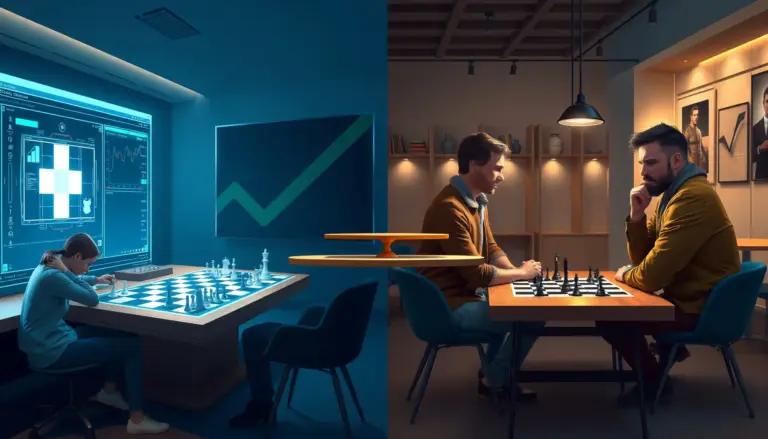
In the heart of Europe, where Scandinavian design merges with a philosophy of life that prioritizes well-being, Denmark emerges as a unique destination for chess lovers. Copenhagen, your capital, It is not only famous for its minimalist aesthetics and its culture of hygge —that Danish concept that celebrates warmth, comfort and small pleasures—, but also for a vibrant and welcoming chess scene. Here, the board 64 Casillas becomes a bridge between strategic tradition and relaxed modernity, where casual games in candlelit cafes compete in popularity with professional tournaments in spaces designed to inspire. This article explores how chess in Copenhagen transcends mere gameplay to become a cultural experience., where the hygge and checkmate intertwine in a perfect balance between intellectual challenge and emotional well-being.
Chess as a reflection of hygge: more than a game, a philosophy
He hygge It's not just a fad, but a philosophy rooted in Danish culture that values the presence, human connection and creating environments that foster happiness. In Copenhagen, This mentality extends to chess in a way that goes beyond competition.. Local chess clubs, like him Copenhagen Chess Club —one of the oldest in Europe, founded in 1866—, have adopted this spirit, transforming games into social experiences where the important thing is not just to win, but enjoy the process.
In these spaces, chess is played with a different attitude: games are usually accompanied by freshly brewed coffee, Homemade cakes and conversations that flow naturally. It is not uncommon to see players of all ages and levels sharing a table, analyzing movements with laughter or simply observing how others develop their strategies. This relaxed atmosphere contrasts with the traditional image of chess as a cold and calculating sport., proving that in Denmark, even the most intellectual discipline can be warm and accessible.
Besides, he hygge manifests itself in the details: carved wooden boards, handcrafted pieces and spaces with soft lighting that invite concentration without sacrificing comfort. Even the most serious tournaments, like him Copenhagen Chess Challenge, incorporate breaks to socialize, with common areas where participants can relax and share impressions. This fusion between the competitive and the welcoming is what makes Danish chess unique..
Copenhagen: an urban board where chess comes to life
The Danish capital is not only home to chess clubs, but has integrated the game into its urban landscape in innovative ways. One of the most notable examples is the Chess Park in the Nørrebro neighborhood, a public space where giant outdoor boards invite passersby to stop and play an impromptu game. This park, designed in collaboration with local artists, not only encourages the practice of chess, but also makes it an element of social cohesion, attracting tourists, neighbors and occasional players.
But chess in Copenhagen is not limited to physical spaces. The city has been able to take advantage of its reputation as a design capital to create unique experiences. For example, he Hotel Sanders, a luxury establishment in the historic center, offers its guests private games in its library, where the chess pieces are hand carved and the boards are works of art. This initiative reflects how chess has become a symbol of sophistication and hospitality, aligned with Danish values of understated elegance and attention to detail.
Another emblematic case is Cafe Petersburg, a historic venue that has been a meeting point for chess players since the beginning of the 20th century. Here, chess is served together with sandwich (the classic danish sandwich) and a glass of wine, creating an environment where gastronomy and strategy complement each other. These spaces show that in Copenhagen, chess is not just a hobby, but an integral part of everyday life, accessible to everyone and at any time.
From Magnus Carlsen to the children of the neighborhoods: chess as a tool of inclusion
Denmark is not only known for its culture of hygge, but also for being the birthplace of one of the best chess players in history: Magnus Carlsen. Although the world champion was born in Norway, His influence on Scandinavian chess is undeniable, and his legacy has inspired a new generation of Danish players. However, The most notable thing is how the country has used chess as a tool for social inclusion, especially among the youngest.
Programs like Chess for Life (“Chess for Life”) They bring the game to schools and community centers in disadvantaged neighborhoods, using chess as a means to develop cognitive skills, improve concentration and promote self-esteem. These projects, funded by government and nonprofit organizations, show that chess can be a bridge to reduce inequalities and promote equal opportunities. In Copenhagen, It is not unusual to see children playing in parks or in free workshops, learning that the board is a space where everyone, regardless of origin, can compete on equal terms.
Besides, chess has been integrated into formal education. Schools like Østerbro International School include chess in their curriculum as a pedagogical tool, teaching students to think critically and strategically. This approach reflects the Danish mentality of seeing chess not only as a sport., but as a discipline that enriches the lives of those who practice it, from the little ones to the adults.
Events that unite tradition and modernity: tournaments with a Danish soul
Copenhagen is home to some of the most innovative chess tournaments in Europe, where tradition mixes with avant-garde proposals. One of the most notable is the Copenhagen Chess Festival, an annual event that attracts players from all over the world and is characterized by its inclusive approach and festive atmosphere. Unlike other tournaments, where seriousness is the norm, Here the games take place in open spaces, with live music and side activities celebrating Danish culture.
Another unique event is the Chess & Beer, an informal tournament held in local bars and breweries, where participants can enjoy a pint while calculating their moves. This initiative, which emerged as a way to bring chess to a wider audience, has gained popularity for its lighthearted approach and ability to break gaming stereotypes. In Denmark, Even the most competitive tournaments have a touch of hygge, remembering that chess is, first of all, a human experience.
But perhaps the most emblematic event is the Nordic Chess Championship, which brings together the best players from the Nordic countries in an atmosphere of camaraderie and respect. This tournament, which is celebrated every two years, It is an example of how chess can be a meeting point between cultures, where competition is developed in a framework of friendship and collaboration. In Copenhagen, tournaments are not just competitions, but celebrations of the chess community, where each game is an opportunity to learn and connect.
Conclusions: Danish chess as a model of equilibrium
Denmark has achieved something extraordinary: transform chess into an experience that goes beyond the board, integrating it into your culture of well-being and community. In Copenhagen, the game is not limited to competition or technical training, but it is lived as a social practice, educational and even therapeutic, where the hygge and checkmate coexist in harmony. This unique approach shows that chess can be accessible, inclusive and, above all, human.
From historic clubs to public parks, through educational programs and innovative tournaments, Denmark has created an ecosystem where chess flourishes in all its forms. It's not just about winning games, but to enjoy the process, to connect with others and to find in the game a reflection of Danish values: simplicity, respect and joy in the little things. In a world where technology and speed dominate our lives, chess in Copenhagen reminds us of the importance of stopping, think and share.
For chess lovers, Denmark is a must-see destination, not only because of its competitive scene, but because of the way the game is integrated into everyday life. And for those looking for inspiration on how to live better, The Danish model offers a valuable lesson: that even in the most complex challenges, like a game of chess, there is always room for warmth, the connection and, of course, some hygge.