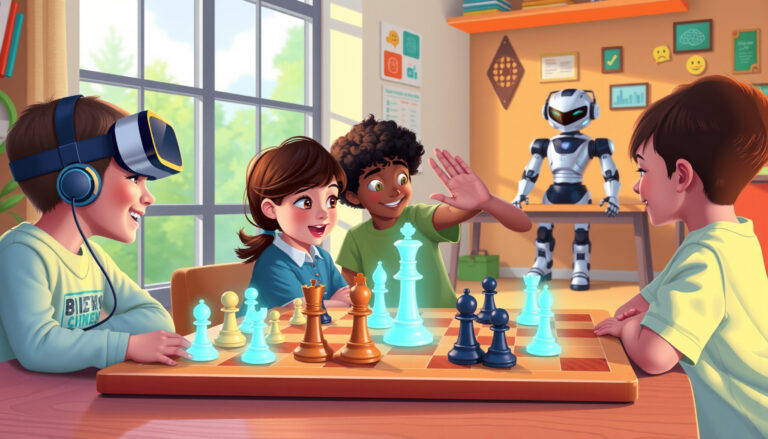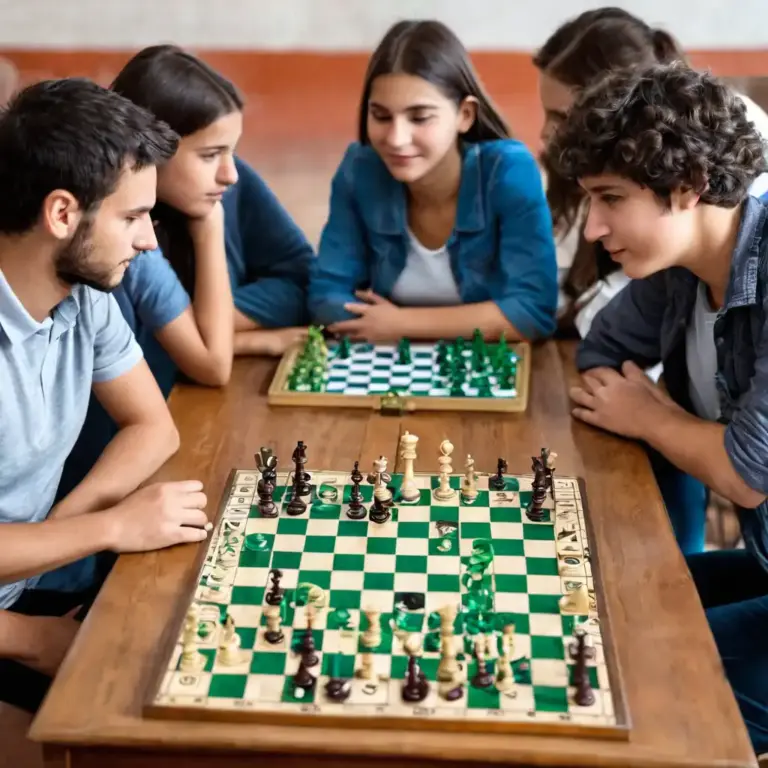
In the heart of Silicon Valley, where algorithms dictate the future and startups are born and die in a matter of months, an unexpected phenomenon has arisen: chess has become the new status symbol. It's not just a game, but from an intelligence statement, strategy and belonging to an elite that values the mind above all else. While the digital world accelerates life to unsustainable limits, The titans of technology find on the board 64 Casillas a refuge where patience, precision and deep thinking are common currency. Why this ancient game, that was once associated with dusty libraries and retirement clubs, now shines in the Google offices, Apple y Tesla? The answer goes beyond fads: Chess encapsulates the values that define the new technological aristocracy.
In this article, We will explore how chess has become a secret language of the global elite, a battlefield where the brightest minds and, above all, a mirror of the ambitions and contradictions of Silicon Valley. From blitz games in Palo Alto coffee shops to underground tournaments between unicorn founders, We will find out why this game is not just a hobby, but a tool of power, networking and intellectual self-defense in a world dominated by speed and superficiality.
Chess as a currency in the attention economy
In an ecosystem where time is the most scarce resource, Chess has become a way to filter out those who deserve attention. Startup founders, VC investors and Big Tech executives have no patience for empty talk. They prefer to sit in front of a board, where each movement reveals more about the personality, the analytical skills and resilience of your opponent than any business pitch. As the article points out “What your chess style says about your personality”, an aggressive player like Bobby Fischer or a positional strategist like Magnus Carlsen not only reflect tactical preferences, but also deep psychological traits. In Silicon Valley, where decisions are made in milliseconds and mistakes can cost millions, Understanding how your interlocutor thinks is an invaluable advantage..
But chess is not just a personality test; It's a perfect metaphor for decision making under pressure.. In a world where markets fluctuate with tweets and regulations change overnight, the ability to anticipate movements, calculating risks and staying calm under fire is a critical skill. Companies like Google and Facebook have incorporated chess into their leadership programs, not like a simple game, but as a tool to train the mind in solving complex problems. As explored in “Chess and companies: keys to leading with strategy”, the principles of the game - center control, parts development, calculated sacrifices—are directly applicable to team management, competition in markets and disruptive innovation.
Besides, Chess acts as a social equalizer in an environment where hierarchies are fluid and status is measured in intellectual capital.. An engineer from 22 years can sit across from a CEO of 50 y, on the board, both start from the same conditions. This inherent meritocracy in the game makes it attractive to a generation that distrusts traditional titles and values pure skill.. In Silicon Valley, where the “fail fast” It's a mantra, chess teaches that mistakes are lessons, not failures, and that true mastery is built with patience and repetition.
The board as a refuge in the era of distraction
We live in the era of fragmented care, where the notifications, algorithms and information overload have reduced our ability to concentrate to alarming levels. In this context, chess emerges as an antidote to digital chaos. Requires—and rewards—absolute concentration, inner silence and the ability to immerse yourself in a problem for hours. As pointed out in “Chess: the last refuge of pure concentration”, Gaming is one of the few activities that still requires a state of uninterrupted flow., similar to what monks experience in meditation or artists in their creative process.
For Silicon Valley residents, whose work life consists of jumping from one meeting to another, from an urgent email to a product crisis, chess offers something almost subversive: the opportunity to disconnect. It is no coincidence that figures like Elon Musk or Sergey Brin have confessed their passion for the game. In an environment where multitasking is the norm, chess forces you to do one thing at a time, and do it well. This practice of forced mindfulness is especially valuable in a culture that glorifies “always on” but suffers the consequences of burnout.
But chess is not just an escape; It is also a training for the modern mind. In a world where AI and algorithms are redefining what it means to be human, the game teaches skills that machines have not yet mastered: creativity, intuition and the ability to improvise. While chess engines like Stockfish and AlphaZero can calculate millions of positions per second, Humans continue to excel at understanding abstract patterns, empathy with the opponent and adaptation to the unexpected. As analyzed in “Chess and AI: how machines redefined gaming”, The relationship between humans and machines in chess is a microcosm of what is to come in other areas: a symbiosis where technology enhances, but it does not replace, human intelligence.
Chess as the language of the global elite
In a world where connections are everything, Chess has become a universal language that transcends borders, languages and cultures. It's not just a game, but a code shared by a global elite that includes everything from technology moguls to political leaders and artists. As explored in “Chess as the secret language of the global elite”, This language allows complex ideas to be communicated without words., establish hierarchies based on skill and create strategic alliances in an environment where trust is a rare commodity.
In Silicon Valley, where networks determine the success of a startup, chess acts as a social filter. Playing a game with someone is a way to test their intelligence, your work ethic and your ability to handle pressure. Informal tournaments in the offices of companies like Stripe or Airbnb are not just entertainment; They are opportunities to identify talent, close deals and, in some cases, even recruit. chess, with its combination of logic and creativity, It is seen as a reliable indicator of how a person will approach challenges in the real world.
But the power of chess as a language goes beyond the professional.. In an era where ideologies are polarized and political conversations often end in confrontation, the board offers neutral ground. Here, differences are resolved with movements, not with insults, and victory depends on skill, not from rhetoric. This quality has turned chess into a diplomatic tool, used at both international summits and high-level meetings in Davos. In a divided world, chess remembers that, in the end, we all play by the same rules.
The dark side: when chess becomes an obsession
However, like any status symbol, chess also has its dark side. In Silicon Valley, where competition is fierce and success is measured in unforgiving metrics, gambling can become a time-consuming obsession, energy and mental health. The pressure to improve, for winning, Demonstrating intellectual superiority can lead to a spiral of anxiety and self-criticism.. As analyzed in “Psychological errors in chess that ruin your game”, the fear of losing, Overconfidence and an inability to handle frustration are common pitfalls that affect even the most talented players..
Besides, Chess can be a double-edged sword in an environment where intelligence is the main asset. In a culture that values brilliance above all else, Players can fall into the trap of measuring their self-esteem based on their Elo rating or their tournament victories.. This is especially dangerous in Silicon Valley, where impostor syndrome and burnout are endemic problems. chess, instead of being a refuge, can become another source of stress, another metric to be judged by.
But perhaps the biggest risk is that chess, in its most elitist version, reinforce social divisions. In a world where access to education and opportunities remains unequal, the game can become another class marker. Children who grow up in privileged environments, with access to trainers, books and tournaments, They start with an overwhelming advantage over those who learn to play in a park or a public library. In Silicon Valley, where the gap between rich and poor widens every day, chess can be both a bridge and a wall.
The future of chess in the digital age
Despite its contradictions, chess is experiencing an unprecedented renaissance, driven by technology and social media. Platforms like Chess.com and Lichess have democratized access to the game, allowing millions of people around the world to compete, learn and connect. In Silicon Valley, where innovation is the currency, chess has found a new home in the digital world. Los streamers de Twitch, TikTok influencers and Netflix series like “The Queen’s Gambit” They have brought the game to audiences that have never been interested in it before.
But this rise also raises questions about the future of chess. Will it become just another product of the attention economy?, where depth is sacrificed for the sake of virality? Or will it maintain its essence as a game that rewards patience, strategy and long-term thinking? In a world where everything speeds up, chess offers silent resistance, a reminder that some things—like intelligence, creativity and human connection—cannot be rushed.
For Silicon Valley, chess is more than a game; It is a mirror of its own contradictions. In an ecosystem that celebrates innovation but also obsession, meritocracy but also inequality, Chess reflects both the ideals and shadows of the new digital economy. and maybe, on that board 64 casillas, the key to navigating the challenges of the future is also found: a balance between speed and depth, competition and collaboration, success and well-being.
Chess has ceased to be a hobby and has become a symbol of an era.. In Silicon Valley, where the future is written in code and dreams are measured in market valuations, the ancient game remains a reminder that, in the end, What really matters is not who has the most pieces, but who plays the game better.