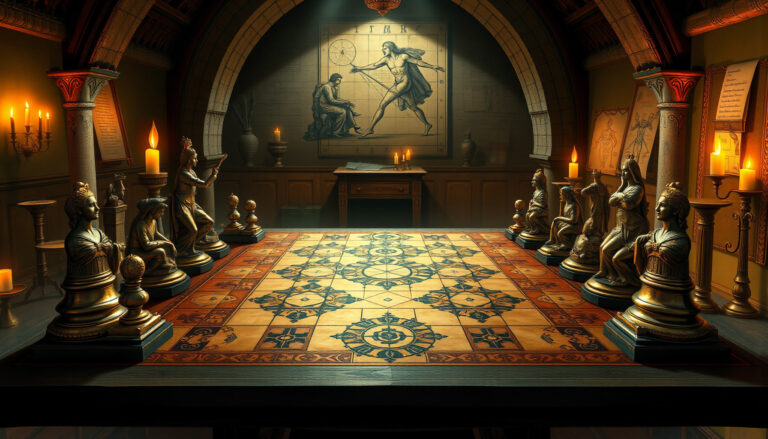
Chess is much more than just a board game.: It is a pedagogical tool with centuries of history that has demonstrated benefits in cognitive development, emotional and social of those who practice it. In a world where education constantly seeks to innovate to form more critical students, creative and resilient, a key question arises: Should chess be a compulsory subject in schools? This discussion not only involves academic aspects, but also values such as discipline, patience and the ability to make decisions under pressure. Throughout this article, We will explore the arguments for and against this proposal, analyzing its impact on learning, social inclusion and comprehensive development of students. From its potential to improve math achievement to its role in reducing school violence, Chess is presented as a discipline with multiple facets that deserve to be evaluated in the current educational context..
Cognitive and academic benefits of chess in childhood
Chess is not just a strategy game, but a mental gym that exercises fundamental skills for learning. Studies carried out in countries like Spain, Armenia and the United States have shown that students who practice chess regularly improve their ability to concentrate, memory and logical thinking. For example, a report from the University of Trier (Germany) revealed that children who received chess classes for a year increased their mathematics performance by a 15%, especially in areas such as problem solving and mental calculation.
But the benefits go beyond traditional subjects. Chess encourages critical thinking, as it forces players to analyze multiple variables before making a decision. This skill is transferable to other areas of knowledge, like science or programming, where the ability to anticipate consequences is key. Besides, the game teaches students to manage the error: in chess, a bad play can lead to defeat, but it is also an opportunity to learn and correct strategies. This growth mindset is essential in an educational system that seeks to create resilient students..
Another relevant aspect is its impact on the creativity. Although chess has fixed rules, The number of possible moves in a game is almost infinite, what stimulates the imagination. Players like Magnus Carlsen and Judit Polgár have stood out for their ability to find innovative solutions in seemingly lost positions., a skill that can be applied in fields such as art or engineering.
Chess as a tool for inclusion and educational equity
One of the most powerful arguments in favor of incorporating chess into schools is its ability to level the playing field among students from different socioeconomic backgrounds. Unlike other sports or extracurricular activities that require expensive equipment or special facilities, chess only needs a board and pieces, which makes it accessible to any educational center, even in rural or resource-limited areas.
In countries like Armenia, where chess is mandatory since 2011, a reduction in achievement gaps has been observed between students from different social strata. This is because chess does not depend on prior knowledge or physical abilities., but the ability to think and plan. Besides, the game encourages gender equality: although historically it has been a sport dominated by men, In schools it has become an activity where girls and boys compete on equal terms, breaking stereotypes.
Another key aspect is its potential to integrate students with special educational needs.. Chess has been shown to be beneficial for children with ADHD, autism or intellectual disabilities, since it helps them improve their concentration, patience and social skills. In some cases, It has even been used as a therapy to develop theory of mind (the ability to understand the intentions of others), something especially useful in children with autism spectrum disorders.
Challenges and limitations of implementing chess in the school curriculum
Despite its benefits, The mandatory nature of chess in schools faces several practical and conceptual obstacles. The first is the curriculum saturation. In many countries, study plans are already overloaded with traditional subjects, and adding a new one could generate resistance from teachers, parents and educational authorities. Besides, there is a risk that chess will become a more, losing its playful essence and becoming a burden for students.
Another challenge is the teacher training. Not all teachers have advanced chess knowledge, and teaching the game effectively requires more than knowing how to move the pieces. Training programs would be needed so that educators can integrate chess into their classes in a transversal way., linking it with mathematics, history or even physical education. Without this preparation, Chess could remain a recreational activity with no real impact on learning.
We must also consider the cultural differences. In some countries, Chess has a deep-rooted tradition and is seen as a prestigious activity, while in others it can be perceived as an elitist or boring game. This could generate rejection in communities where there is no prior chess culture., especially if its educational value is not adequately explained.
Finally, there is the issue of assessment. How to measure student progress in chess? Would your ability to play be evaluated, your understanding of strategies or your ability to apply what you have learned in other areas? Without clear criteria, chess could become a subjective subject, difficult to qualify and, therefore, undervalued.
International experiences: lessons from countries where chess is mandatory
Several countries have implemented chess in their educational systems with varying results., which offers valuable lessons for those considering adopting this measure. Armenia is the most notable case: from 2011, Chess is a compulsory subject in primary school, with two hours per week. The results have been positive: Armenian students have improved their performance in mathematics and science, and the country has become a chess power, with players like Levon Aronian standing out worldwide. However, Armenia's success is due in part to its chess tradition and investment in teacher training.
In Spain, some autonomous communities, like Andalusia and Catalonia, have incorporated chess as an extracurricular or transversal activity. Although it is not mandatory, the results are encouraging: Schools that have implemented it report improvements in student concentration and behavior. Nevertheless, The lack of uniformity in its application has limited its impact at the national level.
In USA, the program “Chess in Schools” has been successful in cities like New York, where it has been used to reduce school violence and improve academic performance in disadvantaged neighborhoods. However, its implementation has been uneven, depending on the will of the school directors and the availability of funds.
These examples show that chess can be a powerful tool, but its success depends on several factors: teacher training, institutional support, adaptation to cultural context and gradual implementation. Countries like Armenia show that, with a well planned strategy, Chess can be effectively integrated into the curriculum, but they also reveal that it is not a magic solution: requires resources, time and commitment.
Conclusions: A necessary subject or an educational utopia?
The debate over whether chess should be mandatory in schools does not have a simple answer, but it does offer a deep reflection on the purpose of education in the 21st century. The cognitive benefits, social and emotional chess are undeniable: improves academic performance, encourages inclusion, develops soft skills such as patience and resilience, and can be a powerful tool to reduce inequalities. However, its implementation faces logistical challenges, cultural and pedagogical that cannot be ignored.
The key is to find a balance. Chess should not be seen as just another subject, but as a cross tool that can be integrated into other subjects, like mathematics or history, or even as an extracurricular activity with an impact on the comprehensive development of students. Countries like Armenia have shown that, with a well-designed strategy, it is possible to incorporate it effectively, but it is also true that not all educational systems are prepared to take on this challenge..
Ultimately, the question is not just whether chess should be compulsory, sino as could be implemented to maximize its benefits without falling into bureaucracy or superficiality. Perhaps the solution is not to impose it as another subject, but to promote it as a flexible pedagogical tool, adaptable to the needs of each school and each student. What is clear is that, in a world where education seeks to form critical and creative minds, chess has a lot to contribute. The final decision will depend on whether societies are willing to invest in education that goes beyond academics., to train people capable of thinking, plan and, above all, learn from your mistakes.