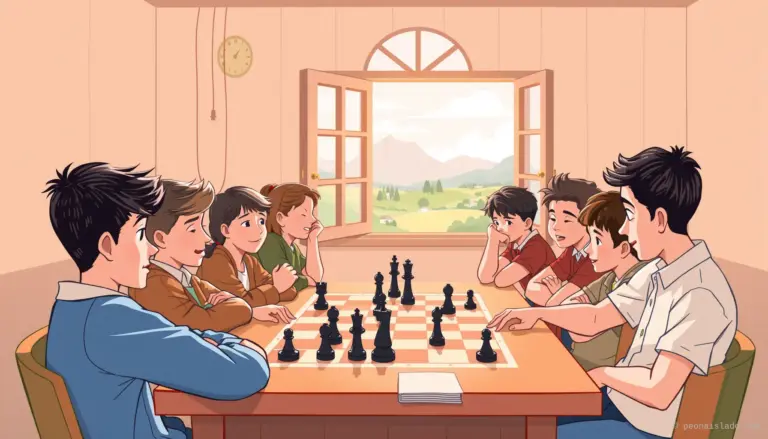
Chess is an ancient game that transcends simple entertainment., becoming a powerful educational and therapeutic tool. For people with Autism Spectrum Disorder (TEA), Attention Deficit Hyperactivity Disorder (ADHD) and Down syndrome, This mental sport offers unique benefits that go beyond cognitive. From improving concentration and patience to promoting social inclusion and emotional development, Chess has positioned itself as an ally in stimulating key skills. In this article, We will explore how chess can be adapted to the specific needs of these groups, analyzing its advantages, implementation strategies and testimonials that support its positive impact. We will discover why this game not only challenges the mind, but also opens doors to new forms of learning and human connection.
Chess as a cognitive stimulation tool
Chess is recognized for its ability to enhance executive functions such as memory, planning and logical thinking. In people with ASD, ADHD and Down Syndrome, These skills often present specific challenges, but the game acts as a structured training that can compensate for some difficulties.
For those who have TEA, Chess offers a predictable environment based on clear rules, which reduces anxiety associated with uncertainty. Studies such as those carried out by the University of Cambridge highlight that children with autism show significant improvements in the ability to anticipate movements and cognitive flexibility after practicing chess regularly.. Besides, The visual nature of the game makes it easy to understand patterns, something especially useful for those who process information better graphically.
In the case of ADHD, chess works like a “mental gym” requiring sustained concentration. Although impulsivity and distractibility are common features in this disorder, the game forces players to pause, analyze and make thoughtful decisions. A study published in the *Journal of Attention Disorders* found that children with ADHD who participated in chess programs improved their ability to self-regulate and reduced symptoms of hyperactivity. The key is to adapt the games to short sessions, avoiding frustration and reinforcing progressive achievements.
For people with Down syndrome, Chess stimulates short-term memory and logical sequencing, areas that often require additional support. Although the pace of learning may be slower, repetition of movements and simplification of rules (how to use colored boards or magnetic pieces) facilitate participation. Programs like *Chess for All* in Spain have shown that, with adaptations, Even players with intellectual disabilities can reach competitive levels, improving your self-esteem and social skills.
Emotional and social benefits of chess
Beyond the cognitive, Chess has a profound impact on emotional well-being and social interactions. For many people with ASD, ADHD or Down Syndrome, Communication and emotion management represent everyday obstacles. chess, however, acts as a bridge to these skills.
In it TEA, the game encourages theory of mind, that is to say, the ability to understand the opponent's intentions and emotions. Although this can be complex for some people on the spectrum, Chess provides a safe context to practice empathy. For example, Recognizing that your opponent is about to checkmate forces you to anticipate your thoughts, something that translates into improvements in social interaction outside the board. Besides, chess teaches how to manage frustration: losing a game becomes a lesson in resilience, and winning reinforces self-efficacy.
For those who have ADHD, Chess is an escape valve for accumulated energy. Unlike physical activities that can overstimulate, the game requires a calm but intense focus, which helps channel hyperactivity in a productive way. The feeling of accomplishment when solving a tactical problem or winning a game releases dopamine, a neurotransmitter whose regulation is key in ADHD. This not only improves the mood, but also reduces impulsivity in other areas of life.
In it Down syndrome, chess promotes inclusion and a sense of belonging. Participating in chess tournaments or clubs allows people with this condition to feel part of a community., breaking stereotypes about their abilities. Patience and respect for the rules of the game are transferred to other contexts, like the classroom or work. Besides, chess is an intergenerational activity: parents, brothers and friends can play together, strengthening family and social ties.
Strategies to adapt chess to specific needs
Not all people with ASD, ADHD or Down Syndrome learn or enjoy chess in the same way. For this reason, It is essential to adapt both the teaching method and the game environment to maximize its benefits. These are some strategies based on evidence and practical experiences.:
- For ASD:
- Use of visual materials: Boards with contrasting colors, pieces with textures or interactive applications that guide movements. This helps those who have difficulty with abstraction.
- Predictable routines: Establish fixed times to play and always follow the same steps (For example, greet, place the pieces, play, say goodbye). Repetition reduces anxiety.
- Focus on specific interests: If the player is passionate about horses, start teaching movements of this piece before others. This increases motivation.
- For ADHD:
- Short and dynamic games: Sessions of 10-15 minutes with clear objectives (ej.: “Today you will learn to checkmate with the rook and the king”). Avoid long games that generate boredom.
- Immediate positive reinforcement: Celebrate every achievement, no matter how small, to stay motivated. Use tangible rewards (stickers, points) if required.
- Integrated physical movement: Allow the player to stand up between moves or use a giant board on the floor to combine play with motor activity.
- For Down Syndrome:
- Rules simplification: Start with variants like the “chess 960” (where the pieces are placed randomly) or the “team chess” to reduce complexity.
- Use of stories and characters: Associate each piece with a character from a story (ej.: “the king is the dad, the queen is the mother”) to facilitate memorization of your movements.
- Work in pairs: Play as a team with a partner to guide the movements, encouraging collaboration instead of competition.
In addition to these adaptations, it is crucial to choose the right environment. quiet spaces, with little sensory stimulation, They are ideal for people with ASD. For ADHD, avoid distractions such as noise or nearby screens. In the case of Down Syndrome, prioritize inclusive environments where they feel accepted and supported.
Testimonials and success stories
The theory about the benefits of chess in people with ASD, ADHD and Down Syndrome come to life through real stories. These are some examples that illustrate its impact:
1. Daniel's case (TEA): Daniel, a child of 12 years with non-verbal autism, started playing chess as part of occupational therapy. At first, I just moved the pieces without following rules, but over time he learned to anticipate his therapist's movements. “Chess gave him a language to communicate”, explains his mother. Hoy, Daniel participates in local tournaments and uses the game to express emotions he cannot verbalize..
2. Sofia's transformation (ADHD): Sofia, of 9 years, She was diagnosed with ADHD and had difficulty concentrating in school.. Her parents enrolled her in a chess club where, to your surprise, managed to maintain attention during entire games. “Chess taught him to stop and think before acting”, comments his teacher. Now, Sofía applies this skill in her schoolwork, reducing your errors due to impulsiveness.
3. Javier's achievement (Down syndrome): Javier, a young man from 20 years with Down syndrome, I had always shown an interest in board games., but chess seemed to him “too difficult”. With the help of a monitor who adapted the rules and used a board with magnetic pieces, Javier learned to play in less than three months. “The most important thing was not that he won, but that he felt capable”, says his instructor. Hoy, Javier is an active member of an inclusive chess club and has won several adapted tournaments.
These cases are not exceptions. Organizations like the International Chess Federation (FIDE) and the Down Spain Foundation They promote specific programs for these groups, demonstrating that chess is an accessible and transformative tool. In countries like Argentina and Mexico, For example, Workshops have been implemented in special schools with notable results in the self-esteem and social skills of the participants.
Conclusions: chess as a bridge to new possibilities
Chess is not just a game; It is a catalyst for personal growth., cognitive and emotional for people with ASD, ADHD and Down Syndrome. Throughout this article, We have seen how its rules structured, Its demand for concentration and its ability to encourage social interaction make it a unique tool. From improving executive functions to teaching how to manage frustration, Chess offers benefits that transcend the board and are reflected in everyday life.
However, Its potential is only unfolded when it is adapted to individual needs. It is not about imposing a rigid method, but to explore variants, materials and approaches that make chess an accessible and rewarding experience. The strategies mentioned—such as using Down Syndrome stories, short games for ADHD or visual boards for ASD—are just the starting point. The key is flexibility and understanding that each player has their own pace and way of learning..
Daniel's testimonies, Sofía and Javier remind us that chess can be a bridge to trust, autonomy and connection with others. In a world where differences are often seen as barriers, this game shows that everyone, regardless of their abilities, can participate, learn and enjoy. The challenge now is to bring chess to more educational spaces, therapeutic and community, breaking myths and opening doors to new forms of inclusion.
If there is a lesson to be drawn from all this, chess has no limits. Whether in a classroom, a day center or a local club, every game is an opportunity to grow, connect and discover the potential we all carry within. The board is ready; you just need to make the first move.