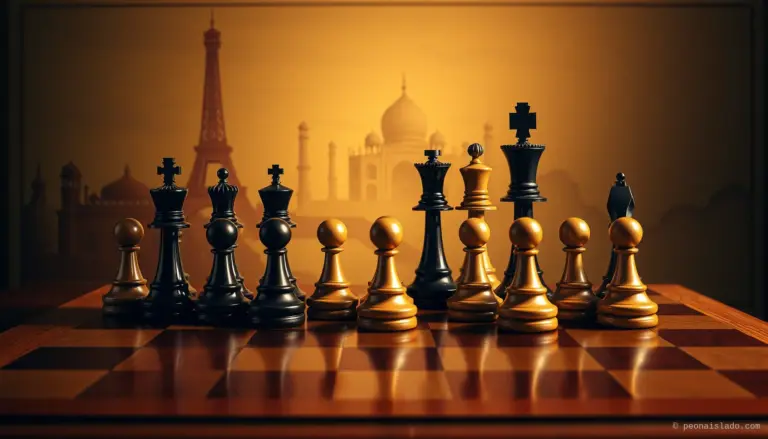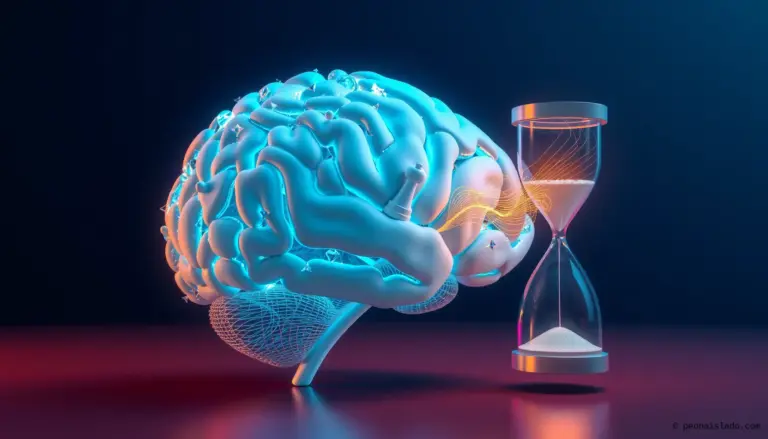
chess, more than a strategy game, It is a mirror of the human mind. Each game requires not only calculation and memory, but also an emotional and physical management that few sports require with such intensity. However, in the obsession to improve, many players—from amateurs to grandmasters—neglect a critical factor: the rest. How does sleep influence the ability to anticipate plays? Why world champions like Magnus Carlsen prioritize recovery as much as training? This article explores the science behind resting in chess, debunks myths and offers strategies to optimize performance without falling into the trap of overtraining.
The chess brain: an engine that needs a break
Chess is one of the most demanding activities for the brain. Neuroscience studies, like those made by Institute of Cognitive Neuroscience from London, reveal that during an intense game, the prefrontal cortex—responsible for decision making and working memory—consumes up to 20% more glucose than at rest. This energy expenditure is not sustainable without recovery periods. In fact, research published in Nature Human Behaviour show that lack of sleep reduces the ability to calculate variants in a 30%, a deficit comparable to playing under the influence of alcohol.
But rest is not just a matter of hours of sleep. Great teachers like Viswanathan Anand have spoken openly about the importance of micro-breaks during the games. In high level tournaments, It is common to see players get up from the board after key moves, walk or even meditate for a few minutes. These interruptions are not whims, but strategies validated by science: A University of California study found that short breaks from 10 minutes improve the retention of tactical patterns in a 15%.
To delve deeper into how great teachers manage their concentration, We invite you to explore our article on concentration techniques in chess, where the habits of figures such as Carlsen and Kasparov are analyzed.
The myth of “training until exhaustion”
In chess culture, the idea persists that “more is better”. Young players, influenced by the success of prodigies like Bobby Fischer—who trained until 12 hours a day—, fall into the trap of overtraining. However, science denies this practice. A longitudinal study with elite players, published in Frontiers in Psychology, showed that those who trained more than 6 hours a day without rest showed an increase in 40% in errors due to fatigue, especially in late game, where precision is crucial.
Active rest—such as moderate physical exercise or mindfulness practice—emerges as an effective alternative. Sports psychologist Michael Gervais, who worked with the US Olympic team., points out that “The chess brain needs oxygenation and disconnection to consolidate learning”. This explains why players like Ding Liren, current world champion, include yoga sessions in your routine. If you want to design a balanced routine, our article on routine 30 minutes to improve your chess with science offers an evidence-based plan.
The dream: the invisible ally of the champions
Sleep is not a luxury, but a performance tool. During the deep sleep phase, the brain processes and stores the tactical and strategic information learned during the day. A Harvard University experiment with chess players revealed that those who slept 8 hours after a study session they retained a 50% more openings than those who stayed awake. Besides, lack of sleep alters risk perception: in a study with 200 players, those who slept less than 6 hours they made decisions 25% riskier, a common mistake in critical positions.
But not all dreams are the same. Quality matters as much as quantity. Players like Hikaru Nakamura have adopted techniques such as sleep hygiene, which includes avoiding screens before bed and maintaining regular schedules. For those who compete in international tournaments, he jet lag is a silent enemy. A study of the Journal of Sports Sciences found that players who adjusted their sleep schedule 3 days before a tournament they improved their performance by a 18%. If you are looking for strategies to manage pressure in competitions, Don't miss our article on psychology in chess: dominates the pressure like the GMs.
Rest as a psychological strategy
Rest is also a psychological weapon. in chess, where the mind can become the worst enemy, fatigue amplifies errors such as tilt —a spiral of impulsive decisions after a defeat—. Players like Fabiano Caruana have spoken about how exhaustion led them to underestimate opponents in key moments. The solution is not just to sleep more, but learn to disconnect. Techniques such as visualization – imagining games without moving pieces – or even playing chess without a board (as Capablanca did) Help reduce anxiety and improve creativity.
A paradigmatic case is that of Garry Kasparov, who in his preparation for the match against Deep Blue in 1997, incorporated meditation sessions to manage stress. Hoy, Tools such as biofeedback—which measures the physiological response to stress—are used by elite players to optimize their rest.. If you want to avoid falling into tilt, we recommend you read how to avoid tilt in chess, where real cases and practical solutions are analyzed.
The balance: the key to long term success
Chess is not about burning stages, but to build a sustainable career. Players like Vladimir Kramnik, who retired undefeated in 2019, They attribute their longevity to intelligent rest management. “Chess is a marathon, no un sprint”, I used to say. This philosophy contrasts with that of prodigies who disappear after a few years of success., victims of exhaustion.
For amateur players, the message is clear: rest is not wasted time, but an investment in performance. Incorporate active breaks, prioritizing sleep and learning to disconnect are skills as important as memorizing openings or calculating variants. As the great teacher Jonathan Rowson said: “Chess is not played with your hands, but with the mind. And the mind needs rest to shine”.
In a world where the obsession with productivity often overshadows the importance of recovery, chess offers a valuable lesson: true mastery is not in playing more, but in playing better. And to play better, you have to know when to stop.
If this article resonated with you, We invite you to explore how chess can transform other aspects of your life, from decision making to emotional management, in our article on chess in life: lessons to make better decisions. The board is not just a battlefield, but a mirror of our strengths and weaknesses.