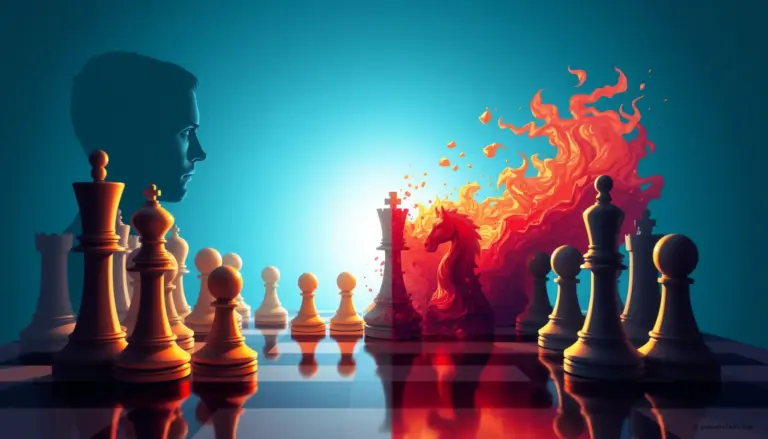
In the vast and arid lands of Eritrea, a country marked by decades of conflict and one of the longest military conscriptions in the world, an image emerges that contrasts with the harshness of war: Eritrean soldiers playing chess in the trenches. this scene, apparently simple, reveals deep layers of life under conscription, where time stretches between vigilance and waiting, and chess becomes a mental refuge, a tool of resistance and even a symbol of humanity in the midst of chaos. But, what is behind this practice? How does it influence the psychology of soldiers? And what does it say about Eritrean society and its relationship to the protracted conflict? This article explores the phenomenon of chess in the trenches of Eritrea, analyzing its impact on morale, its role as an escape valve and its connection with the history and culture of a country that struggles to find peace in the midst of adversity.
Chess as an escape from the monotony of conscription
Conscription in Eritrea, known as the “national service”, It is one of the hardest in the world. With an indefinite duration that can extend for decades, recruits face extreme conditions: low salaries, forced labor, lack of basic freedoms and the constant threat of violence. In this context, time in the trenches becomes an endless succession of empty hours, where the mind desperately seeks stimuli to avoid falling into despair. This is where chess emerges as a lifesaver..
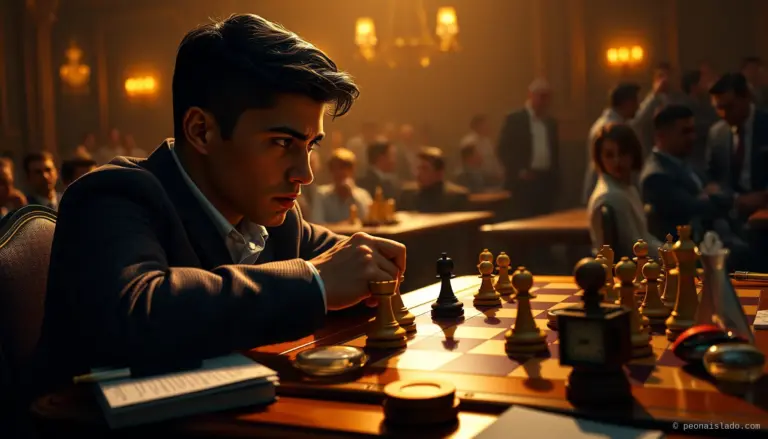
Chess is not just a game in Eritrea; It's a deep-rooted tradition.. Introduced during the Italian colonial era, The game became popular among the local population and, over time, integrated into military culture. in the trenches, soldiers practice it with improvised boards, sometimes carved in wood or drawn on cardboard, and pieces made from recycled materials. The reason for its popularity lies in its ability to offer a sense of control in an environment where everything else is out of the hands of the recruits.. Every movement is your own decision, each game a narrative that develops under its rules, far from the orders of superiors or the chance of war.
Besides, Chess acts as a bridge between reality and fantasy. for a few hours, Soldiers can abstract themselves from their surroundings and immerse themselves in a world where the black and white pieces represent more than just figures.: They are allies, enemies, strategies and, above all, a metaphor for life itself. Psychological studies have shown that chess reduces stress and improves concentration, crucial skills in a context where inattention can cost lives. An Eritrea, this game not only entertains, but saves minds from collapse.
Chess as a tool of resistance and social cohesion
Beyond its function as a distraction, Chess in the Eritrean trenches takes on political and social significance. In a system where dissent is severely punished, the game becomes a subtle form of resistance. The soldiers, when playing, They exercise an act of autonomy in an environment designed to nullify their individuality. It is no coincidence that chess is one of the few spaces where they can express themselves freely., without constant supervision. In this sense, each game is a small act of rebellion, a statement that, yet, they remain masters of their minds.
But chess also serves a social function.. in the trenches, where the military hierarchy is rigid and tensions between recruits can easily escalate, the game acts as an equalizer. A private can confront an officer on the board, and although the rules of the game are the same, The military context is temporarily suspended. This fosters camaraderie and reduces internal conflict., something crucial in an environment where mistrust can be as dangerous as the external enemy. Stories from Eritrean soldiers tell how chess has prevented fights, has created lasting ties and has even served to negotiate informal truces between rival factions.
In addition, chess has become a symbol of Eritrean resilience. In a country where the government promotes a narrative of sacrifice and national unity, The game reinforces the idea that, even in the worst conditions, intelligence and creativity can prevail. It is not uncommon to hear war veterans describe chess as “the only luxury we allowed ourselves”, a phrase that encapsulates the paradox of finding beauty in the midst of oppression.
The psychological impact: therapy or dangerous distraction?
Although chess offers obvious benefits, Its practice in an environment as hostile as the Eritrean trenches also raises questions. Is it really a therapeutic tool or, on the contrary, a distraction that can be dangerous? The answer is not simple. On the one hand, Chess provides a mental structure that helps soldiers deal with trauma. The concentration required to play a game acts as a defense mechanism against anxiety and depression, common in situations of prolonged stress. Besides, the game encourages skills such as patience, planning and adaptability, all of them essential to survive in a conflict.
However, there is a risk: chess can become a form of denial. By immersing yourself in the game, soldiers could be avoiding facing the reality of their situation, postponing the emotional processing of what they experience. In extreme cases, this could lead to a dangerous disconnection, where the line between game and war blurs. Some military psychologists warn that, in trauma contexts, activities that promote avoidance can delay long-term recovery, although in the short term they relieve suffering.
Another worrying aspect is the use of chess as a tool of control by the Eritrean regime.. Although the game is an escape valve, It can also be manipulated to keep soldiers occupied and less likely to question their situation.. In this sense, chess could be seen as a form of “bread and circuses” modern, where entertainment is used to numb dissent. Nevertheless, This interpretation clashes with the testimony of many soldiers, that describe the game as a space of genuine freedom, not as an imposition.
Chess in Eritrean culture: more than a game
To understand the role of chess in the trenches of Eritrea, it is necessary to analyze its place in the country's culture. Unlike other African nations where chess is a minority pastime, in Eritrea the game has a significant presence, especially in urban areas. During the Italian occupation (1890-1941), Chess was introduced into intellectual and military circles, and over time it became popular among the local population. Hoy, It is common to see games in cafes, places and, of course, in the barracks.
Chess in Eritrea is not just a game, but a reflection of the cultural values of the country. The strategy, Patience and the ability to anticipate movements are highly valued skills in a society that has had to constantly adapt to adversity.. Besides, the game is associated with intelligence and cunning, qualities that Eritreans have had to develop to survive in a context of war and international isolation. In this sense, chess in the trenches is not an anomaly, but a natural extension of a tradition that was already rooted in society.
Curiously, Chess has also served as a bridge between Eritrea and the outside world. In recent years, some soldiers have participated in international tournaments, using the game as a way to break the isolation imposed by the regime. These cases, although exceptional, demonstrate how chess can be a tool of informal diplomacy, even in the most adverse circumstances. Besides, the game has been used by humanitarian organizations to work with ex-combatants, helping them reintegrate into civil society through the discipline and concentration it requires.
Ultimately, chess in Eritrea transcends its status as a pastime. It is a symbol of resistance, a survival tool and a cultural legacy that persists despite difficulties. Their practice in the trenches is not just an act of entertainment, but an affirmation of humanity in an environment designed to strip individuals of their essence.
The image of Eritrean soldiers playing chess in the trenches is much more than a curious anecdote; It is a testament to the human ability to find light in the darkness. In a country where military conscription has become a form of modern slavery, chess represents an act of silent rebellion, a tool of social cohesion and a psychological refuge. However, It also raises uncomfortable questions about the limits of distraction in contexts of trauma and about the role that play activities play in oppressive systems..
What is clear is that, an Eritrea, chess is not just a game. It is a metaphor for life under conflict: a battle where every move counts, where strategy is essential and where, despite the adversities, there is always room for hope. While the world observes with concern the human rights situation in the country, These games in the trenches remind us that, even in the most extreme circumstances, humanity finds ways to resist, to connect and dream of a better future.
Maybe, in the background, chess in the trenches of Eritrea be a reminder that, no matter how dark the reality is, there will always be a board where the pieces can move freely, even if it's for a moment.