In the heart of a city marked by war and destruction, Mosul emerges as a symbol of resilience. After years under the yoke of the Islamic State (ISIS), who banned chess because he considered it “to the haras” —a game associated with military strategy and, therefore, dangerous-, The inhabitants of this Iraqi city have found on the board of 64 boxes a way to rebuild not only their lives, but also their cultural identity. This article explores how chess has become a phenomenon of social revival in Mosul, analyzing its role in psychological rehabilitation, community reintegration and the recovery of traditions that extremism tried to erase. From improvised tournaments in public squares to schools that teach it as a pedagogical tool, the ancient game stands as an act of silent resistance and collective hope.
Chess as a victim of extremism: the ban and its consequences
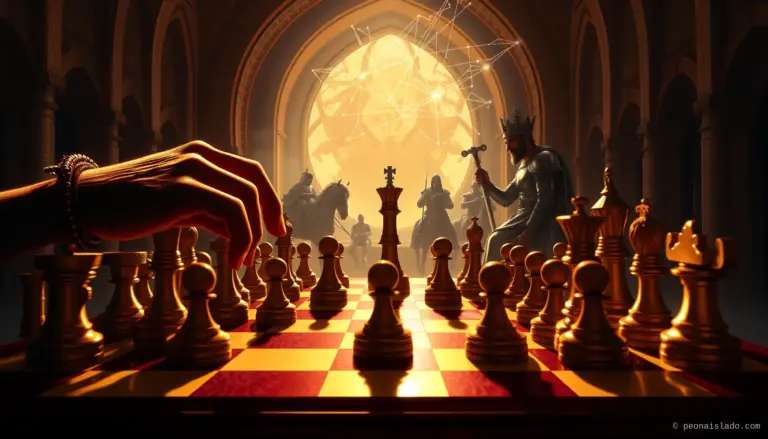
When ISIS took control of Mosul in 2014, imposed a regime of terror that sought to rewrite daily life under a distorted interpretation of Islam. Among the most arbitrary—but symbolically powerful—prohibitions was that of chess.. The militants considered him a “unfaithful game”, arguing that it encouraged critical thinking and competition, values incompatible with their dogmatic vision. Game stores were looted, boards burned and players threatened with punishments ranging from whipping to execution.
However, The ban not only sought to eradicate a recreational activity, but also dismantle a tradition rooted in Mesopotamian culture. chess, introduced to the region during the Abbasid caliphate (8th century), had been part of Iraqi intellectual heritage for centuries. Its ban was a direct attack on collective memory, a way to erase the pre-Islamic history that ISIS despised. For many Mosulis, Stopping playing was like losing a part of themselves: a space for reflection, socialization and, above all, freedom.
The psychological consequences were profound. Studies after the liberation of Mosul revealed that the inability to practice recreational activities—especially those that required concentration and strategy—exacerbated levels of post-traumatic stress in the population.. chess, with its ability to stimulate patience and resilience, had been a refuge for many. His absence left a void that fear and violence failed to fill..
The board as therapy: chess and mental health in a traumatized city
With the liberation of Mosul in 2017, Chess rose from the ashes as an unexpected healing tool. International organizations such as International Chess Federation (FIDE) and local NGOs began to promote workshops in community centers, schools and even in displaced persons camps. The objective was not only to teach the rules of the game, but to use its structure to help victims of conflict process trauma.
The therapeutic benefits of chess in post-conflict contexts are well documented. A study published in the Journal of Traumatic Stress in 2020 analyzed its impact on war veterans and survivors of extreme violence, concluding that the game improves the ability to make decisions under pressure and reduces anxiety. And Mosul, These effects multiplied. For the children, who had grown up in an environment where gambling was prohibited, learning chess became an act of rebellion and normalization. For adults, It was a way to reconnect with a part of their identity that they thought was lost..
An emblematic case is that of Ahmed Al-Jubouri, a mathematics teacher who lost his brother in a bombing during the battle for the city. After release, Ahmed found a way to channel his pain in chess. “when I play, my mind focuses on the board. for a few minutes, I forget the sounds of explosions”, He confessed in an interview with Al Jazeera. Hoy, runs a chess club in the Al-Zuhur neighborhood, where he teaches young people who, like him, They seek to rebuild their future.
Initiatives like Ahmed's show that chess is not just a hobby, but a bridge to emotional recovery. Its structure—based on clear rules and predictable consequences—contrasts with the chaos experienced during the occupation., offering players a sense of control in a world that had taken everything away from them.
From clandestinity to tournaments: the reconstruction of a chess community
During the years of occupation, chess did not disappear completely: went underground. in basements, backyards and even in abandoned mosques, small groups of players met in secret, risking their lives to move a pawn. These games, played with improvised boards or even drawn on the ground, They were acts of silent resistance. “It was our way of telling ISIS that they couldn't control our thoughts.”, reports Fatima Hassan, a young woman who organized meetings at her house.
After release, These clandestine groups laid the foundations for a more organized chess community. In 2018, The first official tournament was held in Mosul since the fall of ISIS, with more than 200 participants. The event, sponsored by the FIDE and the Iraqi government, It was a symbol of normalization, but also a reminder of how much there was still to do. Many players lacked basic equipment—plastic pieces instead of wood, worn boards—and the sports facilities were in ruins.
Despite the difficulties, The Mosulí chess community has grown exponentially. Hoy, there are more than 15 active clubs in the city, some of them with support from international organizations. One of the most notable is the Al-Mosul Chess Club, founded by former underground players, offering free classes to children and adults. Its founder, Mohammed Al-Dulaimi, explains: “We don't just teach how to play; we teach to think. We want young people to understand that every movement has consequences, just like in life”.
Chess has also served to break social barriers. In a city divided by sectarianism and resentment, the tournaments have brought together Sunnis, Shiites, Kurds and Christians in a neutral space. “Here it doesn't matter where you come from or what religion you profess. The only thing that matters is your strategy”, comment Layla Karim, one of the few women who competes in local tournaments. Their participation is especially significant in a society where women still face restrictions on participating in public activities..
Chess as a symbol of the future: education and hope for the new generations
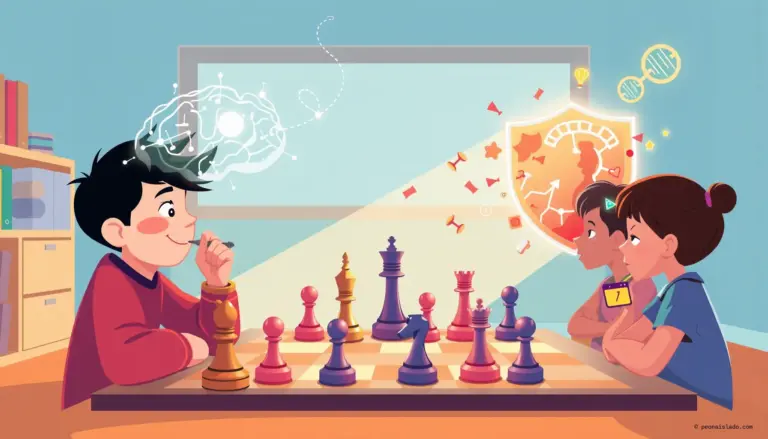
If chess has been a balm for adults, For the children of Mosul it represents a window to a different future. Public and private schools have incorporated the game into their educational programs, not just as an extracurricular activity, but as a pedagogical tool. Studies show that chess improves academic performance in mathematics and science, by developing skills such as logical thinking, concentration and creativity.
A notable example is the Project “Chess for Peace”, driven by the UNESCO in collaboration with the Iraqi Ministry of Education. The program, that operates in 20 Mosul schools, uses chess to teach values such as respect, tolerance and peaceful conflict resolution. “Children who learn chess are less prone to violence”, states Dr. Samir Al-Hamdani, project coordinator. “We teach them that every problem has a solution, and that aggression is not the way”.
For many young people, Chess is also a way out of poverty. In a city where unemployment exceeds 30%, Some players have found an economic opportunity in the game. Tournaments with cash prizes, sponsored by local businesses, have allowed young people like Ali Abbas, of 17 years, help their families. “I won 500 dollars in a tournament last year. with that money, my father was able to repair the roof of our house”, Ali account, who dreams of becoming an international grandmaster.
However, The greatest impact of chess on new generations goes beyond the economic or academic. For children who grew up in the middle of war, the game is a metaphor for life: teaches that, even in the most difficult situations, there is room for strategy and hope. “Before, I only knew violence. Now I know there are other ways to win”, dice Noor Al-Mansouri, a girl of 12 years participating in the UNESCO project.
Conclusions: checkmate to oblivion
The revival of chess in Mosul is much more than the recovery of a game: It is the reconstruction of an identity, the healing of deep wounds and the affirmation that, even in the darkest contexts, humanity finds ways to resist. From its ban by ISIS to its resurgence as a therapeutic tool, educational and community, Chess has proven to be a symbol of resilience in a city that refuses to be defined by its past.
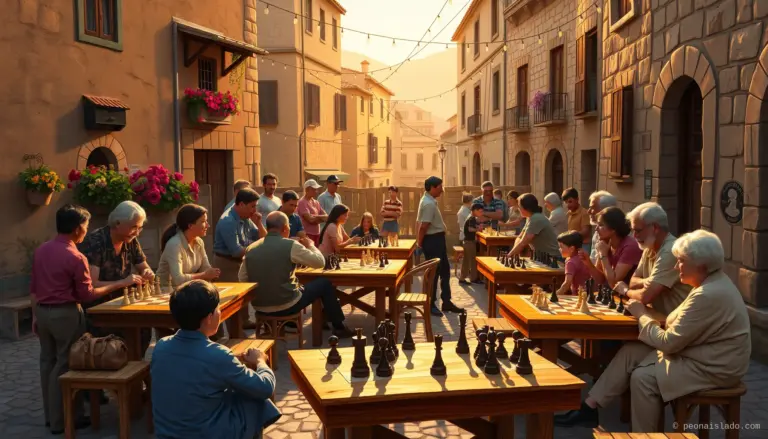
Tournaments in public squares, The clandestine clubs converted into schools and the children who learn to move pieces instead of wield weapons are proof that chess has transcended its status as a pastime to become a political act.: a declaration that Mosul is alive, that his people have not been defeated and that, even on the board of life, there is room for strategy, hope and victory.
However, The path is not without challenges.. Sports infrastructure remains precarious, Government support is limited and social stigmas persist, especially towards women who play. But the fact that chess has managed to flourish under these conditions is, in himself, a victory. As the great teacher once said Garry Kasparov: “Chess is the gymnastics of the mind”. And Mosul, that gymnastics has become an exercise in collective reconstruction, where each game is a step towards a brighter future.
for the world, The history of chess in Mosul is a reminder that the culture, critical thinking and creativity are powerful weapons against extremism. And for the Mosulis, is proof that, even after dark, the game—and life—can always begin again.