Chess is a game that, by definition, seems inseparable from competition. From local tournaments to world championships, The essence of chess has been linked to the fight for victory, strategy and overcoming the rival. But, Is it possible to enjoy chess without competing?? Can this ancient game transcend its confrontational nature and become a learning tool, creativity or even meditation? The answer is not simple, since it involves rethinking the very purpose of chess and exploring alternatives that go beyond victory or defeat. In this article, We will analyze whether chess without competing is a utopia or an achievable reality, examining its benefits, challenges and the ways in which it can adapt to non-competitive contexts.
Chess as a learning and personal development tool
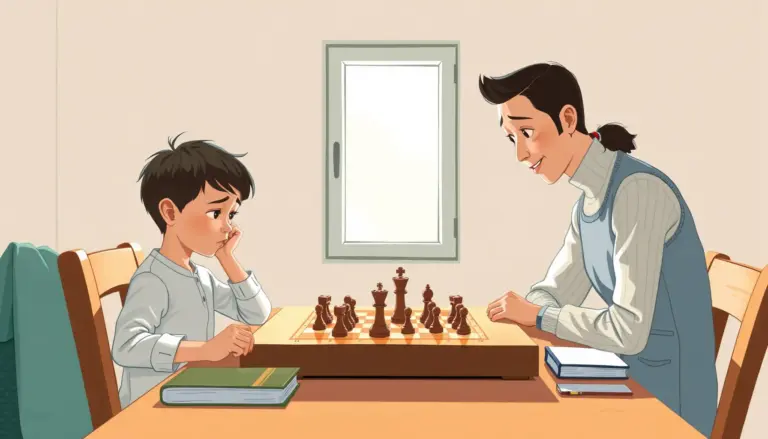
Chess has been recognized for centuries as an intellectual exercise that strengthens cognitive skills such as memory., concentration and logical thinking. However, Your educational potential is not limited to competition. In school or therapeutic settings, Chess is used as a pedagogical tool to teach patience, planning and problem solving, without needing to focus on winning or losing. For example, in chess programs for children with autism spectrum disorders, The game is adapted to encourage social interaction and self-expression, eliminating the pressure of competition.
Besides, chess can be a way of self-knowledge. Analyzing your own games or those of grandmasters without the objective of beating a rival allows you to delve deeper into your thinking patterns., Identify recurring mistakes and develop a growth mindset. In this sense, chess becomes a mental laboratory, where the player explores his own mind without interference from an external opponent. Platforms like Chess.com o Lichess offer training modes that prioritize learning over competition, proving that chess can be a solitary and enriching activity.
Chess as art and creative expression
Although competitive chess is governed by strict rules and clear objectives, There is an artistic aspect of the game that challenges these conventions. He composition chess, For example, consists of creating problems or studies where the beauty of the solution is more important than the victory. These problems, known as studies o mate problems in two, They are works of art in themselves., designed to surprise and delight the viewer. Great composers like Sam Loyd o Vladimir Korolkov have left a legacy of creations that transcend competitive logic.
Another form of non-competitive chess is creative blitz chess, where two players collaborate to build an aesthetically attractive game, no matter who wins. This approach is similar to musical improvisation, where harmony and creativity take precedence over rigid structure. There are even variants such as fantasy chess, where new pieces or rules are introduced to explore unprecedented possibilities. These practices show that chess can be a blank canvas for artistic expression, freed from the shackles of competition.
Chess as a meditative and mindfulness practice
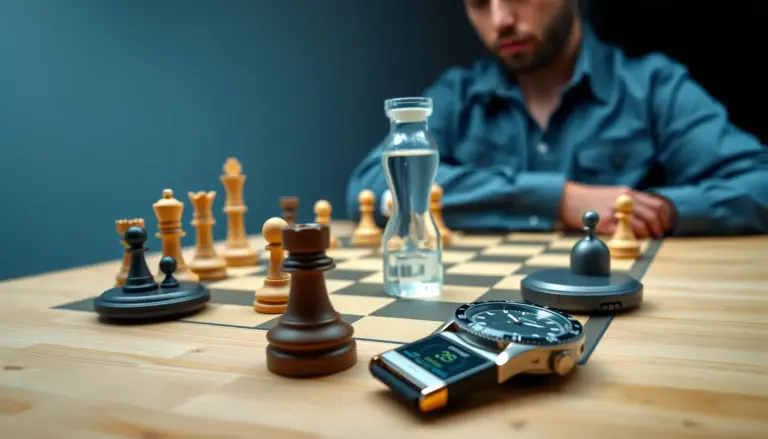
In a fast-paced world, where competition and stress dominate many aspects of life, chess can become a practice of mindfulness. Play a game without time, without pressure and without the need to win allows the player to immerse themselves in the present moment, observing every movement as an act of mindfulness. This approach to chess is similar to meditation, where the objective is not to achieve a result, but to experience the process with awareness.
Some chess masters, as Josh Waitzkin, author of The art of learning, have explored this dimension of the game. Waitzkin describes how chess can be a metaphor for life, teaching to flow with changes and accept uncertainty. In this context, the board becomes a space for introspection, where each piece represents a part of yourself. There are even chess and mindfulness retreats, where participants play slow games while practicing breathing and relaxation techniques, proving that chess can be a tool for emotional well-being.
The challenges of decoupling chess from competition
Despite the alternatives mentioned, separating chess from competition is not easy. Chess culture is deeply rooted in the idea that the game is, first of all, an intellectual battle. From the first chess manuals to analysis engines like Stockfish, competitive logic has shaped the way it is taught, chess is played and perceived. Even in educational settings, It is common for teachers to use internal tournaments to motivate students, reinforcing the idea that chess without competition is meaningless.
Another challenge is the lack of recognition for non-competitive forms of chess. While tournaments offer prizes, rankings and prestige, artistic or meditative practices are often seen as secondary or even irrelevant. This discourages players from exploring these alternatives, especially in an environment where success is measured in ELO and titles. Besides, human nature tends to seek challenges and rewards, which makes it difficult to maintain interest in chess without a clear competitive objective.
However, These obstacles are not insurmountable.. With an open mind and the creation of spaces dedicated to non-competitive chess, it is possible to redefine the game. Communities like Chess Variants or chess groups on social networks are already exploring these possibilities, demonstrating that there is a public interested in alternative approaches.
Conclusions: Is chess possible without competing?
Chess without competing is not only possible, but it already exists in multiple forms, although it often goes unnoticed. From its use as an educational tool to its potential as an artistic or meditative practice, Chess can be adapted to contexts where competition is not the main objective. However, for this vision to be consolidated, a paradigm shift is necessary in chess culture, that values creativity and learning as much as victory.
The biggest challenge is not technical, but cultural. Chess has been a symbol of intellectual struggle for centuries., and separating it from the competition requires rethinking its essence. But, as we have seen, the game is versatile enough to transcend its own nature. Whether as an exercise in self-knowledge, an art form or mindfulness practice, Chess without competing offers an enriching experience that goes beyond victory or defeat.
Ultimately, the question is not whether chess can exist without competing, sino how we want to play. If the goal is to win, chess will continue to be a mental sport. But if the objective is to explore, create or just enjoy the process, then chess becomes something much deeper: a tool for life.