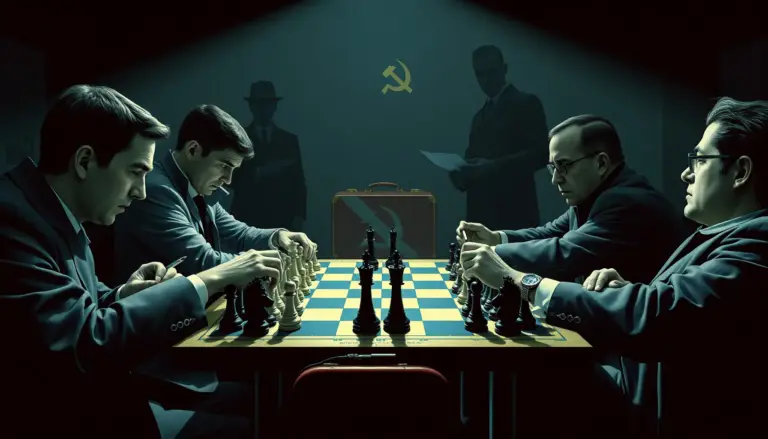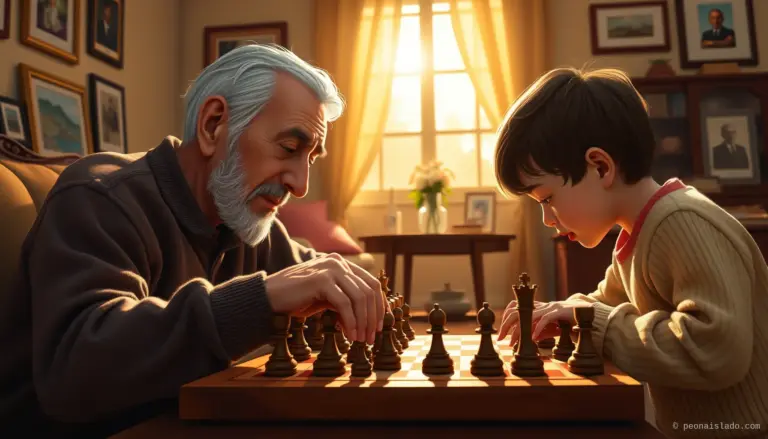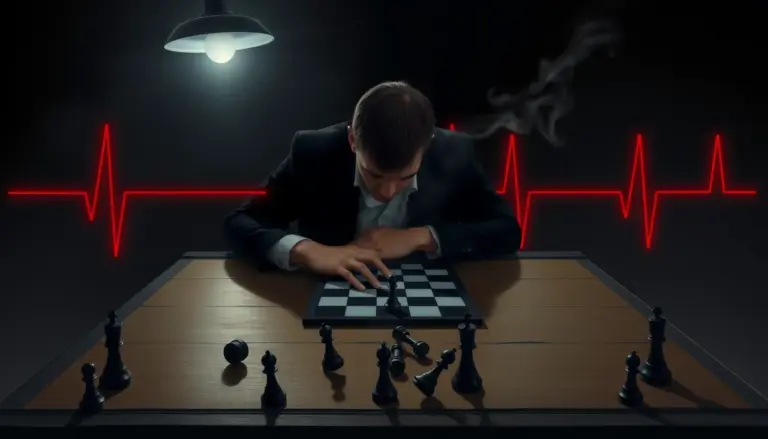
In a country where gang violence has marked generations, El Salvador emerges as an example of social innovation by combining unconventional strategies to rescue young people from the cycle of crime. The gangs, like MS-13 and Barrio 18, They have woven a network of territorial control that traps thousands in their ranks, but in the middle of this scenario, chess has become a powerful tool. Programs like “Chess for Life” y “Hope Boards” They not only teach the game of kings, but they reconfigure minds, They promote discipline and offer real alternatives to life on the streets. This article explores how the dashboard 64 squares are transformed into a symbolic battlefield, where the strategy, patience and resilience gain ground over violence. From the most dangerous neighborhoods to maximum security prisons, chess stands as a bridge towards social reintegration, demonstrating that even in the most adverse contexts, education and creativity can break chains.
Chess as a tool for social transformation
Chess is not just a game; It is a mirror of life. In El Salvador, where the gangs have imposed their law through fear and coercion, This mental sport has become an instrument of change. Programs like “Chess for Life”, driven by non-governmental organizations and the government, They seek to take advantage of the cognitive skills that chess develops: critical thinking, long-term planning and emotional control. These skills are essential for young people who have grown up in environments where impulsivity and violence are commonplace..
Chess workshops are not limited to teaching piece movements. Includes psychology sessions, where participants learn to manage frustration, to recognize behavioral patterns and make decisions under pressure. In a country where the 60% of homicides are gang related, according to data from the Institute of Legal Medicine, chess offers a way out. A study from the Central American University (UCA) revealed that the 70% of youth who participated in these programs reduced their involvement in criminal activities within six months.
But, why chess and not another sport or activity? The answer lies in its nature. Unlike football or boxing, that can exacerbate aggressive competitiveness, chess requires concentration, patience and respect for the rules. Besides, Its hierarchical structure—where each piece has a value and a function—reflects the importance of collaboration and teamwork., values absent in gang culture.
From the streets to the board: redemption stories
The stories of young people who have left the gangs thanks to chess are as inspiring as they are revealing.. One of the most emblematic cases is that of Carlos, a former MS-13 member who found a reason to abandon violence in chess. “in the gang, They teach you how to solve problems with a gun. in chess, you learn to solve them with your mind”, comments Carlos, who today is an instructor in a community program in Soyapango, one of the municipalities most affected by violence.
Another example is that of Maria, a young woman from 17 years that, after being recruited by Barrio 18, He managed to escape thanks to a chess workshop at his school. “At first, I didn't understand how a game could change my life. But after a few weeks, I started to see things differently. Chess taught me that every move has consequences, and that made me reflect on my decisions”, explains. Hoy, María studies psychology with the dream of helping other young people at risk.
These stories are not isolated. According to a report from the Salvadoran Foundation for Economic and Social Development (FUSADES), he 45% of young people who participate in chess programs manage to reintegrate into the educational or work system. However, the road is not easy. Many face the stigma of having belonged to a gang, and some are even rejected by their own families. This is where chess acts as a catalyst: by demonstrating discipline and commitment, young people gain the trust of their communities and open doors that previously seemed closed.
The role of the State and civil society
The success of these programs would not be possible without the collaboration between the State, non-governmental organizations and civil society. In 2019, The government of El Salvador launched the plan “Control Territorial”, which includes initiatives to prevent the recruitment of youth by gangs. Within this framework, chess was integrated as a key tool, with the creation of academies in high-risk areas and the training of teachers in public schools.
Organizations like “Glasswing International” y “Educa Foundation” have been pioneers in the implementation of these programs. Glasswing, For example, works in collaboration with the Ministry of Education to bring chess workshops to more than 50 schools throughout the country. “Chess is not a magic solution, but it is a seed that, over time, can blossom into something much bigger”, says Ana Martínez, Glasswing project manager.
However, the challenges are enormous. Lack of financing, Corruption and resistance from some communities are obstacles that still need to be overcome. Besides, chess cannot operate in a vacuum: must be accompanied by public policies that guarantee access to education, employment and mental health. In this sense, The State has a crucial role. Programs like “Young people with everything”, offering scholarships and job opportunities, They are essential complements so that chess is not just a patch, but a comprehensive solution.
Chess in prisons: a second chance
If chess has proven its effectiveness in the streets, Its impact on prisons is even more surprising. In El Salvador, where the prison system is collapsed and gangs control a large part of the detention centers, chess has become a rehabilitation tool. In 2021, the government implemented the program “Hope Boards” in the Izalco Penal Center, one of the most dangerous prisons in the country.
The results have been remarkable. According to data from the General Directorate of Penal Centers, he 30% of inmates who participate in chess workshops show a reduction in violent behavior. Besides, Chess encourages the creation of spaces for dialogue between members of rival gangs, something unthinkable in the prison context. “on the board, we are all equal. It doesn't matter if you are from MS-13 or Barrio 18; what matters is your strategy”, comments Luis, an inmate who has been participating in the program for two years.
Chess has also served as a bridge between inmates and their families.. In some penal centers, Tournaments are organized where inmates can compete against their loved ones, which strengthens emotional ties and reduces recidivism. A study from the University of El Salvador found that inmates who participate in educational and recreational activities, like chess, they have a 20% less likely to reoffend upon release from prison.
Nevertheless, the road is long. Prison overpopulation, the lack of resources and the influence of gangs within prisons are barriers that still need to be overcome. But chess, with its ability to transform minds, offers a glimmer of hope in a system that, for decades, has been marked by failure.
Conclusions: the board as a symbol of change
El Salvador faces one of the most complex social crises in its history, where gang violence has left deep scars on entire generations. However, in the midst of this desolate panorama, chess emerges as a beacon of hope. Through innovative programs, This ancient game has shown that it can be much more than a hobby: It is a tool of social transformation, a bridge to reintegration and a symbol that, even in the most adverse contexts, change is possible.
Carlos's stories, María and Luis are no exceptions; are examples of what can be achieved when creativity is combined, commitment and effective public policies. Chess teaches young people to think before acting, to plan your movements and understand that every decision has consequences. These lessons are fundamental in a country where impulsivity and violence have been the norm..
But chess is not a magic solution. Your success depends on a comprehensive approach that includes education, employment, mental health and, above all, real opportunities for young people. The State, civil society and communities must work together to ensure that these programs are not just isolated initiatives, but part of a national prevention and reintegration strategy.
on a chess board, each piece has a value and a purpose. The same happens with the young people of El Salvador: Everyone deserves a chance to demonstrate their potential.. Chess not only offers them that opportunity, but reminds them that, even in the most difficult situations, There is always a move that can change the game. The question is: Are we willing to make that move??