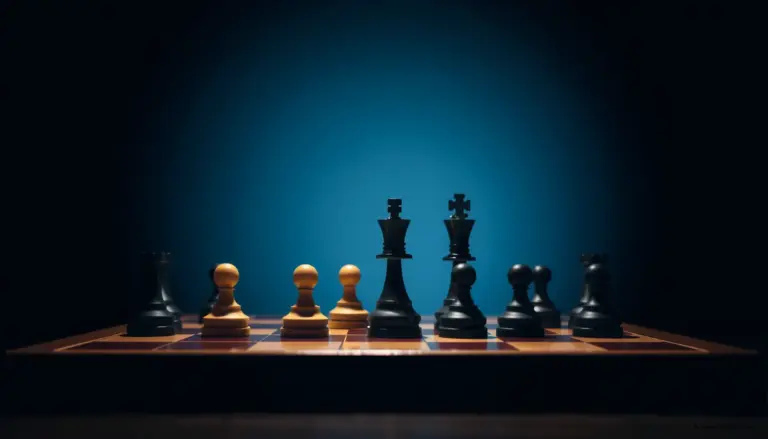
Chess is much more than a strategy game: It is a cultural phenomenon, educational and social that transcends borders, ages and economic conditions. Unlike other sports that require expensive infrastructure, specialized equipment or specific physical conditions, chess is played with a board and 32 parts, tools accessible to almost anyone in the world. But its true democratic essence goes beyond the material.. This mental sport has proven to be a social equalizer, a bridge between cultures and an unparalleled pedagogical tool. In a planet where inequalities are increasingly evident, chess emerges as a space where talent, creativity and effort prevail over origin, gender or purchasing power. Throughout this article, We will explore why chess is not only the most accessible sport, but also the most just and transformative in history.
A game without economic or geographical barriers
The accessibility of chess is its first great democratic pillar. While sports like tennis, golf or motorsports require million-dollar investments in equipment, facilities or trips, Chess can be played with a cardboard board and plastic pieces that cost less than 10 euros. Even in its digital version, platforms like Chess.com o Lichess They offer free games and educational resources at no cost. According to the International Chess Federation (FIDE), there are more than 600 millions of players in the world, a figure that far exceeds that of any other mental or physical sport.
But democratization goes beyond cost. Chess knows no borders: It is played in the parks of Havana, in chennai schools, in the cafes of Paris or in the remote villages of Mongolia. Countries like Russia, India or Armenia have integrated it into their educational systems, while in Africa, organizations like Chess in Slums They use it to empower children in vulnerable situations. Unlike football, that dominates in Europe and South America, or baseball, concentrated in North America and Asia, chess is truly global. Its universal language—the 64 boxes—no translation required, and its practice does not depend on climatic or geographical factors.
Even in conflict contexts, chess has served as a tool of peace. During the Cold War, The meetings between Bobby Fischer and Boris Spassky were a symbol of dialogue in the midst of political tension. Hoy, projects like Chess for Peace They promote tournaments among young people from countries in conflict, demonstrating that the board can be a space of understanding where political or religious differences are left out.
Merit as the only requirement for success
In a world where sporting success is often tied to privilege—access to elite coaches, sponsorships or genetics—, chess is a radical exception. Here, talent and effort are the only passports to the top. Magnus Carlsen, current world champion, learned to play 5 years in Norway, a country without chess tradition. Viswanathan Anand, former world champion, grew up in chennai (India) at a time when chess was not a massive sport in his country. Judit Polgár, considered the best player in history, challenged gender stereotypes by competing with—and beating—the best men in the world.
This meritocracy is based on an objective classification system: he rating Elo, created by Hungarian physicist Arpad Elo. Unlike other sports where judges or referees can influence the results, In chess, games are decided by the skill of the players., and the scoring system accurately reflects your level. A player of 15 years can beat a grandmaster of 50 if your strategy is superior, regardless of your previous experience or reputation.
Besides, chess rewards diversity of styles. While in sports such as athletics or swimming, bodies must conform to specific physical standards., in chess there is no “ideal type” of player. Some, as Mikhail Tal, They stand out for their creativity and risky attacks; others, such as Anatoly Karpov, for its positional precision. This flexibility allows people with different personalities and abilities to find their place in the game..
A tool for social and educational equality
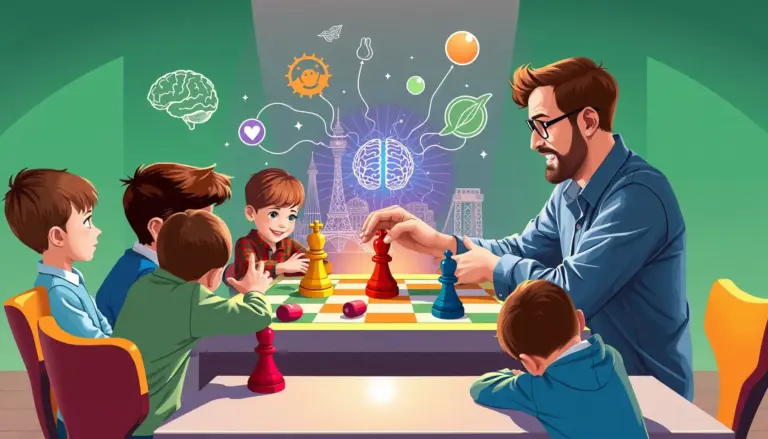
Chess is not only democratic in its practice, but also in its impact. Numerous studies have shown that teaching it improves cognitive skills such as memory, concentration and logical thinking. A report of the Cambridge University (2019) revealed that children who learn chess develop a 15% more ability to solve mathematical problems. In Spain, the program Chess at School has reduced school failure by 30% in the classrooms where it is implemented.
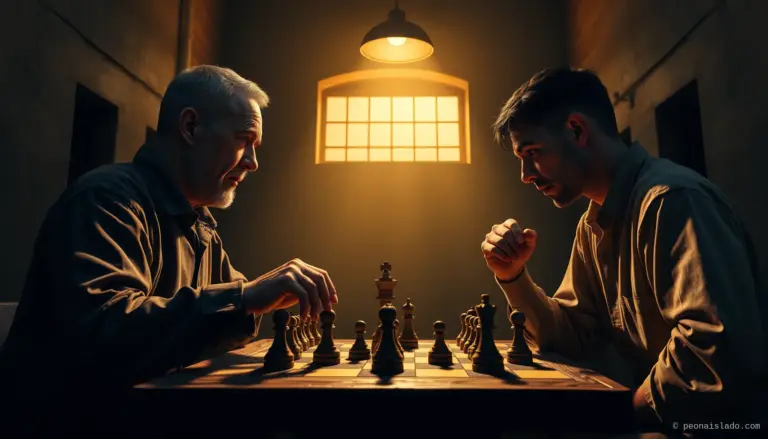
But its transformative power goes beyond academics.. In US prisons, programs like Chess Cops have reduced recidivism by 40% by teaching inmates to think before acting. In conflict zones, like Palestine or Colombia, Chess is used to encourage resilience and decision making under pressure. Even in the workplace, Companies like Google and Microsoft promote it among their employees to improve creativity and teamwork..
Gender equality is another front where chess advances, although with challenges. While in sports such as football or boxing, physical differences limit mixed competition., In chess, men and women can compete on equal terms.. The current gap—only the 10% of great teachers are women—not due to biological limitations, but to cultural and social barriers. Initiatives like Chess Queens or the tournament Gibraltar Chess Festival, that rewards men and women equally, They are changing this landscape.
Chess in the digital age: more democratic or more elitist?
The digital revolution has brought chess to unprecedented levels of popularity. Platforms like Twitch o YouTube They have converted players like Hikaru Nakamura o GothamChess in global stars, with millions of followers. He boom of chess during the pandemic —with series like Queen's Gambit and the increase of 60% in users in Chess.com— showed that the game can adapt to new times without losing its essence.
However, this digital democratization also poses challenges. On the one hand, Internet access remains unequal: according to the International Telecommunication Union (OUT), he 37% of the world's population has never used the Internet. In countries like Chad or South Sudan, where less than 10% has connection, digital chess is still a luxury. On the other hand, the professionalization of the game has created a new elite: los streamers and sponsored players earning thousands of dollars a month, while most amateur chess players fight for resources.
Despite this, Digital chess has broken barriers that previously seemed insurmountable. Hoy, a boy in Nigeria can play against a grandmaster in Russia with just a mobile phone. Tools like Stockfish (the most powerful chess engine in the world) are available for free, allowing anyone to analyze games like a professional would. Even artificial intelligence, with programs like AlphaZero, has democratized chess knowledge by discovering new strategies that were previously only available to geniuses.
Conclusions: a sport for the 21st century
Chess is the most democratic sport on the planet because it does not discriminate based on origin, gender, age or economic condition. Its material accessibility makes it a universal game, but it is his ability to reward merit, promote equality and transform lives which makes it unique. In a world where inequalities are deepening, chess offers a model of justice: a space where talent and effort are the only requirements to succeed.
However, its democratization is not a finished process. The digital divide, gender stereotypes and lack of resources in some regions remain obstacles. But chess has demonstrated time and again its ability to adapt and overcome barriers.. From Ugandan schools to India's online tournaments, going through social projects in Latin America, This game remains a beacon of hope for those seeking opportunities in an unequal world..
Ultimately, chess is not just a sport: It's a metaphor for what humanity could be if the rules were fair., access was equitable and talent always had the last word. On a board 64 casillas, we are all equal. And perhaps that is his greatest teaching.