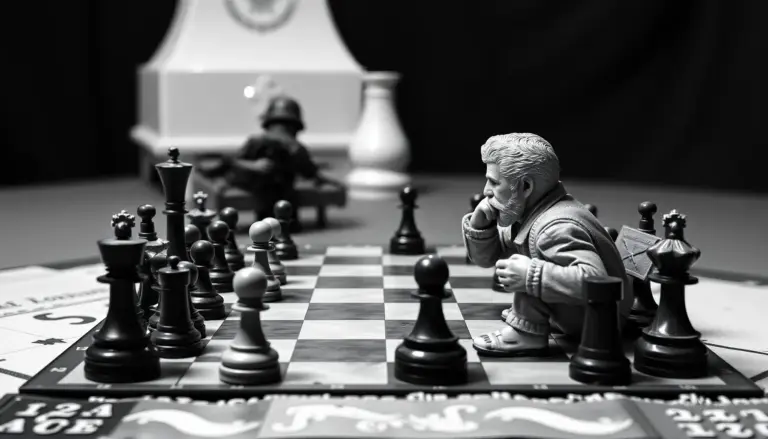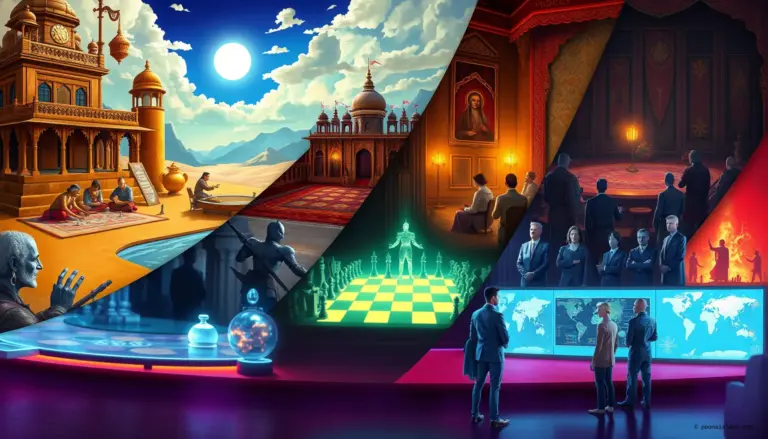
In the heart of Paris, where the aroma of freshly ground coffee mixes with the murmur of intellectual conversations, Cafes have been the scene of philosophical debates for centuries, political strategies and chess games that have shaped modern thought. From the marble tables of the Café de Flore to the bohemian corners of Procopius, These spaces are not just meeting places, but true temples of reflection. But, where do modern philosophers play today? Which Parisian cafés retain that essence of intellectual exchange that made them legendary?? This article explores how chess, more than a game, has become a universal language in these spaces, uniting thinkers, artists and dreamers in a dance of ideas that transcends the board.
The historical legacy of Parisian cafés as intellectual forums
Parisian cafes were not born as simple commercial establishments, but as centers of cultural effervescence. At the beginning of the 18th century, places like Procopius —the oldest café in Paris—became meeting points for figures such as Voltaire, Rousseau and Diderot, who debated the Enlightenment while playing chess. This game, with its rules of strategy and anticipation, It was seen as a metaphor for life itself.: a battle of ideas where every move required reflection and foresight.
During the 19th and 20th centuries, the tradition continued in cafes like The Two Magots y Café de Flore, where existentialists like Sartre, Beauvoir and Camus transformed tables into tribunes. chess, in this context, It wasn't just a hobby, but a tool to analyze the human condition. Sartre, For example, I used it as an exercise to discuss freedom and determinism: Each piece on the board represented a destination, and each player, an architect of his own existence.
Hoy, although the bustle of social networks has changed the dynamics of the debates, These cafes continue to be guardians of a tradition that resists time. Its architecture, Its fogged mirrors and worn wooden tables are mute witnesses of a past where thought flowed with the same intensity as coffee served in porcelain cups..
Chess as a universal language of modern philosophy
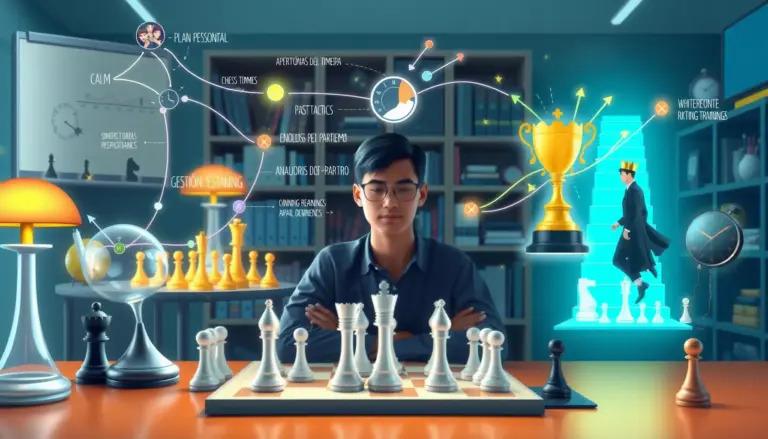
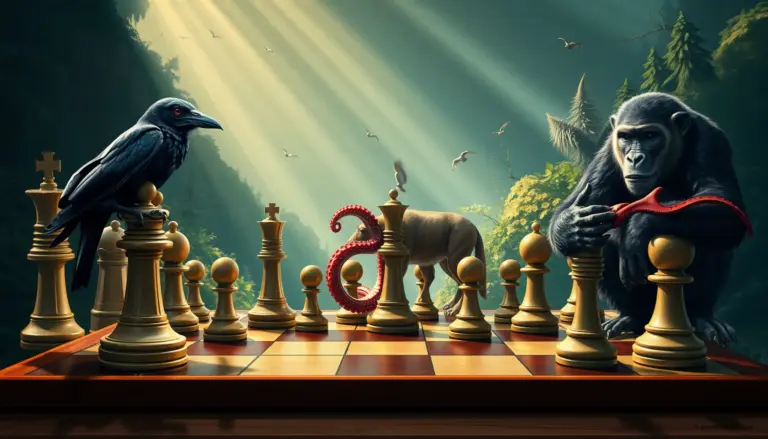
Chess is not just a game; It is a system of thought. In Parisian cafes, has become a bridge between generations of philosophers, artists and scientists. Its structure—a board 64 boxes where each piece has a value and a unique movement—reflects the complexity of the ideas discussed in these spaces. For modern philosophers, chess is a way to exercise the mind, but also to communicate abstract concepts in a tangible way.
For example, the french philosopher Michael Serres compared chess to language: every movement is a word, each game a phrase, and the set of rules, a grammar. In his writings, Serres argued that the game teaches us to think in systems, to anticipate consequences and accept uncertainty, essential skills for any thinker. In the cafes, This metaphor comes to life when a player sacrifices a piece to gain strategic advantage, an act that can be interpreted as a lesson about the value of risk in life.
Besides, chess encourages dialogue. Unlike other games, where the competition can be silent, In chess, games are usually accompanied by conversations about ethics, politics or art. In La Closerie des Lilas, For example, It is common to see young philosophers analyzing a move while discussing chaos theory or artificial intelligence.. The board thus becomes a space for mediation, where ideological differences are resolved not with words, but with calculated movements.
The cafes that still house modern philosophers
Although many historic cafes have lost part of their intellectual essence, some endure as refuges for contemporary thinkers. These are the places where chess remains a sacred ritual:
- Café de Flore: Although today it is more touristy, It still has tables where academics and writers meet. Thursday afternoons, It is possible to find games between philosophy students of the Sorbonne, those who debate Foucault or Deleuze while moving the pieces.
- Procopius: With its 18th century atmosphere, this cafe attracts historians and philosophers of science. Here, chess is played with an air of solemnity, as if each game were a tribute to the encyclopedists.
- La Closerie des Lilas: Frequented by poets and artists, This cafe is a magnet for those looking to combine creativity and strategy. Hemingway mentioned it in his memoirs, and today it continues to be a place where chess mixes with literature.
- Café des Phares: Located on the Place de la Bastille, this cafe is lesser known but equally vibrant. Here, modern philosophers organize informal tournaments where the prize is not money, but a bottle of wine and the right to debate Nietzsche.
These cafes are not museums, but living spaces where the past and present intertwine. Although they are no longer the epicenter of the avant-garde as in the years 50, They continue to be places where a game of chess can become the beginning of a revolutionary theory.
The future of philosophical chess in Paris
In the digital age, where ideas circulate at the speed of clicking, Parisian cafes face the challenge of staying relevant. However, chess—and its connection to philosophy—has found new ways to adapt. Hoy, many of these spaces organize hybrid events: in-person games broadcast live, online debates with philosophers from around the world and even thematic tournaments where each move must be justified with a quote from a classical thinker.
A notable example is the Philosophical Chess Festival, which is celebrated every year in The Two Magots. for a week, Players from all over the world compete in games where each move must be accompanied by philosophical reflection. The winner is not only the one who checkmates, but who manages to articulate the deepest connection between play and thought. These types of initiatives show that chess in Parisian cafes is not in decline, but in evolution.
Besides, The pandemic accelerated the digitalization of these meetings, but it also reinforced the value of in-person. Hoy, more than ever, Philosophers seek spaces where human contact and the exchange of ideas are tangible. The cafes, with its warm atmosphere and its history, they offer that: a refuge from the coldness of screens.
The future of philosophical chess in Paris will depend on its ability to continue being a bridge between analogue and digital, between tradition and innovation. If history has proven anything, is that these spaces have a unique resilience: They always find a way to reinvent themselves without losing their essence..
Conclusions: the board as a mirror of thought
Parisian cafes and chess are two sides of the same coin: both are spaces where ideas are tested, where strategy is confused with reflection and where every move—whether on the board or in conversation—can change the course of a life. From the days of Voltaire to contemporary debates on artificial intelligence, These places have witnessed how the oldest game in the world becomes a laboratory of thought.
Hoy, although the world seems to move faster than ever, modern philosophers continue to find a refuge where time stands still in the cafes of Paris. Over there, between cups of coffee and endless games, Chess is still much more than a hobby: It is a metaphor for existence, a universal language that transcends cultures and times. If you ever visit Paris and look for the soul of its intellectual life, don't just look at museums or universities. Sit at a marble table, order a coffee and watch how, in silence, two players move pieces that represent much more than carved wood: represent the eternal game of human reason.
In the end, Chess in Parisian cafes is not just a legacy of the past, but a promise for the future. A promise that, as long as there are those who sit down to play, there will be those who continue thinking, debating and dreaming. And so, in an increasingly fragmented world, It is a priceless consolation..