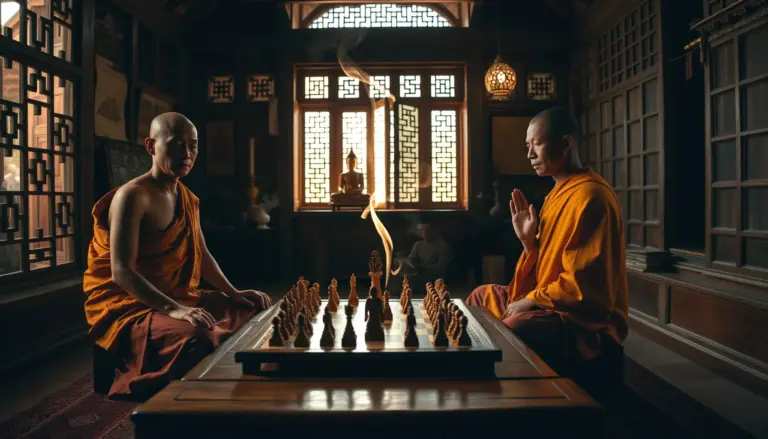
Imagine a board 64 squares where each movement not only moves pieces of wood, but activates neural networks, delays cognitive decline and weaves social connections at a stage of life where loneliness often gains ground. chess, that ancient game that has served as a metaphor for war, politics and even love, has become an unwritten medical prescription for older adults. But, why neurologists, geriatricians and psychologists recommend it so insistently? The answer is not in checkmate, but in the silences between movements, in the patience that each game requires and in the brain plasticity that awakens. This article explores the scientific reasons, social and emotional behind this atypical prescription, where the king is not the target, but the process.
Chess as a brain gym: neuroplasticity in the elderly
The human brain, even in old age, retains an astonishing ability to reorganize itself and form new neuronal connections: neuroplasticity. However, this ability atrophies without adequate stimuli. This is where chess comes into the picture as a personal trainer for the mind. A study published in the New England Journal of Medicine revealed that older adults who practiced cognitively demanding activities, like chess, reduced by a 63% the risk of developing dementia. But, What is it about this game that makes it so effective??
The key lies in its multidimensional nature. Each game requires memory (remember openings and patterns), calculation (anticipate plays), creativity (devise alternative plans) and decision making under pressure. These functions simultaneously activate the prefrontal cortex, the hippocampus and the parietal lobe, critical areas for cognition. Besides, Chess forces players to alternate between convergent thinking (focused on solving immediate problems) and the divergent (explore multiple solutions), an exercise that strengthens mental flexibility. To delve deeper into the scientific mechanisms behind these benefits, We invite you to explore our article on chess for seniors: the science behind the prescription.
But chess not only prevents deterioration; you can also reverse it. Researchers from the University of California showed that older adults with mild cognitive impairment who participated in a chess program for six months improved their working memory and processing speed. The game acts as a puente between what the brain already knows and what it can learn, facilitating the transfer of skills to everyday situations, how to remember recipes or manage finances.
The board as an antidote to loneliness and depression
Loneliness in the elderly is not just an emotional issue; is a risk factor for cardiovascular diseases, diabetes and depression. According to the World Health Organization, he 20% of older adults in the world suffer from a mental disorder, and loneliness is one of the main triggers. chess, in this context, works as a social catalyst.
In chess clubs, nursing homes or even in public parks, the board becomes a meeting point. Unlike other group activities, chess does not require physical skills, which makes it accessible for people with reduced mobility. Besides, encourages meaningful interactions: two players can spend hours in silence, but that silence is loaded with complicity, strategy and, above all, human connection. An Oxford University study found that older adults who participated in board games, especially chess, reported lower levels of depression and a greater sense of belonging.
Chess also offers a sense of purpose. At a stage of life where many feel their usefulness has diminished, the game gives them back control. Each game is an opportunity to show that the mind is still active, that decisions matter and that, even if the body ages, the ability to think, plan and compete remains intact. To understand how chess can be a therapeutic tool in even more complex contexts, How to treat depression in young people, We recommend you read our article on therapeutic chess: how it helps young people with depression.
Strategy and resilience: chess lessons for everyday life
Chess is not just a game; is a metaphor of life, and in the elderly, This metaphor takes on a special meaning. Each game teaches that decisions have consequences, that patience is a virtue and that, even in seemingly hopeless situations, there is always a possible movement. These lessons are especially valuable for older adults facing drastic changes.: retirement, loss of loved ones or chronic illness.
A key concept of chess is zugzwang, a situation where any movement worsens the player's position, but not moving is not an option. in real life, Older adults often find themselves in similar situations: They must adapt to new technologies, to loneliness or dependence, although neither option is comfortable for them. Chess teaches them to evaluate risks, to accept that you can't always win and to find satisfaction in the process, not only in the result.
Besides, the game encourages resilience. Losing a game is not a failure, but an opportunity to analyze errors and improve. This mentality is crucial in old age, where the failures (like forgetting a name or tripping) can generate frustration and anxiety. Chess normalizes error as part of learning, something that cognitive psychology has shown to reduce stress and improve self-esteem. If you are interested in how chess can be a mirror of everyday life, don't stop reading chess in life: lessons to make better decisions.
Chess as an intergenerational bridge
One of the most beautiful aspects of chess is its ability to unite generations. In a world where technological and cultural gaps often separate grandparents and grandchildren, the board becomes a universal language. Age doesn't matter, language or experience: everyone plays by the same rules.
This intergenerational connection has mutual benefits. For older adults, Playing with children or young people allows them to feel relevant, share your wisdom and keep up to date with new generations. For the youngest, chess is an opportunity to learn patience, strategy and, above all, listen. A Harvard University study found that children who played chess with their grandparents developed greater empathy and social skills..
Besides, chess can be a tool to transmit values. In many cultures, the game has been used to teach lessons about life: the value of planning, the importance of humility and respect for the opponent. In an increasingly individualistic world, These lessons are needed more than ever.. If you want to explore how chess can be a bridge between grandparents and grandchildren, we invite you to read chess: the bridge that unites grandparents and grandchildren without words.
Chess in clinical practice: from nursing homes to hospitals
The benefits of chess for older adults have not gone unnoticed by the medical community. In countries like Spain, Cuba and Argentina, The game has been integrated into cognitive rehabilitation and occupational therapy programs. In nursing homes, Chess games are as common as physical therapy sessions, and in some hospitals, It is used as a complement in the treatment of neurodegenerative diseases.
A notable case is that of Sant Pau Hospital in Barcelona, where chess is used as a non-pharmacological therapy for Alzheimer's patients. The results are encouraging: Patients who participate in chess sessions show an improvement in their attention span and a reduction in symptoms of agitation. The game acts as a anchor for memory, helping patients remember movements, strategies and even emotions associated with past games.
In Cuba, Chess has been part of the school curriculum since 1961, but it has also been implemented in programs for older adults. The Cuban Chess School has developed specific methodologies for this population, focused on cognitive stimulation and socialization. These programs have shown that chess not only improves memory, but also reduces anxiety and improves sleep quality. To learn more about how chess is used in nursing homes and rehabilitation centers, we recommend our article chess in nursing homes: therapy that revives memory and joy.
Conclusion: chess as a philosophy of life
Chess is not a miracle cure, but it is a powerful tool to improve the quality of life in the elderly. Its true value does not lie in checkmate, but in the processes it activates: memory, socialization, resilience and intergenerational connection. In a world that often marginalizes older adults, the board gives them back a space where their experience, Your patience and wisdom are not only valued, but necessary.
Doctors recommend it because they have seen its effects: more agile brains, more stable emotions and fuller lives. But chess is also an invitation to rethink aging. It's not about resisting the passage of time, but to find new ways to grow, learn and connect. In each game, older adults don't just move pieces; move borders, They challenge stereotypes and demonstrate that the mind, like chess, has no age.
If this article has inspired you to explore chess as a tool for well-being, We invite you to discover more about how play can be a refuge in times of anxiety in our article chess: refuge from global anxiety. Why, in the end, chess is not just a game; It's a way of living.