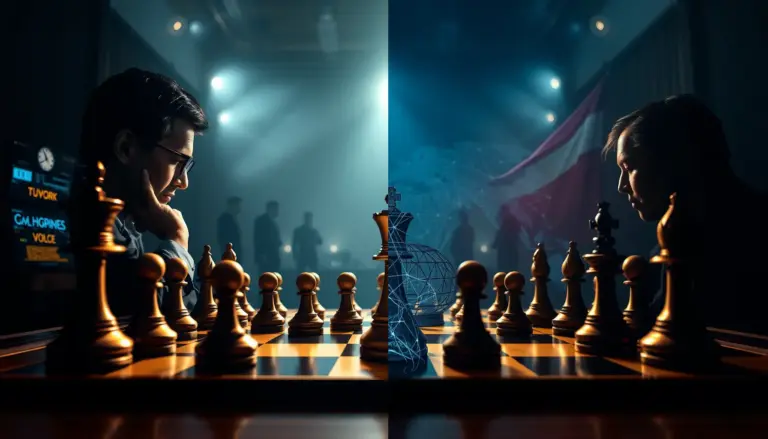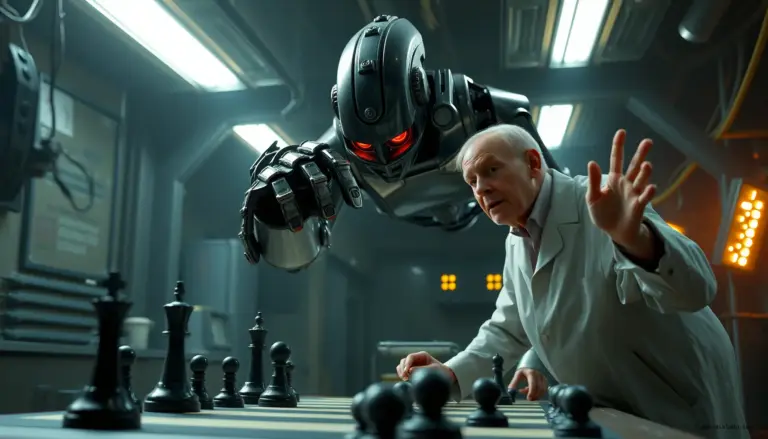
chess, that ancient game of strategy and mind, has fascinated humanity for centuries. But beyond the brilliant games and the legendary champions, There is a dark legend that has haunted some of the best players in history: the mystery of the cursed board. It is said that certain boards, either because of its age, their origin or the tragic events that surround them, They have ruined careers, plunged their owners into madness or even caused unexplained deaths. Is it just a superstition or is there something more behind these stories? Throughout this article, we will explore documented cases, psychological theories and the impact that these objects have had on the world of chess. From boards linked to tragedies to players who swore never to touch certain pieces again, We will unravel the enigma that has turned chess into something more than a simple game.
The origin of the curse: boards with history
The idea that certain objects can be “cursed” It is not exclusive to chess. throughout history, artifacts like swords, jewelry or even books have been associated with misfortunes. In the case of chess boards, Some of the most famous are linked to tragic events or historical figures who suffered fatal fates.. One of the best known examples is the staunton board used in the Saint Petersburg Chess Tournament 1914, where the great teacher Aaron Nimzowitsch lost a crucial game against Emanuel Lasker. Nimzowitsch, who used to be an unflappable player, He later stated that the board “there was something strange” and he couldn't concentrate. Although his defeat did not ruin his career, The anecdote set a precedent in the chess community.
Another intriguing case is that of Paris Opera board, used in a duel between Paul Morphy and the Duke of Brunswick in 1858. Morphy, considered one of the best players in history, He suffered a mental breakdown years after that game.. Some historians suggest that the stress of that encounter, combined with the pressure of being a prodigy, contributed to its decline. Although there is no evidence that the board was “damn”, The coincidence is too striking to ignore..
These boards are not just physical objects, but symbols of decisive moments in the lives of their players. Their historical value makes them museum pieces., but also in carriers of an emotional charge that transcends the game. Is it possible that the human mind, under extreme pressure, project your fears onto inanimate objects? Psychology suggests yes.
The psychology behind the curse
The human brain is a complex organ that, under stress conditions, can lead to distorted perceptions. in chess, where concentration and mental clarity are essential, any distraction can be fatal. The idea of a cursed board can act as a self-fulfilling prophecy: If a player believes that the item will bring him bad luck, your performance will be affected.
A study published in the journal Psychological Science in 2015 showed that chess players who believe in superstitions tend to make more mistakes under pressure. This is because your mind is divided between game strategy and worrying about external factors., like a board “damn”. Besides, he reverse placebo effect —where the expectation of a negative outcome makes it more likely—can play a crucial role. If a player associates a board with a past defeat, you are more likely to repeat the mistake.
But psychology doesn't explain everything.. Some players have reported unexplained experiences, such as feeling a hostile presence during a game or hearing strange noises. In 2018, the great teacher Veselin Topalov abandoned a game in Candidates Tournament after stating that “something wasn't right” with the board. Although there was no evidence that the object was tampered with, His reaction was so intense that the organizers decided to replace him. Was it just suggestion or is there something else on these boards that science can't explain yet??
Cursed boards in popular culture
The legend of the cursed boards has transcended the world of chess to become a recurring theme in popular culture.. Movies, books and series have explored this idea, mixing fiction with real facts. One of the most famous examples is the film The seventh seal (1957) de Ingmar Bergman, where Death plays chess with a medieval knight. Although the game is not linked to a specific board, the scene symbolizes the struggle between life and death, reinforcing the idea that chess is a game with metaphysical consequences.
in literature, the writer Vladimir Nabokov, a chess enthusiast, he explored the topic in his novel The defense (1930). The work tells the story of a player obsessed with chess who ends up losing his sanity.. Nabokov, who was also a strong player, used the board as a metaphor for life and death, suggesting that gambling can be both a salvation and a curse.
Even in the world of video games, the idea of a cursed board has been exploited. In The Witcher 3: Wild Hunt, there is a secondary mission where the protagonist, Geralt de Rivia, must solve a mystery related to a chess board that has caused the death of several players. Although it is fiction, the plot is based on real legends, demonstrating how myth has permeated different art forms.
These cultural performances not only entertain, but they also reinforce the idea that chess is more than a game. For many, It is a reflection of the human condition, with its triumphs and tragedies. And in some cases, These boards become silent witnesses of stories that go beyond the rational..
Does the curse really exist or is it just superstition?
The question that inevitably arises is whether these boards are really cursed or if everything is a product of superstition.. Science offers rational explanations: stress, psychological pressure and the reverse placebo effect can explain most cases. However, there are details that escape logic.
One of the most documented cases is that of Rothschild family board, used in the 19th century by several members of this influential dynasty. According to the records, at least three players who used it suffered premature deaths or mental problems. Although there is no evidence that the board was “damn”, the coincidence is disturbing. Some researchers suggest the board could be made of toxic materials, like lead or arsenic, that affected the health of those who handled it for long periods.
Another theory points to the residual energy, a pseudoscientific idea that suggests that objects can absorb the emotions of those who use them. In the case of chess boards, who often witness intense games and extreme emotions, This theory could explain why some players feel a negative presence when touched. Although there is no scientific evidence to support this idea, It is a recurring theme in paranormal folklore.
Ultimately, The answer may lie at the intersection of psychology and the inexplicable.. for some, the curse is real; for others, It's just a superstition. But the truth is that, in the world of chess, where the mind is the main tool, perception is everything. A player who believes in the curse of a board has already lost the game before moving the first piece.
Conclusions: chess as a mirror of the human mind
The mystery of the cursed board is, in essence, a reflection of the complexity of the human mind. throughout history, chess has been much more than a game: It has been a psychological battlefield, a symbol of power and, in some cases, an obsession that has pushed its practitioners to the limit. The cursed boards, whether real or imaginary, They represent that fine line between genius and madness.
We have explored documented cases, psychological theories and the cultural impact of these legends. From the Staunton board to that of the Rothschild family, each story reminds us that chess is not just a game of strategy, but also emotions. The pressure, superstition and suggestion can turn a simple board into an object of fear. However, It is also true that, in most cases, the “curse” It is nothing more than the result of the human mind working at its maximum expression—or at its worst—.
In the end, the real mystery is not on the boards, but in ourselves. Are we able to separate reality from superstition? ¿O, like the players who swore never to touch certain pieces again, we are condemned to see ghosts where there are none? chess, with its mix of logic and emotion, remains the perfect mirror to explore these questions. and maybe, on that board 64 casillas, let's find answers that go beyond the game.