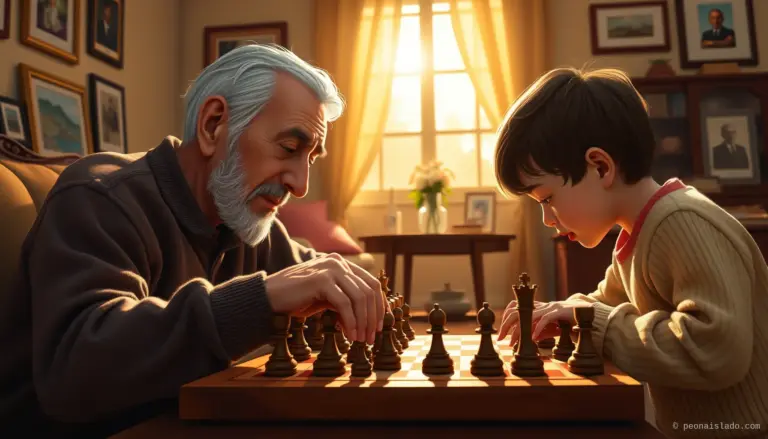
In a forgotten corner of Spain, where the wind whistles between empty houses and the echo of depopulation resounds like a checkmate without an answer, A group of chess players decided to turn the board into a shield against decay. It was not just another tournament, not even a game between friends in a city cafe. It was an act of resistance: chess as a tool of social reconstruction, as a seed of community in a town that time had left behind. This is the story of how a chess club. not only saved a place, but he rewrote his destiny.
The town that chess rescued from oblivion
Imagine a town where the streets, formerly bustling, now they only house the silence of the cracked facades. Where the school closed years ago, The bar is only open on Sundays and young people left in search of opportunities. This was the setting of a small Spanish municipality—whose name, out of respect for its inhabitants, we prefer to skip—until a group of neighbors, led by a retired professor and a couple of board enthusiasts, decided that chess could be more than just a hobby. could be a magnet.
The idea came almost by chance.. A local tournament, organized with more will than resources, attracted visitors from nearby towns. They were not great teachers, but fans who found in that place something more than a board: an excuse to socialize, to break the routine. The neighbors, seeing the interest, They began to offer accommodation in their homes, to prepare traditional foods and share stories. Chess became the perfect excuse to weave networks where before there was only loneliness. As our article on chess in life, the game not only teaches strategy, but also human connection.
From games to revitalization: the domino effect
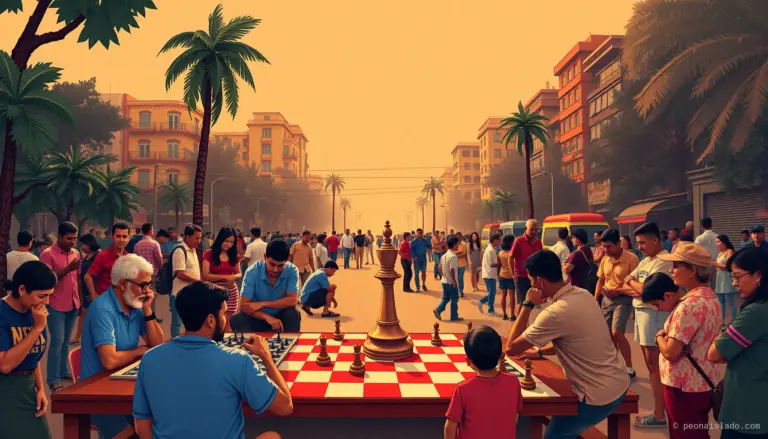
What started as a sporadic tournament became a life project. The chess club, founded with just a dozen members, started organizing weekly activities: classes for children, intergenerational tournaments, even workshops for older adults. The key was not in the competition, but in the inclusion. As happens in the chess programs in prisons, where play acts as a bridge to reintegration, here the board became a meeting space.
The results did not take long to arrive. The abandoned houses began to be rented to tourists who came attracted by the club's fame.. A rural hostel opened its doors, and shortly after, a café-bar where chess players could play while enjoying a coffee. The town, who had lost his last doctor years before, managed to get a professional to install temporarily thanks to an agreement with the city council: in exchange for free accommodation, served the neighbors and visitors of the club. chess, in this case, not only did he save a town, but gave him a second chance.
Chess as a mirror of community resilience
The case of this Spanish town is not isolated. all over the world, Chess has proven to be a powerful tool for social transformation. In Medellin, For example, los chess clubs have served to keep young people away from violence and offer them alternatives for development. In Africa, Projects like the one in the Marshall Islands use play to heal collective traumas. What do these cases have in common?? The ability of chess to generate structure, discipline and, above all, esperanza.
In the Spanish town, The club not only filled the places with players, but also recovered almost lost traditions. The tournaments became parties where quick games were mixed with folk music., and where visitors could learn about local history. chess, in this context, It stopped being a game to become a symbol of cultural resistance. As our article on chess and resistance in America, the board has historically been a space for silent struggle, but powerful.
Lessons for other peoples: Can chess be the solution?
The question that arises is inevitable: Can this model be replicated in other places?? The answer is not simple, but there are keys that can guide those who seek to emulate this success. First of all, chess should be seen as a medium, not as an end. It's not just about winning games, but to create community. In second place, flexibility is essential. The Spanish town club was not limited to organizing tournaments; It also adapted its activities to local needs, from workshops for children to talks about history.
Another crucial factor is collaboration with institutions. The town hall, although initially skeptical, ended up supporting the project with resources and dissemination. This allowed the club to grow and attract more visitors.. Finally, chess should be accessible. in this town, the classes were free, and the tournaments had categories for all levels. As our article on inclusive chess, The democratization of the game is fundamental for its social impact.
The future: a sustainable model?
The biggest challenge for this town's chess club is not keeping its members interested., but to ensure its long-term sustainability. For this, They have diversified their sources of income: from the sale of merchandising with the club logo to the organization of private events for companies. They have also explored alliances with schools in nearby cities, offering educational chess workshops.
However, true success is not measured in numbers, but in the intangible impact. Hoy, The children of the town not only know how to play chess, but they have also learned to value their community. The older adults, previously isolated, Now they have a space to share their knowledge. and the visitors, that come from everywhere, they take more than a won game: They take the history of a town that refused to disappear.
In a world where rural depopulation is a growing problem, This case shows that solutions do not always require large investments. Sometimes, just one board, a few pieces and the will to believe that the game can change the rules of destiny. chess, in this town, It wasn't just a hobby. It was an act of rebellion, a checkmate to oblivion.
The board is ready. The game, under way. Are we willing to play?