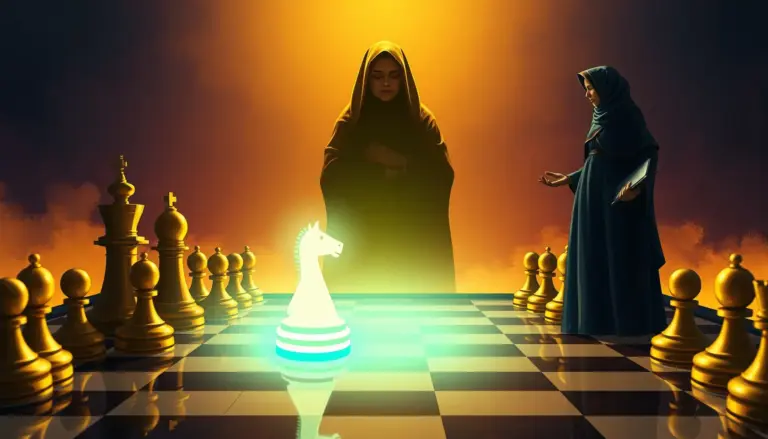
chess, more than just a strategy game, has transcended throughout history as a bridge between cultures, ideologies and nations. In a world where geopolitical tensions often dominate the headlines, this ancient board 64 Casillas has become a subtle but powerful tool of international diplomacy. From the Cold War to modern conflicts, chess has served as a stage for dialogue, peaceful competition and even reconciliation. Its ability to unite adversaries on neutral ground, where the rules are clear and mutual respect is essential, positions it as a symbol of cooperation in the midst of discord. This article explores how chess has shaped international relations, analyzing its role in soft diplomacy, its influence on public perception and its potential to build bridges in a fragmented world.
Chess as a universal language of diplomacy
Chess does not require translation. Your rules, although complex, they are universal, which makes it a means of communication that transcends linguistic barriers, cultural and even political. This characteristic has made it a valuable instrument for soft diplomacy., where the objective is not to impose, but to persuade and connect. During the Cold War, For example, The meetings between Soviet and American chess players were not simple games, but symbolic acts that reflected the tension and, at the same time, the possibility of peaceful coexistence. The famous “Match of the Century” of 1972 between Bobby Fischer and Boris Spassky in Reykjavík was not only a sporting milestone, but a diplomatic moment that captured global attention and demonstrated how chess could be a catalyst for dialogue amid superpower rivalry..
Beyond tournaments, Chess has been used as a rapprochement tool in conflict contexts. In 2018, For example, North and South Korea participate in chess tournament in Russia, marking a rare moment of cooperation between both countries. These meetings, although seemingly innocuous, they send a powerful message: even in the midst of mistrust, There is a common ground where competition can be peaceful and respect, an unwritten rule. chess, in this sense, acts as a “neutral language”, where political differences are put aside in favor of logic and strategy.
The influence of chess on public perception and international image
Chess not only facilitates dialogue between governments, but also shapes public perception of countries on the global stage. A prominent chess player can become an unofficial ambassador for his nation, projecting an image of intelligence, discipline and sophistication. Garry Kasparov, For example, He was not only a world champion, but also a figure who transcended the board to become a symbol of intellectual resistance against authoritarianism.. His chess career and subsequent political activism demonstrated how chess can be a platform to influence international public opinion..
International tournaments, for his part, They are showcases where countries exhibit their culture, values and organizational capacity. FIDE (International Chess Federation) has played a key role in this aspect, promoting events that bring together players from all over the world under the motto of unity. The World Chess Championship, For example, It is not only a sports competition, but also a showcase of cultural diplomacy. When a country like Norway, with a modest chess tradition, organized the duel between Magnus Carlsen and Viswanathan Anand in 2013, not only demonstrated its logistical capacity, but also its commitment to the values of inclusion and diversity that chess represents.
Besides, Chess has been used as a tool of “soft power” to improve the image of countries with controversial reputations. Russia, For example, has invested heavily in chess as part of its cultural diplomacy strategy, promoting high-level tournaments and supporting young talents. This bet not only seeks to highlight the country's chess legacy, but also project an image of modernity and openness. In a world where public perception can influence international relations, chess becomes a strategic asset.
Chess in conflict resolution: beyond the board
Chess is not only for competition, but also to teach essential skills in conflict resolution. The ability to anticipate movements, Assessing risks and adapting to opponent strategies are skills that transcend the board and can be applied in international diplomacy.. Organizations such as the Kasparov Foundation for Eastern Europe have used chess as an educational tool to encourage critical thinking and tolerance in conflict-affected regions., like the Balkans or the Caucasus. These programs not only teach how to play, but they promote values such as respect, patience and negotiation skills.
In postwar contexts, Chess has been used as a means to rebuild trust between divided communities. In Bosnia and Herzegovina, For example, Interethnic tournaments have served to bring together young people from different origins, creating spaces where political and religious differences are set aside in favor of peaceful competition. These meetings, although small, are important steps towards reconciliation, proving that chess can be a catalyst for peace.
Even in active conflicts, chess has played a symbolic role. During the Six Day War in 1967, Soviet chess player Mikhail Tal and Israeli Daniel Yanofsky played a friendly game in Moscow, a gesture that, although it did not resolve the conflict, sent a message of humanity in the midst of chaos. These moments show that chess can be a reminder that, even in the darkest moments, there is common ground where reason and respect can prevail.
The future of chess as a diplomatic tool
In an increasingly digital world, Chess has found new ways to influence international diplomacy. Platforms like Chess.com or Lichess have democratized access to the game, allowing millions of people around the world to compete and collaborate regardless of their geographic location. This globalization of chess has opened new opportunities for digital diplomacy, where virtual meetings can serve as a prelude to more formal dialogues. During the COVID-19 pandemic, For example, online tournaments brought together players from countries in conflict, like Iran and the United States, proving that even in a virtual environment, chess can be a bridge.
Besides, Chess is gaining relevance on the agenda of international organizations. UNESCO, For example, has recognized the educational and cultural value of chess, promoting their inclusion in educational systems around the world. This initiative not only seeks to improve the cognitive skills of students, but also promote values such as tolerance and mutual respect. In a global context where polarization and misinformation are growing challenges, Chess can be a tool to counteract these phenomena, teaching new generations to think critically and value dialogue over confrontation.
The future of chess as a diplomatic tool also depends on its ability to adapt to new geopolitical challenges.. In a world where tensions between powers like the United States and China dominate the international scene, Chess could be a neutral field where both nations compete peacefully. Tournaments like “Grand Chess Tour” They already bring together the best players in the world, including representatives of these powers, offering a model of how competition can be constructive rather than destructive. If used properly, Chess could become a key element of 21st century diplomacy, where intelligence and strategy prevail over force.
chess, with its rich history and its ability to bring people together, has proven to be much more than a game. throughout the centuries, has served as a bridge between cultures, a symbol of intellectual resistance and a tool for international diplomacy. From meetings during the Cold War to tournaments that bring together countries in conflict, Chess has offered a neutral ground where dialogue and mutual respect are possible.. Its influence on public perception, Its role in conflict resolution and its potential to adapt to the challenges of the 21st century make it a valuable asset for soft diplomacy..
In a world fragmented by geopolitical tensions and ideological divisions, chess reminds us that, even in the most intense competition, there is space for humanity. Its ability to teach essential skills such as critical thinking, patience and negotiation positions it as an educational and diplomatic tool of great relevance. As we move towards an uncertain future, chess can be a beacon of hope, proving that, even in the darkest moments, reason and respect can prevail. Ultimately, chess is not only a game of kings, but also a game for peace.