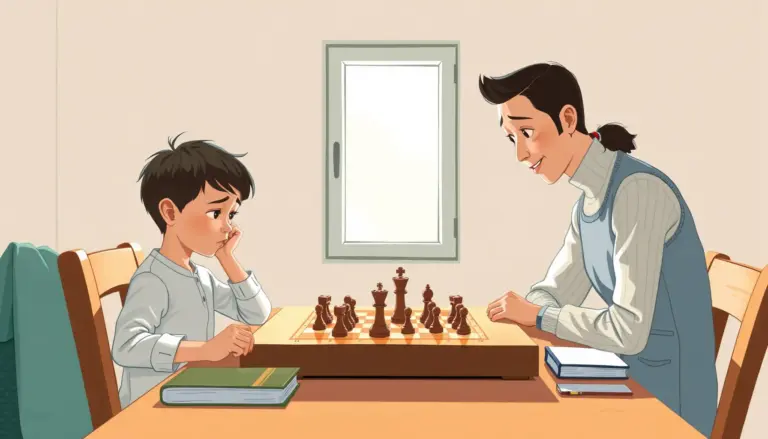
Chess is an ancient game that has proven to be much more than a simple hobby.. For children with Attention Deficit Hyperactivity Disorder (ADHD), This mental sport can become a powerful tool to improve cognitive skills, emotional and social. ADHD, characterized by difficulties in concentration, impulsivity and, in some cases, hyperactivity, affects millions of children around the world. However, chess, with its structure, clear rules and strategic approach, offers a controlled environment where these children can develop their potential without feeling overwhelmed.
In this article, We will explore how chess can be an ally in the development of children with ADHD. We will analyze the specific benefits that this game brings, from improving concentration to encouraging patience and decision making. We will also address practical strategies to introduce chess into the lives of these children., adapting learning to your particular needs. Finally, We will reflect on how chess can become a therapeutic and educational activity, complementing other interventions for ADHD.
The cognitive benefits of chess in children with ADHD
Chess is a game that requires a high level of concentration, planning and logical thinking. For children with ADHD, These skills are often areas of difficulty, but they are also precisely the ones that chess can help strengthen. Studies have shown that regular chess practice improves the ability to sustain attention., as the player must stay focused on the board for long periods. This is especially valuable for children with ADHD., who often struggle to maintain concentration on monotonous or prolonged tasks.
Besides, Chess promotes the development of working memory, a key executive function that allows you to retain and manipulate information in the mind. Children with ADHD often have difficulties in this area, which affects their academic performance and their ability to follow complex instructions. When playing chess, They must remember previous movements, anticipate the opponent's moves and plan your own strategies, which exercises this skill in a natural and fun way.
Another important cognitive benefit is improved decision making.. Chess forces players to evaluate multiple options before acting, which contrasts with the impulsivity characteristic of ADHD. Through practice, children learn to pause, analyze and choose the best move, a skill that can be carried over to other aspects of your life, such as problem solving at school or managing social conflicts.
Chess as a tool for emotional regulation
ADHD doesn't just affect cognition, but also emotional regulation. Children with this disorder can easily experience frustration, especially when facing challenges or failures. chess, however, offers a safe space to learn to manage these emotions. Every game is an opportunity to practice patience, perseverance and resilience, since even the most experienced players make mistakes and lose games.
One of the most valuable lessons that chess teaches is that mistakes are part of learning.. For a child with ADHD, who may feel overwhelmed by criticism or failure, this is essential. When analyzing your games, they can identify what went wrong and how to improve in the future, which encourages a growth mindset. Besides, chess allows them to experience success in a tangible way: every victory, no matter how small, reinforces their self-esteem and motivates them to continue trying.
Another key emotional aspect is the management of impulsivity.. in chess, acting without thinking usually leads to defeat, which teaches children to control their impulses and reflect before moving a piece. This skill is transferable to everyday situations, like waiting your turn in a conversation or thinking before acting in a conflict. Over time, Chess can help children with ADHD develop greater self-discipline and self-control.
Strategies to introduce chess to children with ADHD
Introducing chess into the life of a child with ADHD requires an approach tailored to their needs.. It's not just about teaching them the rules of the game., but to do it in a way that captures their interest and fits their learning style. An effective strategy is to start with short and dynamic games, avoiding long sessions that may bore or frustrate them. For example, You can play quick games of 5 o 10 minutes, which keeps their attention without overloading them.
Another useful technique is to use visual and tactile materials to teach the movements of the pieces.. Children with ADHD tend to learn best when they can manipulate objects and see graphic representations.. For example, You can use boards with bright colors or pieces with different shapes and textures to make learning more interactive. It is also advisable to incorporate games prior to chess, as “the pawn eats the pawn” o “the king in danger”, that simplify the rules and make the game more accessible.
Motivation is key to maintaining the interest of a child with ADHD. One way to achieve this is to set small, achievable goals., like learning to move a new piece every week or winning a game against an opponent of your level. Celebrate these achievements, however minimal they may be, reinforces their self-esteem and encourages them to continue practicing. Besides, It is important that chess is not perceived as an obligation, but as a fun activity. Incorporate playful elements, such as family tournaments or games themed around their favorite characters, can make the game more attractive.
Chess as a therapeutic complement for ADHD
Chess is not just a game, but also a therapeutic tool that can complement other interventions for ADHD. In many cases, It is used in behavioral and cognitive therapies to work on specific skills, like attention, memory and impulse control. For example, Some therapists incorporate chess into executive function training sessions, where children practice planning and self-regulation while playing.
Besides, Chess can be a socializing activity for children with ADHD, who often have difficulty interacting with their peers. Participating in chess clubs or school tournaments gives them the opportunity to interact with other children in a structured environment with clear rules.. This can improve your social skills, like communication, cooperation and respect for turns, while helping them feel part of a group.
Another therapeutic aspect of chess is its ability to reduce stress and anxiety.. For children with ADHD, School and everyday activities can be overwhelming, but chess offers a space for calm and concentration. By focusing on the board, They can disconnect from external distractions and find a moment of tranquility. This is especially helpful for those children who experience anxiety or frustration in academic or social situations..
Conclusions: Chess as an ally in the development of children with ADHD
Chess is much more than a strategy game: It is a valuable tool for the development of children with ADHD. Throughout this article, We have explored how this mental sport can improve cognitive skills such as concentration, memory and decision making, areas that are often challenging for these children. Besides, chess promotes emotional regulation, teaching patience, resilience and impulse control, fundamental aspects for your emotional and social well-being.
Introducing chess into the life of a child with ADHD requires an adapted approach, that combines fun, motivation and accessible learning strategies. It's not about imposing the game, but to make it attractive and meaningful for them. Over time, Chess can become a therapeutic activity that complements other interventions, helping children develop skills that transcend the board and are applied in their daily lives.
Ultimately, Chess offers children with ADHD a unique opportunity to grow, learn and overcome challenges. It's not a magic solution, but it is a powerful tool that, when used appropriately, can make a significant difference in your development. If you are looking for an activity that combines fun, learning and therapeutic benefits, chess is, definitely, an excellent option.