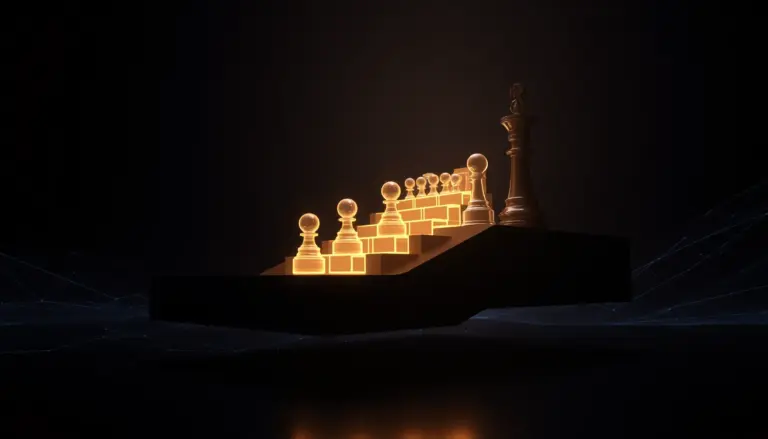
In a world marked by uncertainty, where economic crises, Geopolitical conflicts and digital saturation generate record levels of anxiety, chess emerges as an unexpected refuge. This ancient game, more than just a hobby, It has become a therapeutic tool and a space of calm for millions of people.. According to data from the International Chess Federation (FIDE), The COVID-19 pandemic fueled growth in 66% in the number of active players on online platforms, while recent studies link its practice with reducing stress and improving mental health. But, why chess, with its apparent complexity, acts as a balm in turbulent times? This article explores how its structure, Its ability to focus the mind and its social dimension make it an ally against global anxiety, offering not only an escape, but also valuable lessons to face adversity.
Chess as an anchor in the storm: concentration and control
Global anxiety feeds, to a large extent, of the feeling of loss of control. Events like wars, pandemics or climate crises remind us of our vulnerability to forces beyond our control. In this context, Chess offers something that the outside world rarely provides: a closed system with clear rules and predictable consequences. every movement, each strategy, It is a decision that depends exclusively on the player, which creates a sense of agency rare in everyday life.
Neuroscientists like Dr.. Robert Sapolsky, from Stanford University, have shown that playing chess activates the prefrontal cortex, the region of the brain associated with decision making and impulse control. This not only improves the ability to concentrate, but also reduces rumination—that cycle of repetitive thoughts that fuels anxiety—. A study published in *Frontiers in Psychology* in 2021 found that regular chess players showed lower levels of cortisol, the stress hormone, compared to those who did not play the game.
Besides, chess requires a kind of mindfulness (*mindfulness*) that many look for in meditation. When analyzing positions, calculate variants or anticipate the opponent's moves, the mind immerses itself in a state of flow (*flow*), a concept developed by psychologist Mihály Csíkszentmihályi. This state, characterized by total absorption in an activity, has been linked to reduced anxiety and increased emotional well-being. In a hyperconnected world, where notifications and news bombard our attention, Chess forces you to disconnect from external noise to reconnect with the present.
The paradox of challenge: how difficulty relieves anxiety
It may seem contradictory that a game known for its complexity—with more possible games than atoms in the observable universe—is a remedy for anxiety.. However, It is precisely that difficulty that makes it therapeutic. Anxiety arises when we perceive that the demands of a situation exceed our resources to cope with it.. chess, instead, offers a *manageable* challenge: although the possibilities are endless, Each game is a specific problem that can be solved with patience and logic.
This dynamic aligns with the theory of *positive stress* or *eustress*, proposed by endocrinologist Hans Selye. Unlike distress (negative stress), eustress is stimulating and motivating, since it implies a challenge that, although demanding, It is within our capabilities. A study from the University of California at 2019 revealed that chess players experienced an increase in dopamine levels—the neurotransmitter associated with motivation and reward—during difficult games., but not overwhelming. This explains why many describe chess as “addictive in a good way”: Each game is an opportunity to improve yourself without the risk of collapsing.
Another key aspect is the *frustration tolerance* that chess develops.. Lose a game, making a mistake or being surpassed by a rival are inevitable experiences, but they are also lessons. In a world where failure is often perceived as a blow to self-esteem, Chess teaches that mistakes are part of the learning process. This mentality, known as *growth mindset* (growth mindset), was popularized by psychologist Carol Dweck and has been shown to reduce anxiety in the face of challenges. Players like Magnus Carlsen, current world champion, have spoken openly about how chess helped them handle pressure and self-criticism since childhood.
The board as a social space: community in times of isolation
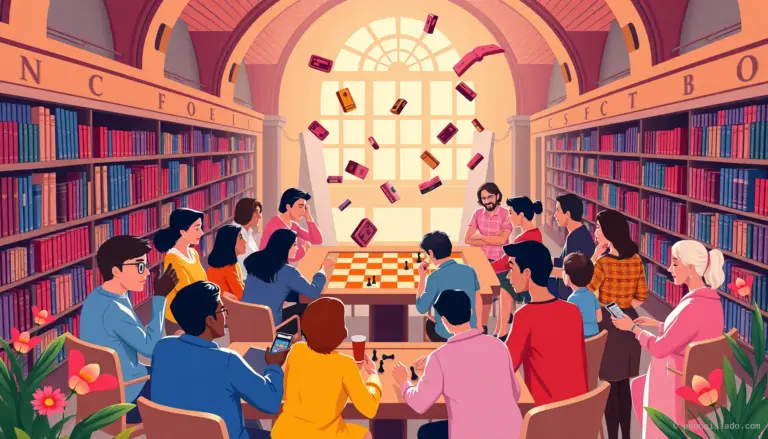
Global anxiety is not only a product of external events, but also loneliness and disconnection. chess, although it is often perceived as a solitary game, It has a deep social dimension. From local clubs to online platforms like Chess.com or Lichess, chess creates communities where people find belonging and support. During the pandemic, many turned to this game not only as a distraction, but as a bridge to maintain human contact in a time of physical distancing.
A FIDE report on 2022 highlighted that the 42% of new online gamers during the pandemic did so motivated by friends or family. This social aspect is crucial, since human interaction—even mediated by a board—releases oxytocin, a hormone that reduces stress and promotes confidence. Besides, chess transcends cultural and linguistic barriers: two people who do not speak the same language can communicate through the pieces, creating a universal language.
Initiatives like *Chess for Mental Health*, promoted by FIDE, They have brought chess to psychiatric hospitals, rehabilitation centers and schools in conflict zones, demonstrating its potential as an inclusion tool. In countries like Armenia, where chess is part of the school curriculum since 2011, An improvement in children's social skills and a reduction in anxiety levels has been observed. These examples underline that chess is not just a game, but a catalyst for human connections in an increasingly fragmented world.
Chess lessons for life: strategies against uncertainty
Beyond its immediate benefits, Chess offers a mental framework to face the uncertainty of modern life. Each game is a metaphor for everyday challenges: risks must be evaluated, adapt to the unexpected and make decisions with limited information. These skills are transferable to real situations, from the management of work projects to the resolution of personal conflicts.
One of the most valuable lessons of chess is *flexible planning*. Great teachers don't stick to a single plan; They anticipate multiple scenarios and adjust their strategy based on the opponent's moves. This ability to adapt without losing sight of the end goal is essential in a world where long-term plans are often interrupted by unforeseen crises.. The psychologist and chess player Jonathan Rowson sums it up this way:: “Chess teaches us to think in systems, not in isolated events”.
Another key lesson is *time management*. in chess, Each player has a limited time to make decisions, which forces us to prioritize and avoid paralysis by analysis. This skill is especially useful in the age of information overload., where anxiety usually arises from the feeling of not being able to process everything that is happening. Learning to distinguish between what is urgent and what is important—like in a game of chess—can reduce feelings of overwhelm..
Finally, chess teaches *resilience*. A lost game does not define the player, just as a failure in life does not define a person. The ability to get back up after a defeat, analyzing mistakes and trying again is a skill that transcends the board. In a global context where anxiety usually derives from the feeling of being trapped in a cycle of bad news, chess offers a way out: the possibility of restart, to learn and improve.
Conclusions: chess as a mirror and refuge
In a world where global anxiety seems a constant, chess stands as a refuge for its ability to offer structure, challenge and connection. It's not a magic solution, but a powerful tool for those seeking respite in the midst of chaos. Its practice activates brain regions associated with emotional control, teaches how to manage frustration and fosters resilience, essential skills in times of uncertainty.
Besides, chess reminds us that, even in the most complex situations, there is room for strategy and creativity. Every game is a reminder that, although we cannot control everything that happens around us, yes we can choose how to respond. In this sense, the board becomes a mirror: reflects our strengths, our weaknesses and our ability to adapt.
For those feeling overwhelmed by global anxiety, chess offers an accessible and enriching path. It's not about becoming a great teacher, but to find in this ancient game an ally to navigate the storm. As the writer Stefan Zweig said in his novel *The Chess Player*: “on the board, the man faces himself”. and maybe, in that confrontation, let's find the keys to also face the world.