From time immemorial, Chess has been more than just a board game. His presence in the military ranks is no coincidence, but the result of a deep connection between strategy, mental discipline and leadership. Civilizations like the Persian, The Romans and the Byzantines already recognized in this game an invaluable tool to train minds capable of anticipating movements., assess risks and make decisions under pressure. But, Why has a seemingly innocent game been adopted by armies throughout history as an essential part of their training??
Chess not only simulates battles on a board, but also reflects the fundamental principles of war: planning, adaptability and resource management. Through its seemingly simple rules, This game requires absolute concentration, a long-term vision and the ability to sacrifice smaller pieces for larger goals, skills that every commander must master. In this article, We will explore the historical reasons, psychological and tactical techniques that have turned chess into an indispensable ally for the military, from ancient times to modern times.
Chess as a mirror of military strategy
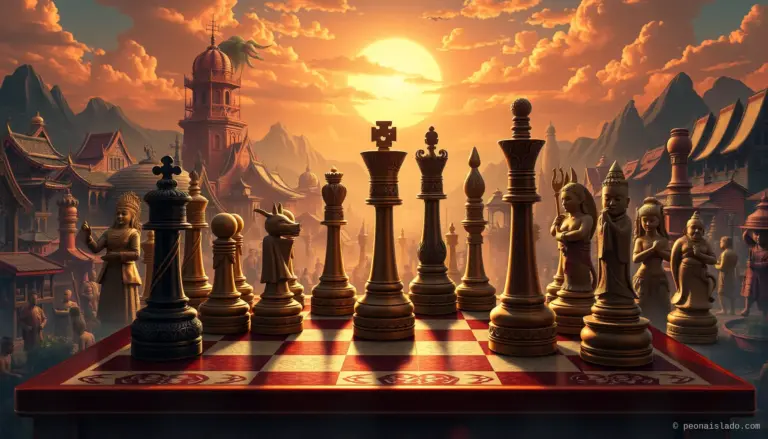
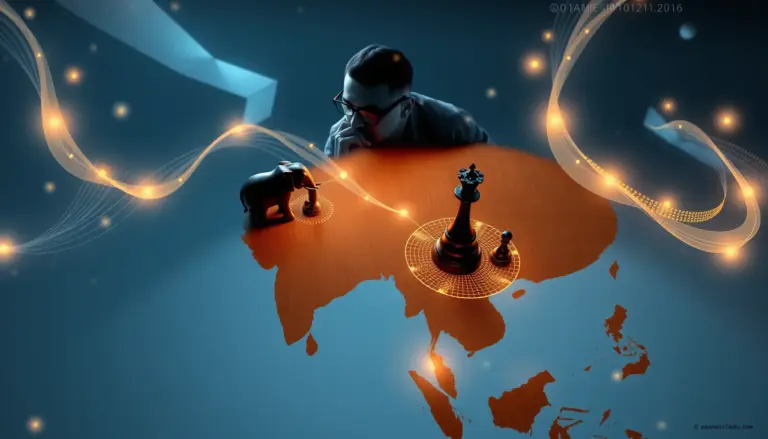
Chess was born in India around the 6th century under the name *chaturanga*, a game representing the four divisions of the Indian army: infantry, chivalry, elephants and war chariots. This structure was not merely symbolic, but rather it reflected the tactical organization of the battles of the time. Every piece on the board had an equivalent on the battlefield, and its movement imitated the real capabilities of those units. For example, the *bishop* (originally an elephant) moved diagonally, simulating the movement of these animals in combat, while the *tower* represented the war chariots, capable of moving in a straight line with great speed.
This direct analogy between gaming and war did not go unnoticed by military leaders.. In Sassanid Persia (224-651 d.C.), Chess became a mandatory training tool for officers. The Arab historian Al-Masudi recorded in the 10th century that Persian kings required their generals to master the game, because they considered that someone who could not plan a game could not lead a military campaign either.. This idea spread to other cultures: The Byzantines adopted it as part of the education of their strategists, and in medieval Europe, Figures such as King Alfonso X of Castile included chess in their treatises on military tactics.
But beyond the mere representation of military units, Chess teaches universal principles of strategy. One of the most important is the concept of *center of gravity*, developed centuries later by the Prussian military theorist Carl von Clausewitz. in chess, Controlling the center of the board grants positional advantages, allowing greater mobility and tactical options. in the war, This principle translates into identifying and neutralizing the enemy's key points, be it a fortress, a supply line or a charismatic leader. Napoleon Bonaparte, an avid chess player, He applied this idea in his campaigns, concentrating their forces on decisive points to unbalance the adversary.
The psychology of chess: mental training for the battlefield
War is not just a physical confrontation, but also a psychological battle. chess, being a game of perfect information (where both players know all the pieces and moves), requires exceptional ability to manage stress, uncertainty and pressure. These are exactly the same conditions that military personnel face in combat, where decisions must be made in seconds, with limited information and potentially catastrophic consequences.
Modern neuroscience studies have shown that playing chess regularly improves critical cognitive functions for the military.. A report published in *Frontiers in Psychology* in 2019 revealed that chess players develop a greater capacity for *working memory*, essential for retaining and processing multiple variables in real time. Besides, the game stimulates *cognitive flexibility*, allowing players to quickly adapt to changes on the board, a skill directly transferable to combat situations where initial plans rarely survive first contact with the enemy.
Another key psychological aspect is *tolerance of ambiguity*. in chess, like in war, It is not always clear which is the best move. Players must learn to make decisions with incomplete information, evaluating risks and rewards in an environment of uncertainty. This skill was highlighted by American General George S. Patton, who stated: *”A good plan executed today is better than a perfect plan executed tomorrow.”*. Patton, Known for his aggressiveness on the battlefield, He was also a competitive chess player, and attributed part of his success to the ability to act decisively even when the situation was unclear.
Chess also teaches how to handle *frustration and failure*. In a game, It is common to make mistakes that lead to defeat, but the player must analyze his mistakes, learn from them and move forward. This resilience is crucial in the military field, where mistakes can cost lives. During World War II, The British Army implemented chess programs for its officers, with the aim of improving your ability to recover from tactical setbacks. Field Marshal Bernard Montgomery, one of the most prominent allied commanders, He was an enthusiast of the game and used it as a tool to teach his subordinates to remain calm under pressure..
Chess in the training of modern military leaders
Although war has evolved with technology, The strategic principles that chess teaches are still relevant. Currently, military academies around the world, such as West Point in the United States or the General Military Academy of Zaragoza in Spain, They incorporate chess into their training programs. But, How is this ancient game applied to the challenges of the 21st century??
One of the most valued aspects is *decision making under pressure*. In an environment where information flows at dizzying speeds and threats can arise at any time, Military leaders must be able to quickly analyze multiple scenarios and choose the most effective course of action. chess, with its combination of tactical calculation and strategic vision, train this skill. For example, in the Gulf War 1991, General Norman Schwarzkopf used chess-like principles to deceive Iraqi forces, moving their troops like pieces on a board to create a false perception of their real intentions.
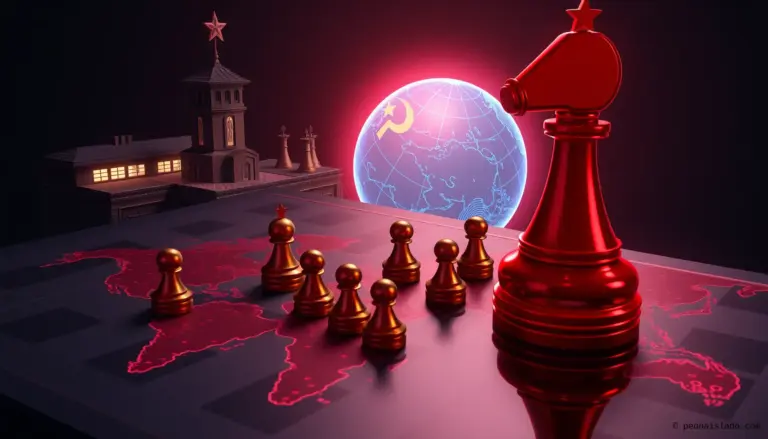
Another key benefit is the development of *critical thinking*. In a world where disinformation and psychological operations are weapons as powerful as missiles, The military must be able to evaluate information objectively and detect hidden patterns. Chess fosters this skill by forcing players to anticipate their opponent's intentions and identify threats before they materialize.. During the Cold War, The CIA and the KGB used chess as part of the training of their agents, teaching them to analyze the opponent's moves as if they were movements on a geopolitical board.
Besides, Chess promotes *collaboration and teamwork*. Although the game is individual, In the military field it is used in group exercises where officers must discuss strategies and reach a consensus. This reflects the reality of modern operations, where coordination between different units and branches of the armed forces is essential. In NATO, For example, Drills have been carried out where teams of officials from different countries play chess games in real time, debating each move as if it were a joint operation. This approach not only improves communication, but also builds trust between allies.
From ancient times to the digital age: chess in modern warfare
In the age of drones, artificial intelligence and cyberwar, chess remains a valuable tool, but its application has evolved. Hoy, It's not just about playing traditional games, but to integrate the principles of chess into advanced simulation and training systems. For example, The US Army uses computerized chess programs to train its pilots in air combat tactics., where every move of the opponent must be anticipated with precision.
artificial intelligence (IA) has taken this connection to a new level. Programs like *Stockfish* or *AlphaZero* are not only capable of defeating the best human players, but they also analyze millions of games to identify strategic patterns. These algorithms are used in military planning to simulate war scenarios and evaluate possible outcomes.. In 2018, the Pentagon announced a project called *AI Next*, including the development of chess-inspired AI systems to improve battlefield decision-making. The idea is that, just like a chess program evaluates each move based on its long-term impact, military systems can anticipate the consequences of each action in an operation.
However, Chess also serves as a reminder that, despite technological advances, War remains a confrontation between human minds. AI can calculate millions of movements per second, but lacks the creativity and intuition that only an experienced commander can bring. This is a lesson that chess teaches clearly: even in a game with fixed rules, victory depends on the ability to innovate, adapt and surprise the opponent. In modern warfare, where technology can fail or be hacked, these human skills remain irreplaceable.
A notable example of this evolution is the use of chess in cybersecurity. Hackers and cyber defense experts often describe their confrontations as chess games., where every move of the attacker must be anticipated and countered. In 2016, The United States Department of Defense launched the *Cyber Grand Challenge*, a contest where teams of programmers developed AI systems capable of playing chess against malware, identifying and neutralizing threats in real time. This approach demonstrates how chess principles can be applied even in domains seemingly unrelated to traditional warfare..
Conclusions: chess as an eternal school of war
throughout history, chess has proven to be much more than a hobby. From its origins in India to its application in modern warfare, This game has been a faithful reflection of the principles that govern human conflicts: the strategy, psychology and adaptability. Its value as a military training tool lies in its ability to condense the essence of war onto a board. 64 casillas, where every move requires careful risk assessment, opportunities and consequences.
in ancient times, Chess taught Persian and Byzantine generals to plan campaigns and anticipate enemy moves. In the modern era, has evolved to train leaders capable of making decisions under pressure, analyze complex information and collaborate in multinational environments. Even in the digital age, where artificial intelligence and cyberwar dominate the landscape, chess principles are still relevant, reminding us that, in the end, war is a confrontation between minds, not only between machines.
But beyond its practical usefulness, chess also offers a deeper lesson: the war, like the game, It's not just about winning, but to understand the rules, respect the opponent and learn from each defeat. In a world where conflicts are increasingly complex and technological, This ancient wisdom remains as valuable as it was on the battlefields of ancient times.. That's why, as long as there are armies, chess will continue to be an essential part of your training, not just as a game, but as an eternal school of strategy and leadership.