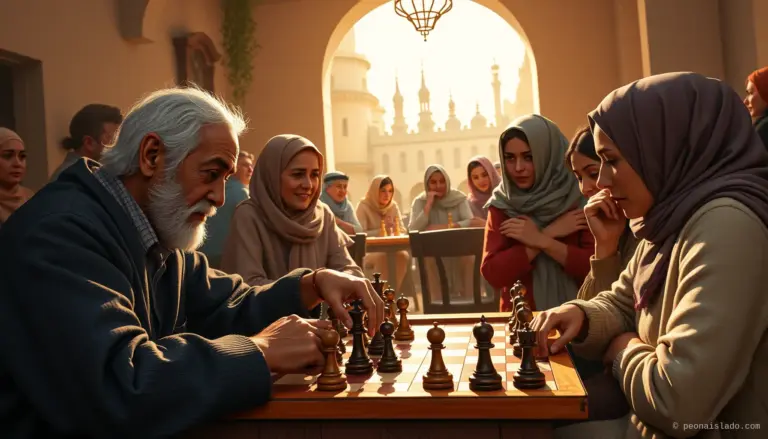
In a world where freedom is an increasingly precious concept, Chess stands as a powerful tool to promote intellectual and emotional emancipation. In Ecuador, a country with a rich history and culture, the project “Chess for Freedom” has been released by “Isolated Pawn” of Colombia and the “SNAI” from Ecuador, with the aim of promoting personal and community development through the game of chess.
This innovative project seeks not only to teach chess moves and strategies, but also use the game as a metaphor for life, teaching valuable lessons about decision making, critical analysis and resilience. Some may wonder, how chess can influence our freedom? The answer lies in the way chess allows us to explore different scenarios., evaluate risks and consequences, and adapt to changing situations, skills that are essential for navigating real-life challenges.
The Power of Chess in Education
Chess has proven to be an invaluable educational tool, capable of improving academic performance and developing cognitive skills in children and adults. By incorporating chess into the study plans, skills such as problem solving can be promoted, memory and concentration. Besides, chess can be an inclusive activity, allowing people of different ages and abilities to compete and learn together. For more information on how chess can influence education, can be visited Chess in schools: the future of education.
The Connection between Chess and Freedom
freedom, in its purest form, It is related to the ability to make decisions and act according to our own will. chess, as a strategy game, allows us to experiment with different decisions and evaluate their consequences in a controlled environment. This ability to explore and learn from our mistakes is essential for the development of personal freedom.. Besides, Chess teaches us to manage stress and anxiety, aspects that can limit our emotional freedom. To better understand how chess can be a refuge from anxiety, can be read Chess: refuge from global anxiety.
The Social Impact of Chess
Chess has the power to transcend cultural and socioeconomic borders, uniting people from different backgrounds around a common goal: the love of the game. In the context of “Chess for Freedom”, This aspect is particularly significant, as it seeks to create inclusive communities where people can come together, learn and grow together. Chess can be a tool for diplomacy and mutual understanding, promoting peace and harmony in society. For more information on the role of chess in diplomacy, can be visited Chess: silent diplomacy between nations.
Challenges and Opportunities
Implement a project like “Chess for Freedom” is not without challenges. From the logistics of establishing chess programs in marginalized communities to the task of measuring the project's real impact on personal and community freedom, There are numerous obstacles that must be overcome. However, These challenges also represent opportunities to innovate and adapt the project to the specific needs of each community.. By addressing these challenges, the project can grow and expand, reaching more people and contributing significantly to the promotion of freedom and development in Ecuador.
In conclusion, “Chess for Freedom” is a visionary project that uses chess as a powerful tool to promote intellectual freedom, emotional and social. By teaching chess as a metaphor for life, This project seeks to empower people with the skills and confidence necessary to make informed decisions and live fuller lives.. By uniting the community around chess, “Chess for Freedom” has the potential to leave a lasting legacy in Ecuador, inspiring future generations to seek freedom and knowledge through the king's game.