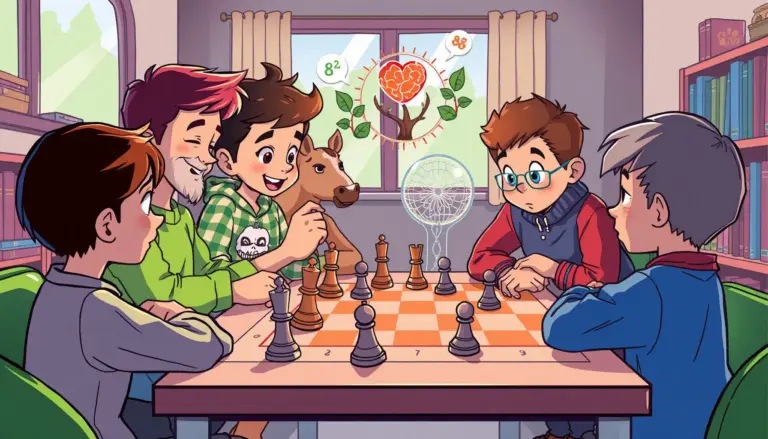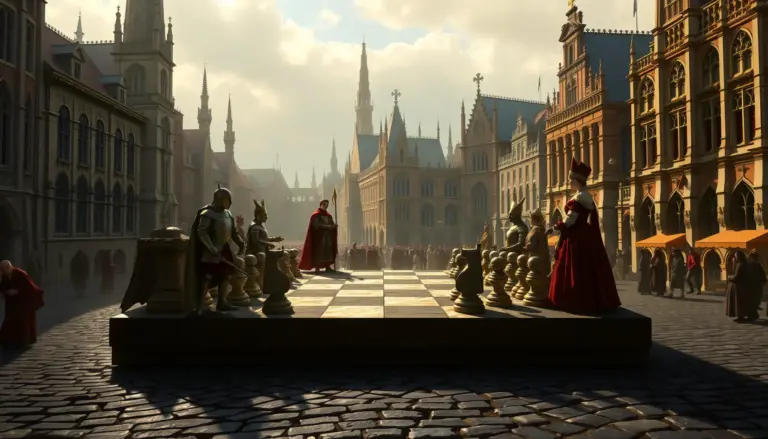
In the bustling squares of cities like Barcelona, Havana, New York or Moscow, between the murmur of passersby and the echo of street vendors, hides a cultural phenomenon that transcends borders: he street chess. Far from official tournaments and elitist clubs, This spontaneous movement has created a unique subculture, where the board becomes a strategy stage, resistance and community. It's not just a game, but of a way of life that defies established rules, unites generations and redefines public space. From the parks of Buenos Aires to the markets of Marrakech, street chess is a universal language that speaks of patience, cunning and, above all, of the human need to connect. In this article, we will explore its origins, its social impact, the characters that keep it alive and the secrets that make it resist the passage of time.
The origins of street chess: of resistance to popular culture
Street chess was not born in a specific place, but as an organic response to specific historical and social contexts. Its roots date back to the beginning of the 20th century, when the game, traditionally associated with elites, began to filter into the popular classes. In Russia, For example, The parks of Moscow and St. Petersburg became epicenters of improvised games during the Bolshevik Revolution, where workers and soldiers adopted it as a tool to exercise the mind in times of chaos. Meanwhile, in Cuba, street chess flourished in the years 60 as part of Fidel Castro's campaign to democratize gambling, making it a symbol of the cultural revolution.
In USA, The phenomenon took a different turn. During the years 70 y 80, in neighborhoods like Harlem or the Lower East Side of New York, chess mixed with hip-hop culture and community activism. Figures like Maurice Ashley, the first African American Grandmaster, emerged from these boards in the open air, where young people learned to think strategically while escaping the violence of the streets. In Spain, for his part, street chess was consolidated in the 90, especially in cities like Barcelona, where Latin American and Eastern European immigrants adopted it as a cultural bridge.
The fascinating thing about this movement is that, unlike competitive chess, does not seek titles or awards, sino the collective experience. There are no referees or strict clocks; the rules adapt to the context, and the real prize is the respect earned among the players. This flexibility has allowed street chess to survive and expand., even in the digital age, where platforms like Chess.com o Lichess dominate the scene.
The board as a space of resistance and community
More than just a hobby, street chess is a political act. In many cities, The boards installed in squares or parks are the result of neighborhood struggles to recover public spaces. In Buenos Aires, For example, The street chess movement in the San Telmo neighborhood emerged as a way to resist gentrification, creating meeting points where young and old shared knowledge. In London, during the years of austerity, the boards in parks like the Bethnal Green They became shelters for the homeless, who found in play a form of dignity and connection.
This community dimension is manifested in several aspects:
- Transmission of knowledge: In many cultures, street chess works as an informal school. The most experienced players teach the newbies, creating a chain of learning that transcends generations. In India, For example, It is common to see elders teaching openings to children on the steps of temples.
- Social inclusion: Street chess breaks age barriers, gender and class. In Berlin, groups like Chess in the park They organize mixed tournaments where refugees, students and retirees compete on equal terms. In Mexico, in places like Alameda Central, Women who were previously excluded from chess circles now lead games.
- Collective therapy: In crisis contexts, street chess has served as a healing tool. After the earthquake of Haiti in 2010, volunteers installed boards in refugee camps, using play to relieve post-traumatic stress. In Palestine, in cities like Ramallah, chess has become a symbol of peaceful resistance, where young people practice it as an alternative to violence.
However, This social function is not without challenges.. In many cities, The authorities see street chess as a “public order problem”, associating it with illegal gambling or substance use. In Paris, For example, The police have dismantled boards in squares such as Republic Square under the argument that “encourage laziness”. This criminalization ignores the role that chess plays in crime prevention: studies such as the one carried out by the University of Chicago in 2018 showed that in neighborhoods where street chess is promoted, rates of youth violence decrease by up to 30%.
The guardians of the board: characters who keep tradition alive
Behind every street game there are stories of characters who, often anonymous, They dedicate their lives to preserving this subculture. They are the guardians of the board, figures ranging from former champions to self-taught people who found in chess a reason to get up every day.
One of the most emblematic is Emanuel Lasker, although not the world champion of the same name, but a street player Havana what, for decades, challenged tourists and locals in the Central Park. Known as “Old Lasker”, this man of 80 years he became a legend for his ability to play up to five games simultaneously without losing any. His story reflects how street chess can be a profession: many players, especially in countries with fragile economies, They depend on informal gambling to survive. In Russia, For example, It is common for professional players to travel to parks like the Gorky Park to earn money in quick games.
Another notable case is that of Jessica Prescott, a young woman from London what, after overcoming an addiction, founded the collective Chess in the Park. His initiative not only teaches chess to children in vulnerable situations, but also organizes tournaments where the prizes are food or clothing for homeless people. In Argentina, Carlos “The Master” González He is a key figure in the neighborhood of The Mouth, where it takes more than 40 years teaching chess to neighborhood children, many of whom have gone on to compete in national tournaments.
These characters share a characteristic: They don't seek fame, but legacy. His greatest satisfaction is not winning games, but to see how his disciples overcome their own limitations. In a world where competitive chess is dominated by algorithms like Stockfish o AlphaZero, They represent the human essence of the game: the ability to think, adapt and, above all, connect.
The future of street chess: between tradition and innovation
In the era of eSports and online tournaments, street chess faces a dilemma: How to maintain your essence in an increasingly digitalized world? The answer is not simple, but there are signs that this subculture is evolving without losing its identity.
One of the most interesting trends is the hybridization with technology. In cities like Barcelona o Berlin, groups like Chess in the City They organize games where players use physical boards, but they record their movements in applications like Chess.com to analyze your games later. This not only attracts young people accustomed to digital, but also allows creating global communities. For example, in New York, the project Street Chess NYC broadcast live games on Twitch, attracting thousands of viewers who bet online or donate money to players.
Another innovation is the expansion to new spaces. Street chess is no longer limited to squares and parks. In Tokio, For example, boards have been installed in train stations, while in Amsterdam, bars and cafes offer free games in exchange for consuming. In Medellín, the program Chess for Life brings boards to rural areas, using play as an educational tool to prevent the recruitment of children by armed groups.
However, The biggest challenge remains preservation of its community essence. In a world where individualism gains ground, street chess offers something unique: the opportunity to sit in front of a stranger and, in silence, share an intellectual experience. So that this tradition does not disappear, It is crucial that new generations adopt it not as a simple game, but as a rite of passage. Initiatives such as those of Chess in Slums in Nigeria, where children from slums learn chess as an alternative to violence, show that the board continues to be a symbol of hope.
The future of street chess will depend on its ability to adapt without losing its soul. If you manage to balance innovation with tradition, will continue to be a beacon of cultural resistance in the squares of the world.
Conclusions: street chess as a mirror of humanity
Street chess is much more than a game: it's a social phenomenon that reflects the contradictions and beauties of the human condition. Throughout this article, we have seen how it emerged as a tool of resistance, It became a space for inclusion and today struggles to survive in an increasingly digitalized world.. Its origins, linked to revolutions and economic crises, They remind us that great cultural movements are born from the need, not luxury. Its ability to unite people of different ages, genders and social classes shows that, on a board, we are all equal.
The characters that keep him alive, from the “Old Lasker” in Havana to Jessica Prescott in London, They are proof that street chess is not about winning or losing, but of create community. In a world where human interactions are reduced to likes and ephemeral messages, the simple act of sitting in front of an opponent and thinking silently takes on revolutionary value. Besides, Its role as a tool for social transformation—from reducing youth violence to serving as therapy in conflict zones—makes it an invaluable resource that cities should protect, do not criminalize.
Looking to the future, street chess faces the challenge of reinventing itself without losing its essence. Technology can be an ally, but it should never replace human contact, the smell of wood from worn boards or the sound of pieces moving. Its survival will depend on new generations seeing it not as a vestige of the past., but as a future tool. In an increasingly divided planet, street chess reminds us that, in the end, we all play with the same pieces: only the strategy varies. and maybe, in that simple truth, lies your greatest power.