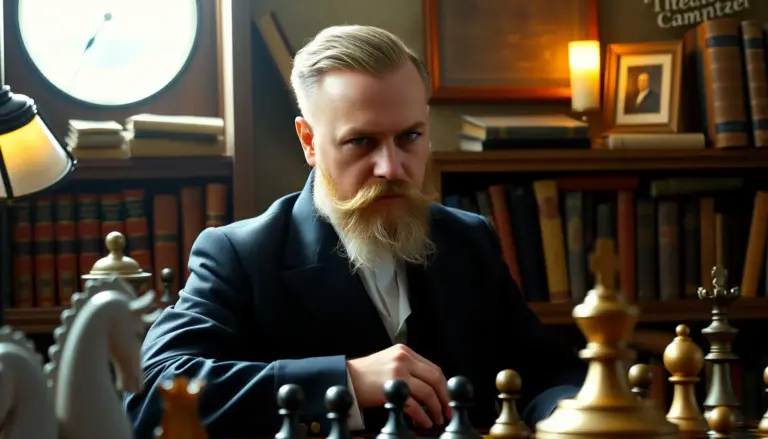
Chess has evolved over the centuries, but in recent decades, two formats have dominated the competitive scene: he classic chess and the fast chess. While the former remains the elite standard, with games that can last for hours, the second has gained popularity thanks to its dynamism and adaptability to modern rhythms. This debate not only questions which of the two formats will prevail in the future, but also how they influence the strategy, player preparation and spectator experience. Are we facing a paradigm shift or simply a necessary coexistence? In this article, We will explore the fundamental differences between both styles, its impact on the development of the game and the trends that could define the future of chess.
The essence of classical chess: depth vs. endurance
classic chess, with its time controls that exceed the 60 minutes per player, It is the format that has shaped the history of the game. Its essence lies in the strategic depth and the ability of players to calculate complex variants without the pressure of the clock. Great teachers like Magnus Carlsen o Garry Kasparov have shown that, in long games, human error is minimized, allowing pure talent and theoretical preparation to shine.
However, This format also requires a physical and mental resistance exceptional. Games like the one in the World Championship 2018 between Carlsen and Caruana, which lasted almost seven hours, They test not only chess knowledge, but also the ability to maintain concentration in extreme conditions. This has led some critics to argue that classical chess has become a “endurance sport”, where fatigue can be as decisive as skill.
Besides, theoretical preparation in classical chess has reached unprecedented levels. Openings like the Defense Berlin o to Siciliana Najdorf Even deep movements are analyzed, leaving little room for improvisation. This has sparked debates about whether the game is becoming too predictable., where victory depends more on memory than creativity.
The rise of rapid chess: speed and spectacularity
In contrast, speed chess—with time controls ranging from 10 y 30 minutes per player—has gained ground thanks to its fast pace and its ability to attract new audiences. Platforms like Chess.com y Lichess have popularized this format, allowing millions of players to compete in online tournaments with a frequency unthinkable in classical chess.
The main advantage of rapid chess is its spectacularity. Time pressure forces players to make risky decisions, resulting in more dynamic games and, in many cases, more exciting for the public. Events like the Chess960 World Cup or the Speed Chess Championship have shown that this format can be as competitive as the classic, but with a focus on intuition and the adaptability instead of memorization.
Nevertheless, Rapid chess also has its detractors. Some argue that the game quality suffers due to frequent errors caused by lack of time. Players like Hikaru Nakamura, specialist in quick formats, have recognized that, although rapid chess is more accessible, does not always reflect the true level of a player. Besides, The reliance on technology—such as real-time analytics engines—has raised concerns about the trap and the authenticity of the game.
The impact of technology in both formats
Technology has been a catalyst in the evolution of chess, but its influence varies depending on the format. In classical chess, tools like Stockfish o Leela Chess Zero have revolutionized opening preparation, allowing players to analyze lines to previously unimaginable depths. This has led to a homogenization of the openings, where the differences between elite players are reduced to small nuances.
In rapid chess, technology has had an even more disruptive impact. The possibility of playing online has democratized access to the game, but it has also introduced challenges such as cheating (trap). Platforms have implemented fraud detection systems, but the problem persists, especially in unofficial games. Besides, the immediacy of analytics engines has changed the way players learn, prioritizing speed over deep understanding.
Another key aspect is the streaming. Players like GothamChess o Baptist Sisters have brought rapid chess to mass audiences through platforms like Twitch, creating a new generation of fans who prefer fast entertainment over the patience of classical chess. This raises a crucial question: Is technology redefining chess as a show instead of a mental sport?
The future: coexistence or dominance of one over the other?
The debate over the future of classical and rapid chess does not have a simple answer. What does seem clear is that both formats they complement each other instead of excluding. Classical chess will remain the elite standard, where the purest skills are measured, while the rapid will continue to attract new generations of players and spectators.
However, There are trends that could tip the balance. On the one hand, the chess globalization —driven by online platforms—favors the quick format, which is more accessible and less demanding in terms of time. On the other, the chess professionalization —with sponsors and million-dollar prizes— could keep the classic as the reference format for the most prestigious tournaments.
A possible solution is the hybridization of both formats. Events like the Grand Chess Tour They already combine classic games, fast and lightning, offering a balance between depth and dynamism. Besides, the IA could play a key role in the future, not only as a training tool, but also as a referee in real time to ensure the integrity of the game.
Ultimately, The future of chess will depend on how the players, organizers and fans respond to these changes. If the classic manages to adapt to the demands of the digital age—for example, shortening time controls without losing its essence—could maintain its relevance. If the rapid continues to gain ground, we could be facing a revolution in the way chess is played and consumed.
Conclusions: a balance between tradition and modernity
Chess is found in a turning point, where the tradition of the classic format collides with the modernity of rapid chess. While the first represents the strategic depth and the technical excellence, the second embodies the speed, the accessibility and the entertainment. They both have strengths and weaknesses., and their future does not necessarily imply the disappearance of one in favor of the other.
Most likely we will attend a coexistence, where each format occupies a specific niche. Classical chess will continue to be the scene of the most prestigious tournaments, where the world champions are consecrated, while the fast will dominate the online sphere and massive events. The technology, far from being a threat, could be the key to unify both worlds, offering tools that improve the experience for both players and spectators.
For fans, This means a unique opportunity: enjoy the chess beauty in all its forms. Whether analyzing a six-hour classic match or rocking out to a quick online tournament, the game continues to evolve, but its essence—the intellectual challenge—remains intact. The future of chess is not in choosing between one format or another, but in take advantage of the best of both to ensure its growth and relevance for decades to come.