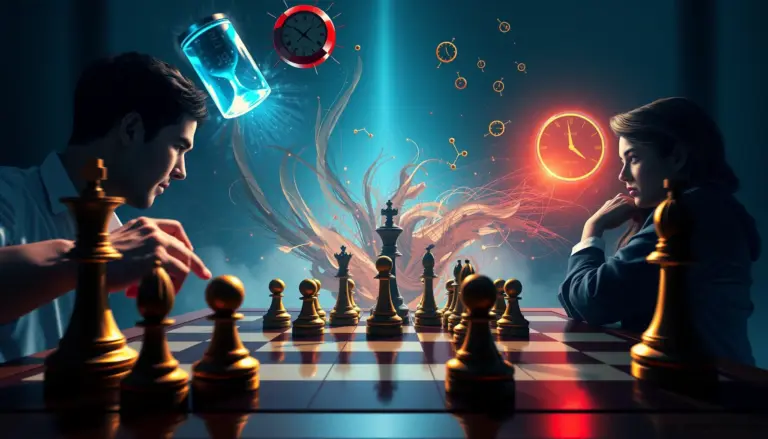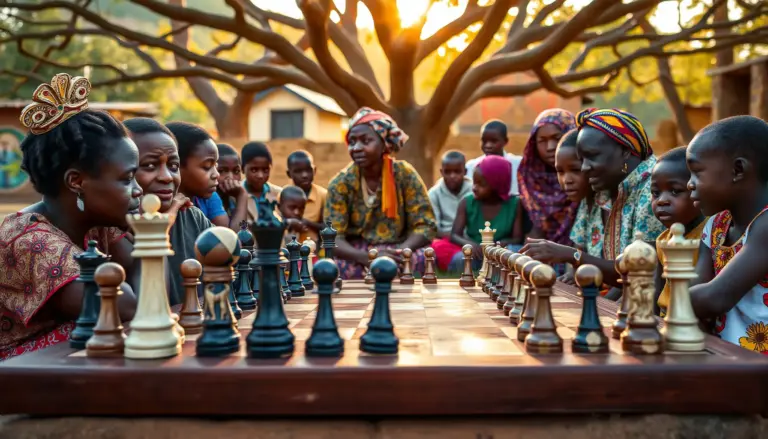
Competitive chess is a microcosm of human tensions: the obsession with rating, the pressure for perfection and the emotional exhaustion that lurks after each game. But, What happens when the board stops being a battlefield and becomes a space for connection?? Social chess emerges as an antidote, transforming rivalry into dialogue and strategy into therapy. This article explores the shadows of competitive gaming and how its community version not only heals wounds, but it redefines the very purpose of chess.
The paradox of competitive chess: when the game devours the player
The Elo system, that cold algorithm that measures the value of a chess player, has become an invisible slab. Players of all levels fall into the trap of chasing numbers instead of enjoying the process., as if he rating was a reflection of your personal worth. Studies in chess psychology reveal that this obsession generates anxiety, insomnia and even burnout syndrome, especially in promising young people. The pressure for “do not disappoint” to coaches or sponsors distorts the game until it becomes a burden.
But the problem goes beyond the individual.. Modern competitive chess, with its emphasis on memorized openings and analysis engines, has eroded creativity. Great masters such as Magnus Carlsen have criticized how the dependence on AI in training homogenizes the style of play, reducing games to algorithmic calculations instead of artistic expressions. Where is chess as a universal language when machines dictate every move??
The loneliness of the competitor is another side effect. Hours in front of a screen, analyzing solo games, they generate an isolation that contrasts with the social essence of the game. Even in face-to-face tournaments, silence between rivals—that unwritten etiquette—reinforces the disconnection. chess, conceived as a bridge between cultures, has become an individualistic sport where the other is, first of all, an obstacle.
social chess: when the board unites instead of divides
Faced with this panorama, social chess offers a radical alternative: give back to the game its human dimension. It is not about giving up competition, but to balance it with spaces where the objective is not to win, but share. A revealing example is the chess in refugee camps, where the board becomes an emotional refuge. In places like Jordan or Uganda, Organizations use play to rebuild community ties, teaching children and adults to see the rival as a traveling companion, not as an enemy.
This version of chess prioritizes inclusivity over technical excellence. In Medellin, For example, clubs like Isolated Pawn have shown how play can be a tool for social transformation. Over there, Children from vulnerable neighborhoods learn chess not to compete in tournaments, but to develop skills such as patience and resilience. The board becomes a mirror of life: Each game teaches that mistakes are not failures, but opportunities to improve.
Social chess also challenges gender stereotypes. In Saudi Arabia, the creation of women's clubs has broken cultural barriers, using gaming as a platform to empower women in restrictive societies. The message is clear: chess is not an elite sport, but a language accessible to all, regardless of origin, gender or age.
therapy in 64 casillas: chess as a healing tool
Science supports what social chess players intuit: the game has a therapeutic power. Research in therapeutic chess show that its practice reduces symptoms of depression and anxiety, especially in adolescents. The reason is simple: chess requires absolute concentration, acting as a “mindfulness” active that takes the mind away from everyday worries.
In hospitals, Chess has been used to treat ADHD and autism. Children with difficulties socializing find a safe space on the board where clear rules and the structure of the game give them confidence.. A study in Spain revealed that, after six months of practice, Children with autism improved their planning and non-verbal communication skills. chess, in this context, it's not a game, but a therapy.
But its most profound impact is seen in extreme environments. In prisons in Argentina and Colombia, chess programs have reduced recidivism by 30%. Inmates learn that every move requires thinking about the consequences, a lesson that transcends the board. As a participant of the program in Buenos Aires said: “There is no checkmate here, only opportunities to correct mistakes”.
Chess as a community ritual: from the sacred to the everyday
Social chess recovers an ancient tradition: that of the game as a union ritual. in India, he Chaturanga —predecessor of modern chess—was practiced in temples as a spiritual exercise. Hoy, in places like Bali, chess is still part of religious ceremonies, where each game symbolizes the balance between opposing forces. This sacred dimension contrasts with the coldness of competitive chess, reminding us that the game was born to connect, not to divide.
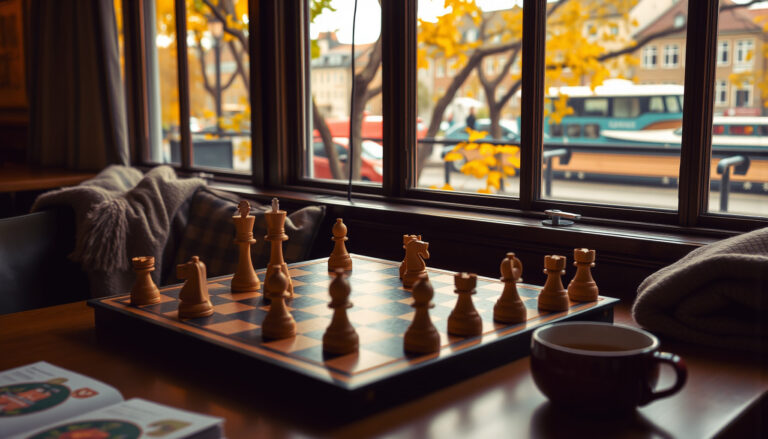
In Europe, street chess has revived this essence. In cities like Barcelona or Berlin, public boards invite strangers to sit and play. There are no clocks, nor ratings, no pressure: just the pleasure of moving pieces and talking. These spaces, often located in squares or parks, democratize the game, bringing it to those who would never set foot in a chess club. As pointed out by a study on street chess, These encounters reduce urban loneliness and promote empathy.
Even in the digital sphere, Platforms like Lichess have created communities where the social takes precedence over the competitive. Thematic tournaments, Handicap games to balance levels or chat rooms where openings are discussed without hierarchies are examples of how technology can humanize the game.. Online chess, often criticized for his coldness, It thus transforms into a collaborative learning space.
Can social chess save competitive chess?
The answer is not binary. Competitive and social chess are not opposites, but complementary. The key is to integrate the best of both worlds: the discipline and rigor of the first, with humanity and the inclusion of the second. Great masters such as Vladimir Kramnik have advocated a “hybrid chess”, where tournaments maintain their technical level but incorporate spaces for dialogue between players, such as collective analysis of games or talks on psychology.
Initiatives like the Chess and Music Festival in Spain they are going in this direction, fusing play with art to create multi-sensory experiences. These events not only attract new audiences, but they redefine chess as a cultural phenomenon, not only sports.
The future of chess could lie in its ability to adapt. In a hyperconnected but increasingly lonely world, the game has the opportunity to become a bridge between generations, cultures and realities. As the philosopher Walter Benjamin said, “Chess is the game that best reflects the human struggle”. Maybe it's time for that fight not to be against a rival, but against disconnection.
Competitive chess taught us to pursue excellence; Social chess reminds us that the true checkmate is the one that unites us. On a board where each piece has a unique value, the most important game is not played against an opponent, but against indifference. and in that game, we can all win.