In the heart of the Colombian Amazon, an ancient game becomes a symbol of transformation and hope. chess, more than just a hobby, emerges as a tool of reconciliation and reconstruction in a region marked by decades of armed conflict. FARC ex-combatants, now in the process of reintegration, They find in this mental sport a space to heal wounds, rebuild ties and redefine your future. This article explores how chess has become a bridge between the violent past and a present full of possibilities., analyzing its impact on social reintegration, education and peacebuilding in Colombia. Through testimonials, data and reflections, We will discover why this game transcends play to become an act of peaceful resistance and a beacon of hope in the middle of the jungle..
Chess as a metaphor for peace
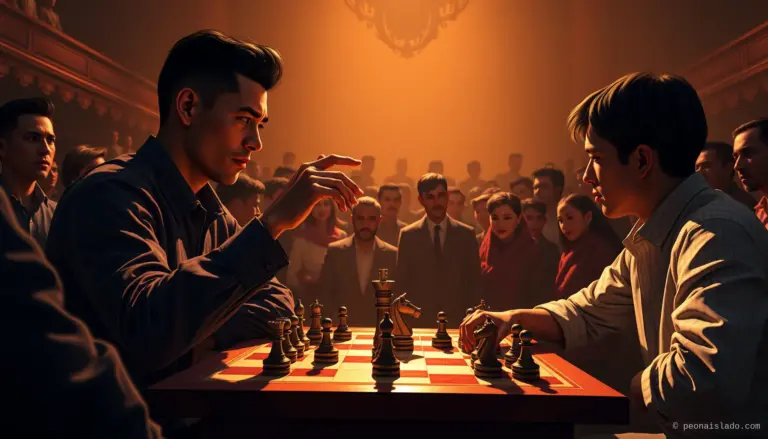
chess, with his 64 squares and pieces that represent armies in battle, It might seem like a contradictory game to talk about peace.. However, in the Colombian Amazon, has become a powerful metaphor for reconciliation. Each game is a microcosm where the rules are clear, strategic movements and the objective is not to destroy the opponent, but overcome it with intelligence and patience. For ex-combatants who spent years in the jungle, where decisions were made under pressure and the consequences were immediate, chess offers a new way of thinking.
In Territorial Training and Reintegration Spaces (ETCR), located in areas such as Miravalle or La Variante, the board has become a stage where non-violence is practiced. “Before, my mind only thought about war tactics; now, I think about how to protect my king and anticipate the other's moves”, comments Carlos, a former guerrilla who learned to play in 2018. Studies carried out by the National University of Colombia In these spaces they reveal that chess improves the ability to concentrate, reduces impulsivity and encourages critical thinking, essential skills for those seeking to leave behind the logic of confrontation.
But chess not only transforms at an individual level. In communities where mistrust still persists, games between ex-combatants and civilians have become a symbolic act. In San José del Guaviare, For example, Tournaments are organized where both reincorporated and victims of the conflict participate. “At first, no one wanted to sit in front of them, but when they see that we all follow the same rules, fear is replaced by curiosity”, explains María Fernanda, a teacher who promotes these meetings. The game, so, It becomes a universal language that breaks barriers and humanizes the other..
From weapons to the board: the reintegration process
The transition from guerrilla life to civilian life is a path full of obstacles. Many ex-combatants face stigmatization, lack of job opportunities and, in some cases, the temptation to relapse into violence. In this context, Chess has emerged as a key tool in reintegration programs designed by the Agency for Reintegration and Normalization (ARN) and organizations like Peace and Reconciliation Foundation.
One of the biggest challenges is adapting to a routine far from the adrenaline of conflict.. “in the jungle, every day was a fight to survive; here, the silence and calm can be overwhelming”, Javier confesses, a former combatant 32 years. chess, with its slow but demanding pace, help fill that void. Programs like “Chess for Peace”, implemented in the ETCR, They not only teach the rules of the game, but they work on social-emotional skills. Through workshops, participants learn to manage frustration, to take turns and recognize that each movement has consequences, a valuable lesson for those who previously made decisions under crossfire.
Besides, chess has opened unexpected job doors. In cities like Florence or Leticia, Some ex-combatants have found employment as monitors in schools or community centers, teaching the game to children and young people. “It's ironic: I spent years learning to handle a rifle, and now I earn more teaching how to move a pawn”, Luis jokes, who today runs a chess club in a school in Caquetá. These types of initiatives not only generate income, but also rebuild self-esteem and the sense of belonging to society.
However, The process is not without difficulties. In areas where the presence of FARC dissidents or illegal armed groups is still strong, Some ex-combatants face threats for their participation in these programs. “There are those who see chess as a waste of time or, even worse, like a betrayal of the cause”, explains an RNA official who prefers to remain anonymous. Despite this, The perseverance of those who opt for this path shows that reintegration is possible, even in the most remote parts of the country.
The Amazon as a scene of change
The Amazon rainforest, with its lush vegetation and geographical isolation, It has historically been a strategic territory for armed groups. Hoy, however, It is becoming a laboratory of peace where chess plays a leading role. In departments like Putumayo, Guaviare or Caquetá, where the presence of the State has been weak, community initiatives are using the game to weave networks of trust and development.
One of the most notable projects is Hands for Peace Corporation, which has installed giant chess boards in public squares in municipalities such as Puerto Asís or San Vicente del Caguán. These spaces, in addition to being used for informal games, have become meeting points where ex-combatants, Social leaders and young people discuss the future of the region. “The Amazon cannot continue to be seen only as a place of conflict; It has to be a territory of opportunities”, Diana says., a former guerrilla who now coordinates chess workshops in her community.
The impact of these initiatives goes beyond the symbolic.. In areas where formal education is limited, Chess has been integrated into school programs as a pedagogical tool. In the Superior Normal School of Florence, For example, A pilot plan was implemented where students learn mathematics and logic through play. “Children who play chess improve their math and reading performance, but they also develop greater empathy and respect for the rules”, points out a report from the Secretary of Education of Caquetá. For ex-combatants who participate in these programs, Teaching the youngest becomes a way to redeem their past and build a positive legacy.
Nevertheless, The challenge of bringing chess to the Amazon is no less. The logistical difficulties, such as lack of connectivity or limited access to materials, force organizations to be creative. In some cases, The boards are made from local wood, and the pieces are carved by hand. “There are no chess shops here, so we do what we can with what we have”, Miguel tells, a former combatant who leads a carpentry workshop in La Variante. This resilience, typical of those who have lived in the jungle, It is the same one that today drives the transformation of the region.
Chess as a tool for memory and future
In a country where the memory of the conflict is still fresh, Chess has become a bridge between the past and the future. For many ex-combatants, The game is a way to process what we have experienced without falling into victimization or glorification of war.. “when I play, I don't think about what I did, but what I can do now”, Ana reflects, a former member of the FARC who is today a chess instructor at a school in Villavicencio.
Projects like “Chess by Memory”, driven by the National Center of Historical Memory, they are looking for exactly that: use the game as a tool to narrate the conflict from a constructive perspective. Through thematic games, where each piece represents an actor in the conflict (guerrilla, army, victims, State), participants reconstruct historical events not as a succession of battles, but like a board where every move had consequences. “It is a way of understanding that the war was not a game, but peace can be”, explains a project facilitator.
For the new generations, Chess is also a way to break the cycle of violence. In communities where children grew up hearing war stories, the game offers them an alternative conflict resolution model. “My children no longer want to be soldiers; they want to be chess champions”, Ricardo says proudly., a former combatant who today lives in an ETCR in Meta. This cultural transformation is perhaps the most valuable legacy of chess in the Amazon.: prove that, even in the places hardest hit by violence, it is possible to imagine a different future.
However, The path is not without contradictions. In some areas, chess is still perceived with skepticism, associated with the idea that “play” is incompatible with the seriousness of the conflict. “There are those who say that this is a luxury, that first we must solve problems such as hunger or security”, comments a community leader from Guaviare. But those who bet on chess argue that it is not about choosing between what is urgent and what is important., but to understand that peace is built on multiple fronts. “Chess is not going to solve poverty, but it can change the way we think about ourselves and others”, concludes.
Conclusions: more than a game, an act of resistance
Chess in the Colombian Amazon is much more than a sport or a hobby: It is a symbol of resilience, an act of peaceful resistance and a tool to rebuild the social fabric. Through his 64 casillas, ex-combatants, Victims and entire communities are rewriting their history, moving from conflict to strategy, from confrontation to dialogue. This game, with its clear rules and its demand for critical thinking, has proven to be an unexpected ally in peacebuilding, offering not only an alternative to violence, but also a new way of understanding the world.
The results are tangible: improvements in the mental health of ex-combatants, stigma reduction, generation of job opportunities and, above all, creating spaces where mistrust gives way to collaboration. However, the road is far from easy. The persistence of armed groups, lack of resources and cultural resistance are obstacles that still need to be overcome. But every game played in the jungle, every tournament organized in an ETCR, every child who learns to move a pawn instead of holding a weapon, It's a victory in itself..
Chess in the Amazon reminds us that peace is not just the absence of war, but the presence of opportunities, of dialogue and shared dreams. In a country where conflict has left deep scars, This ancient game has become a beacon of hope, proving that, even in the darkest places, it is possible to find light. The invitation, so, it's clear: Let's not underestimate the power of a board and 32 parts. Because in Colombia, like in chess, every move counts, and the future is built with intelligence, patience and, above all, with the desire to change the rules of the game.