Imagine a chess board where each move is not just a strategic move, but a bridge to calm. Where the silence between shifts becomes a refuge for minds that process the world differently. For many children with autism, chess is not a game, but an alternative language that allows them to communicate without words, structure sensory chaos and find a space where logic replaces uncertainty. This article explores how the therapeutic chess It has become a powerful tool to improve concentration, reduce anxiety and encourage social interaction in children on the autism spectrum, backed by scientific studies and real experiences that demonstrate its transformative impact.
Chess as therapy: beyond the board
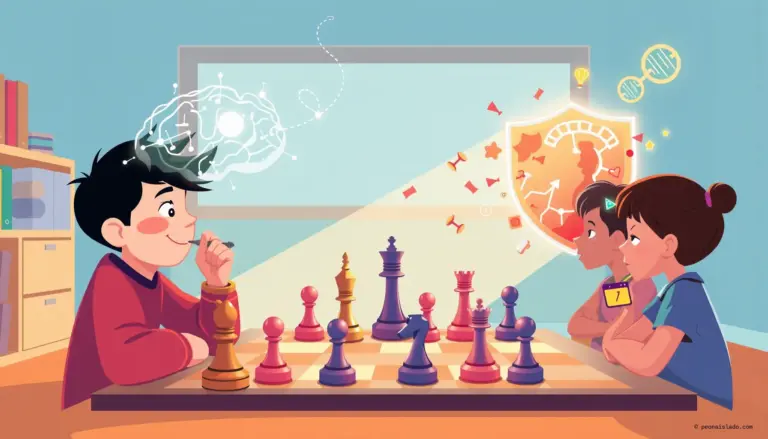
Autism is characterized by challenges in social communication, repetitive behavior patterns and sensory sensitivities. However, These same characteristics can find an unexpected ally in chess. The predictable structure of the game—with clear rules and a defined space—provides a safe framework for children who often feel overwhelmed by unpredictable environments.. A study published in Journal of Autism and Developmental Disorders (2020) revealed that chess improves cognitive flexibility in children with ASD (Autism Spectrum Disorder), since it forces them to anticipate movements, adapt to changes and plan strategies, skills that are often difficult to develop in traditional contexts.
But chess not only works the mind; It also acts on emotions. The chess psychology It has been shown that the game promotes patience and tolerance for frustration, two critical areas for children with autism. When faced with defeat or an unexpected move by the opponent, They learn to manage intense emotions in a controlled environment. As pointed out by Ajedrez and mindfulness, the board becomes a space for active meditation, where every decision requires full attention and every mistake is an opportunity to grow.
Structure and predictability: the board shelter
For a child with autism, The world can seem like a chaotic place where social rules are ambiguous and sensory stimuli, overwhelming. chess, instead, offers a microcosm with fixed rules: pieces move in specific ways, The objective is clear and each game follows a logical sequence. This predictability is key to reducing anxiety. According to clinical psychologist María López, specialized in ASD, “chess acts as a anchor for children who need routines. Gives them control in an environment where everything else can seem unpredictable”.
Besides, the game encourages sequential decision making, a skill that translates into everyday life. For example, a child who learns to evaluate the consequences of moving a pawn before doing so, It also develops the ability to think before acting in social situations. This not only improves your autonomy, but also reinforces their self-esteem by seeing that their actions have a direct impact on the outcome of the game.. As explored in chess in education, This type of structured learning can be especially beneficial in inclusive school environments..
Chess as a social bridge
One of the biggest challenges for children with autism is social interaction. chess, however, offers a unique format to connect with others without the pressure of a traditional conversation. The board acts as a mediator: the rules of the game provide a safe topic of conversation, and each player's turn establishes a rhythm that avoids sensory overload. In programs like Chess for Autism, implemented in US schools, It has been observed that children with ASD who participate in chess tournaments show significant improvement in their ability to initiate and maintain interactions with their peers..
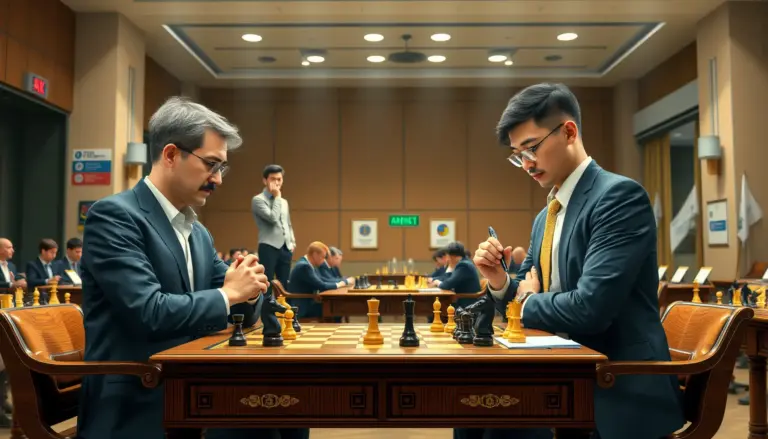
Chess also teaches theory of mind —the ability to understand the intentions and perspectives of others—, an ability that is often affected in autism. By anticipating the opponent's movements, the child learns to put himself in the other's place, even if in an abstract way. This mental exercise has a positive side effect: improves empathy and understanding of social dynamics. As the article points out therapeutic chess in hospitals, These types of interventions are not only effective, but can also be adapted to different contexts, from classrooms to rehabilitation centers.
Adaptations to maximize impact
Not all children with autism respond the same way to chess, so it's crucial to tailor the experience to your individual needs. Some effective strategies include:
- Use of sensory boards: For children with tactile hypersensitivity, Larger pieces or pieces with soft textures can be used.. There are also boards with contrasting colors for easy viewing.
- short games: Reducing the duration of games helps maintain attention and avoids fatigue. He fast chess can be an excellent option to introduce the game without overwhelming.
- Focus on fun: Prioritize enjoyment over competition. For example, use variants like cooperative chess, where both players work together to achieve a common goal.
- Integration of specific interests: If a child has a fascination with dinosaurs, You can use pieces with shapes of these animals to increase your motivation.
These adaptations not only make chess more accessible, but they also show that the game can be a flexible and customizable tool. As mentioned in how to teach chess to children, The key is to combine structure with creativity, allowing each child to explore the game at their own pace.
real cases: when chess changes lives
The stories of children with autism who have found refuge in chess are as diverse as they are moving.. One of the most documented cases is that of Jacob Barnett, a child with autism and Asperger's syndrome who, to the 12 years, He already had an IQ higher than Einstein. Jacob attributes much of his cognitive development to chess, which allowed him to channel his abstract thinking and improve his ability to socialize. “Chess taught me that there is no one way to solve a problem.”, said in an interview. Her story is an example of how play can be a catalyst for the hidden potential in many children with ASD..
In Spain, the program Chess for Inclusion, promoted by the Spanish Chess Federation, has brought the game to schools with specific classrooms for children with autism. The results are encouraging: teachers report a decrease in anxiety episodes and an increase in participation in group activities. “Chess gives them a role inside the classroom”, explains Laura Martínez, program coordinator. “They stop being 'the child with autism'’ to become 'the one who always beats the teacher'”.
These cases are not isolated. In chess in prisons, It documents how the game has served as a social reintegration tool for people with mental disorders.. If chess can transform lives in such complex contexts, Its potential for children with autism is immense.
The future of therapeutic chess
Although therapeutic chess for children with autism is not yet a widespread practice, its growth is promising. Organizations like the FIDE (International Chess Federation) have begun to promote global initiatives to integrate play into educational and clinical therapies. Besides, digital platforms like Chess.com y Lichess they are developing adapted tools, such as game modes with less visual stimuli or interactive tutorials that guide the child step by step.
The challenge now is to scale these programs so that they reach more children, especially in resource-limited settings. Initiatives like chess that revives towns show that play can be a tool for social transformation, even in rural or marginalized communities. If chess has managed to unite cultures, heal traumas and rehabilitate lives, Your role in supporting children with autism is just the beginning of a quiet revolution.
The board is ready. The pieces, willing. We just need more children to discover that, in those 64 casillas, There is a world where logic triumphs over chaos, where every movement is an opportunity to connect and where, at last, they can feel at home.
Chess does not cure autism, But it gives these kids something just as valuable.: tools to navigate a world that doesn't always understand them. And in that process, teaches everyone else that diversity is not an obstacle, but a source of unique strategies to solve life's most complex problems.