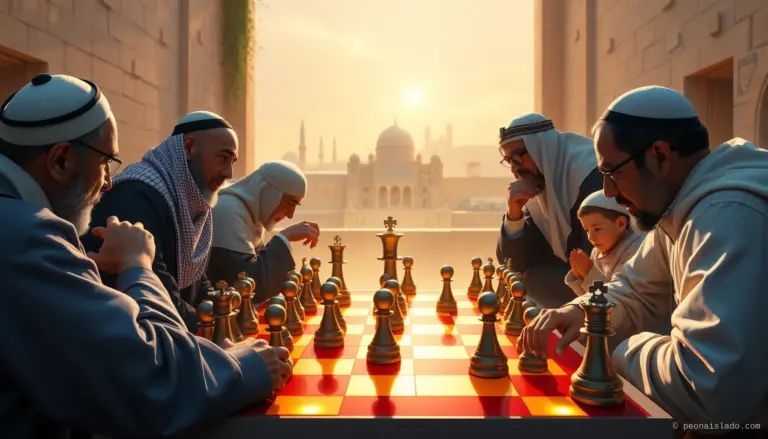
Chess has been a symbol of strategy for centuries., intelligence and patience, transcending borders and cultures. But, What would happen if this ancient game moved beyond our planet? With space exploration in full swing and manned missions to Mars getting closer and closer, a fascinating question arises: Would astronauts play chess in space?? It's not just a hobby, but of a challenge that combines psychology, technology and the extreme conditions of life outside Earth. From microgravity to prolonged isolation, Chess could become a key tool to maintain the mental health of crew members, but also in an unprecedented scientific experiment. In this article, We will explore how chess could adapt to Martian conditions, its impact on astronaut cognition and whether, in the not too distant future, We will see interplanetary games that redefine the concept of “game of kings”.
Chess as a psychological tool in space missions
Isolation and confinement are two of the biggest psychological challenges astronauts face during long-duration missions.. Studies of the NASA and the European Space Agency (ESA) have shown that, in environments like the International Space Station (EEI), crew members experience high levels of stress, anxiety and even depression due to lack of varied stimuli and prolonged separation from loved ones. This is where chess could play a crucial role..
Chess is not just a game; It is a mental exercise that requires concentration, memory and strategic thinking. According to a study published in the journal Nature Human Behaviour in 2021, playing chess regularly improves cognitive resilience, that is to say, the brain's ability to adapt and function efficiently under pressure. In the context of a mission to Mars, where astronauts will be exposed to extreme conditions for at least two years, Maintaining mental acuity will be as important as preserving your physical health.
Besides, chess encourages social interaction, a critical aspect in space missions. On the ISS, astronauts already participate in group activities to strengthen ties between the crew. A game of chess, whether between teammates or even against teams on Earth, could serve as an emotional bridge, reducing the feeling of loneliness. The ESA has experimented with board games in space, like him Go, but chess, with its strategic depth, offers a longer and more rewarding intellectual challenge.
However, not everything is advantages. Chess can also generate frustration, especially if an astronaut repeatedly loses. In an environment where stress is already high, this could be counterproductive. For this reason, the psychologists of the NASA They suggest adapting the rules to make it more collaborative, like playing in teams or with flexible time limits, thus preventing it from becoming an additional source of tension.
Technical challenges: How to play chess in microgravity?
Playing chess in space is not as simple as taking a board to the ISS. Microgravity poses unique challenges that force you to rethink game design. On Earth, Pieces are held in place by gravity, but in space, Any sudden movement could cause them to fly away., interrupting the game or even damaging sensitive equipment.
The most obvious solution is to use magnetic boards. In fact, the NASA has already tested magnetic versions of board games on the ISS, like chess. The pieces, Made with light but resistant materials, such as aluminum or reinforced plastic, They adhere to the board using magnets. However, this doesn't solve all the problems. In an environment where objects float freely, even a small mistake when moving a piece could destabilize the entire board. For this reason, some engineers propose boards with vacuum clamping systems, similar to those used in surgical operating tables, that would keep the pieces stationary without the need for magnets.
Another alternative is the digital chess. Tablets and touch screens are already common on the ISS, and chess software adapted to spatial conditions could be the most practical solution. Companies like Chess.com o Lichess They have developed versions that allow you to play online, even with communication delays, something essential for games between Mars and Earth. Nevertheless, Physical chess has a symbolic and tactile value that digital chess cannot replicate., especially on long duration missions where contact with real objects can be therapeutic.
A less obvious but equally important aspect is the parts material. in space, objects are exposed to cosmic radiation, which can degrade certain plastics or paints. Besides, Pieces must be large enough to be handled with gloves, but not enough to take up valuable space on the ship. The ESA has experimented with 3D printers on the ISS, which opens up the possibility of manufacturing custom parts on site, adapted to the needs of each mission.
Chess as a scientific experiment on Mars
Beyond being a hobby, chess on Mars could become a unprecedented scientific experiment. Researchers are interested in studying how the Martian environment, with its reduced gravity (approximately a 38% of the terrestrial) and its hostile atmosphere, affects human cognition. chess, being a game that requires long-term planning, working memory and decision making under pressure, It is an ideal tool to measure these effects.
A study published in the journal Frontiers in Psychology in 2020 analyzed how reduced gravity in Mars mission simulations affected cognitive performance. The results showed that, although the participants maintained their ability to solve complex problems, are processing speed decreased slightly. This suggests that, on Mars, astronauts could take longer to calculate chess moves, especially in quick games. However, It was also observed that the strategic creativity improved, possibly because the brain, when adapting to a new environment, develop alternative ways to solve problems.
Another fascinating aspect is the effect of isolation on decision making. On Earth, Chess players usually analyze their games with coaches or teammates, but on Mars, astronauts will rely heavily on their own judgment. This could lead to a more conservative playing style, where unnecessary risks are avoided, o, on the contrary, to a bolder approach, driven by the need to break the monotony. The NASA has already expressed interest in studying these patterns, as they could offer clues about how humans adapt to extreme environments.
Besides, chess could be used to evaluate the impact of cosmic radiation in the brain. Although the long-term effects are not yet fully understood, Some studies suggest that prolonged exposure to radiation could affect memory and ability to concentrate. Playing chess regularly would allow scientists to monitor these changes in real time, providing valuable data for future missions.
Interplanetary departures: The future of chess?
Imagining a chess game between an astronaut on Mars and a player on Earth seems like something out of a science fiction novel., but the technology already exists to make it happen. The main challenge is not the game itself, but the delay in communications. Depending on the relative position of Mars and Earth, signals may take between 3 y 22 minutes to travel from one planet to another. This means that a real-time game would be impossible, but not an adapted version.
One solution is the correspondence chess, a format in which players submit their moves in turns, no strict time limit. This method is already used on Earth, especially in international competitions, and would be ideal for space missions. Platforms like Chess.com allow you to play with delays, and astronauts could send their movements through the space's communication networks. NASA o to ESA. Even symbolic tournaments could be organized, like a game between a team on Mars and another on Earth, with every move broadcast live to millions of viewers.
Another possibility is the chess vs artificial intelligence (IA). On the ISS, astronauts already have access to AI systems like BUG, a robotic assistant developed by the ESA y IBM. An AI specialized in chess, as Stockfish o Leela Chess Zero, could be adapted to run on ship computers, offering astronauts a challenging opponent without the need for connection to Earth. Not only would this be entertaining, It would also allow us to study how humans interact with AI in isolated environments..
But, What would happen if chess transcended the borders of Earth and Mars?? In the distant future, with permanent colonies on the red planet, we could see the emergence of interplanetary chess leagues. Martian colonists could compete against each other or even against terrestrial teams, using advanced communication systems that reduce delay. This would not only encourage healthy competition, but it would also help maintain a cultural link with the Earth, reminding the settlers that, despite the distance, They are still part of humanity.
Conclusion: Chess as a bridge between worlds
Chess in space is not just a curiosity; It's a window into how humans might adapt to life outside Earth.. From its potential as a psychological tool to its role in scientific experiments, This ancient game could become an indispensable ally for astronauts on long-duration missions. microgravity, Isolation and delayed communications pose unique challenges, but also opportunities to innovate, either with magnetic boards, digital versions or correspondence games.
Beyond the practical, chess on Mars symbolizes something deeper: the human capacity to carry with it its culture, his traditions and his ingenuity wherever he goes. In a hostile and unknown environment, a simple strategy game could be a reminder of our humanity, a link to the Earth and a way to keep the spark of creativity and competition alive. If in the future we see the first Martian colonists moving pieces on a board, It won't just be a chess game., but a testament to our resilience and our ability to find beauty and meaning in even the most inhospitable places in the universe..
For now, chess in space is still a possibility, but with each advance in Martian exploration, That possibility is a little closer to reality.. Maybe, in a few decades, he “game of kings” becomes the first interplanetary sport, uniting humanity under one board, no matter what planet you are on.