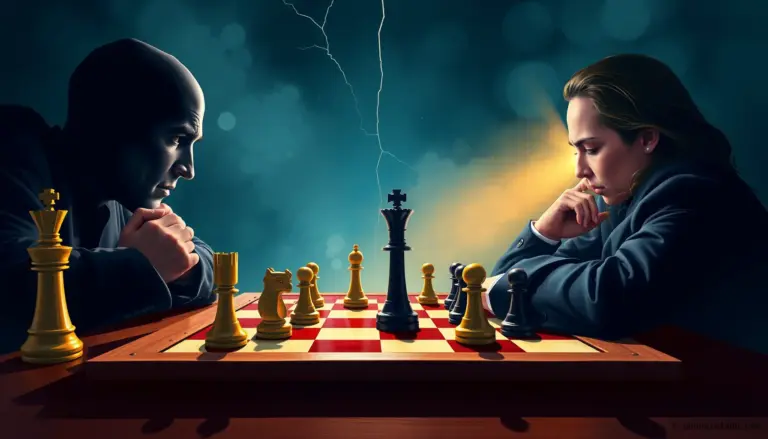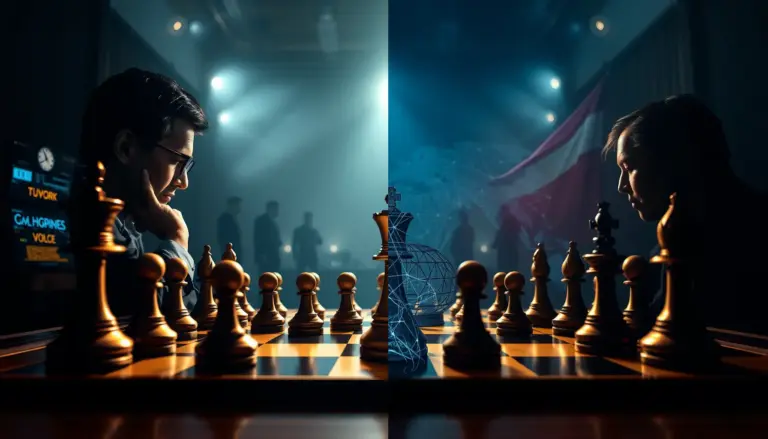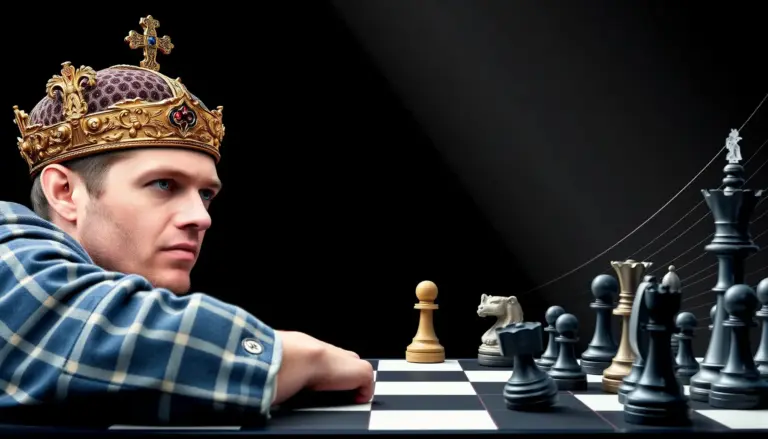
chess, an ancient game of strategy and logical thinking, has transcended its original purpose to become a recurring symbol in conspiracy theories. From political movements to alleged hidden plots in popular culture, the board 64 Casillas has served as a metaphor to explain complex conspiracies that, according to its defenders, They rule the world from the shadows. But, How could a board game inspire such elaborate narratives?? What elements of chess make it so attractive to those looking for hidden patterns in reality??
In this article, We will explore how chess has been intertwined with conspiracy theories throughout history.. We will analyze its symbolic structure, its influence on the culture and psychology behind those who see in its pieces a reflection of hidden powers. From its propaganda use during the Cold War to its presence in works of fiction that feed the conspiracy imagination., We will unravel why this game continues to be a board where humanity's deepest suspicions are projected.
Chess as a metaphor for power and control
Chess is not just a game; It is an abstract representation of the conflict, where each piece has a defined role and each move can alter the balance of the board. This hierarchical and strategic structure makes it a perfect metaphor for those who see the world as a scene of competing forces.. Historically, Chess has been used to illustrate power dynamics, from medieval treatises on leadership to modern analyzes of geopolitics.
In the context of conspiracy theories, the board transforms into a map of hidden influences. Black and white pieces no longer represent just two sides, but secret factions that manipulate events from the shadows. For example, Some theorists have associated the king and queen with financial elites or shadow governments, while the peons would symbolize the population, moved without awareness of its destiny. This interpretation is reinforced by the idea that chess is a game of “perfect information”, where all movements are visible, but only for those who know how to interpret them.
An emblematic case is that of The Protocol of the Elders of Zion, a forged anti-Semitic text from the early 20th century describing an alleged Jewish plan to dominate the world. Although the document is an invention, Its narrative is structured like a chess game, where every step is calculated to achieve final victory. This parallel is not accidental.: chess, with its implacable logic, offers a compelling framework for those seeking to explain the world's chaos as the result of premeditated design.
The Cold War and chess as a propaganda weapon
During the Cold War, Chess became a symbolic battleground between the United States and the Soviet Union. Both sides promoted their players as representatives of the superiority of their political systems.. The USSR, in particular, invested heavily in chess, seeing it as a tool to demonstrate the intelligence and discipline of communism. Players like Mikhail Botvinnik and Garry Kasparov became national heroes, and their victories were celebrated as ideological triumphs.
However, This obsession with chess also fueled conspiracy theories. Some Western analysts interpreted Soviet dominance in the game as a sign that the Kremlin was using mind control or psychological manipulation techniques.. In 1972, The confrontation between Bobby Fischer and Boris Spassky in Reykjavik was seen by many as not only a sporting battle, but also politics. Fischer, an eccentric genius, He accused the Soviets of cheating and orchestrating a conspiracy to prevent his victory.. Although his claims lacked evidence, The idea that chess was a theater of covert warfare gained strength.
This narrative was reinforced with the fall of the USSR. Some theorists suggested that the collapse of the communist bloc had been planned from within., like a game of chess where a player sacrifices pieces to achieve a greater goal. chess, in this context, became a symbol of how elites manipulate history, moving nations like pawns on a global board.
Chess in popular culture and its influence on the conspiracy imagination
the cinema, Literature and video games have used chess as a recurring element to represent conspiracies and hidden plots.. Works like The seventh seal de Ingmar Bergman, where Death plays a game with a knight, o Harry Potter and the Philosopher's Stone, where magic chess decides the fate of the protagonists, They reinforce the idea that the game is linked to higher forces. But it is in the genre of science fiction and thriller where chess takes on a more sinister role..
In The angel game by Carlos Ruiz Zafón, Chess appears as a metaphor for literary intrigues and hidden secrets in Barcelona.. In X-Men: Days of future past, Magneto's character plays a game with Xavier while they discuss the fate of humanity, suggesting that key decisions are made on an invisible board. Even in Stranger Things, chess is used by Eleven to demonstrate his superior intelligence, linking the game with supernatural abilities.
These cultural representations have contributed to normalizing the idea that chess is more than a game.: It is a secret language of the elites. Conspiracy theorists such as David Icke have suggested that figures such as Queen Elizabeth II and the Rothschilds use chess as a code to communicate with each other.. Although these claims are unfounded, The repetition of this symbolism in popular culture has made the association between chess and conspiracy almost instinctive for many people..
The psychology behind the obsession with chess in conspiracy theories
Why is chess so attractive to those looking for hidden patterns in reality?? The answer can be found in cognitive psychology. The human brain has a natural tendency to seek order in chaos., a phenomenon known as apophenia. This predisposition leads us to see connections where there are none., especially when we face complex or threatening situations. chess, with its clear structure and defined rules, offers a perfect framework to project hidden meanings.
Besides, chess activates confirmation bias, a psychological mechanism that causes us to pay more attention to information that supports our prior beliefs. Those who believe in conspiracies see in each game a reflection of their theories: a pawn sacrifice as a diversionary maneuver, a castling like a secret alliance, or a checkmate as the culmination of a master plan. This selective interpretation reinforces your worldview, making chess a powerful tool to validate your suspicions.
Another key factor is the efecto Dunning-Kruger, which describes how people with little knowledge about a topic tend to overestimate their understanding of it. In the case of chess, many conspiracy theorists believe they understand their rules and strategies, but in reality they apply simplistic logic to complex systems. For example, can interpret a brilliant move by a grandmaster as a “sign” of a hidden plan, without considering that chess, like life, It is full of uncertainty and chance.
Finally, chess also exploits black box mystery, a concept that refers to the fascination with the unknown. In a game, players cannot see the opponent's thoughts, just his movements. This opacity is analogous to how conspiracy theorists perceive the world.: a series of visible actions that hide secret intentions. chess, in this sense, It is a mirror of your fears and mistrust.
Conclusions: chess as a mirror of our obsessions
Chess has transcended its status as a game to become a universal symbol of strategy., power and mystery. Its logical structure and symbolic richness have made it attractive to both thinkers and conspiracy theorists., who see in their pieces and movements a reflection of the forces that, according to them, they rule the world. From the Protocol of the Elders of Zion to theories about the Cold War, Chess has served as a canvas on which humanity's deepest suspicions are projected..
However, It is important to remember that chess, in essence, it's a game. Its beauty lies in its ability to challenge the mind, not in its alleged connection with hidden conspiracies. Theories that link him to secret plots are often based on biased interpretations., cognitive biases and a human tendency to look for patterns where there are none. Although it is fascinating to explore how chess has inspired conspiracy narratives, It is also crucial to maintain a critical spirit and not fall into the trap of seeing conspiracies in every movement..
In the end, chess teaches us a valuable lesson: that the world is complex, but not necessarily controlled by invisible forces. Like in a game, every decision counts, but the result is not always predetermined. Maybe, instead of looking for hidden meanings on the board, we should enjoy the game for what it is: a celebration of strategic thinking, creativity and the human capacity to face the unknown with intelligence and audacity.