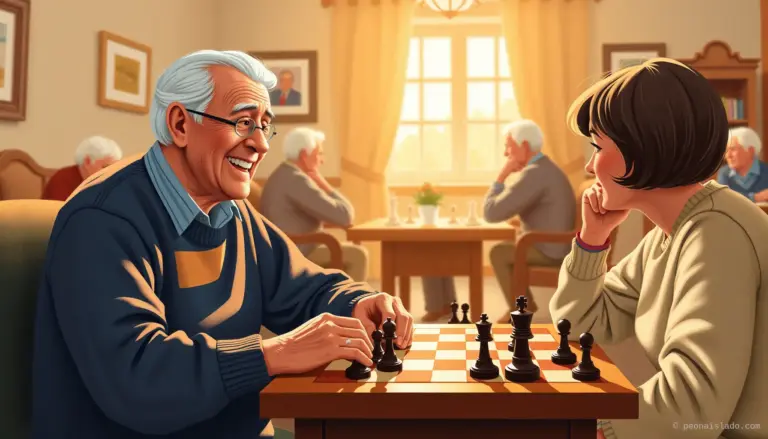
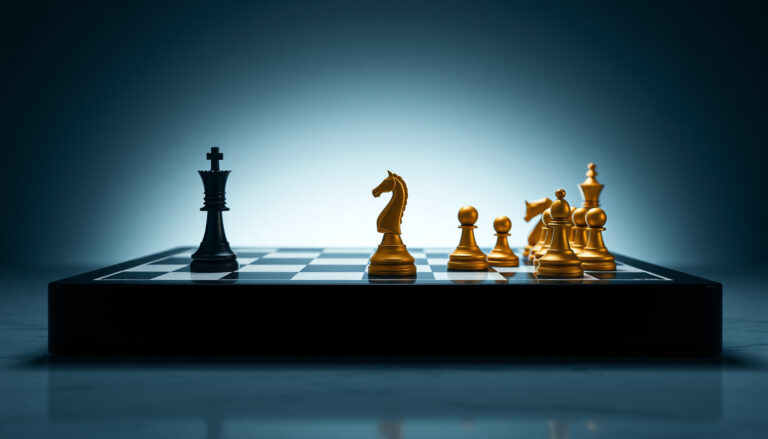
In the heart of Jerusalem, where stones whisper stories of millennia and religions intertwine in a mosaic of faith, Chess emerged as a universal language capable of transcending the deepest barriers. The first interfaith chess tournament in this city, cradle of three spiritual traditions, It was not just a strategy competition about 64 casillas, but an act of peaceful resistance: a board where Jews, Muslims and Christians sat face to face, not as adversaries, but as equals. This event, more than a sporting milestone, became a symbol of how chess as a universal language can weave bridges where others only see abysses.
The board as neutral territory: when pieces replace flags
Jerusalem, with its historical burden of conflicts, seemed the least likely scenario for a division-defying tournament. However, chess, with its origin in Chaturanga indio and its evolution through Persian cultures, Arabs and Europeans, It has always been a game of adaptation. In this tournament, the pieces did not represent armies, but the possibility of a dialogue without words. The players, regardless of your creed, the same rules should apply: a pawn advances, a bishop moves diagonally, and checkmate does not distinguish between prayers or prayers. The paradox is fascinating: a game born as a war simulation became a tool of peace.
What made this tournament unique was its ability to strip participants of their external identities.. In the silence of a game, where only movements and intentions matter, religious differences were diluted. There were no mosques, synagogues or churches on the board, solo 32 pieces and the relentless logic of the game. This phenomenon is not new: in refugee camps, as those documented in chess in refugees, the board has served as an emotional refuge. But in Jerusalem, the symbolism was even more powerful: If chess could unite those who have historically been divided, What other conflicts could be resolved with a little strategy and a lot of silence??
The psychology of checkmate: how chess deactivates prejudices
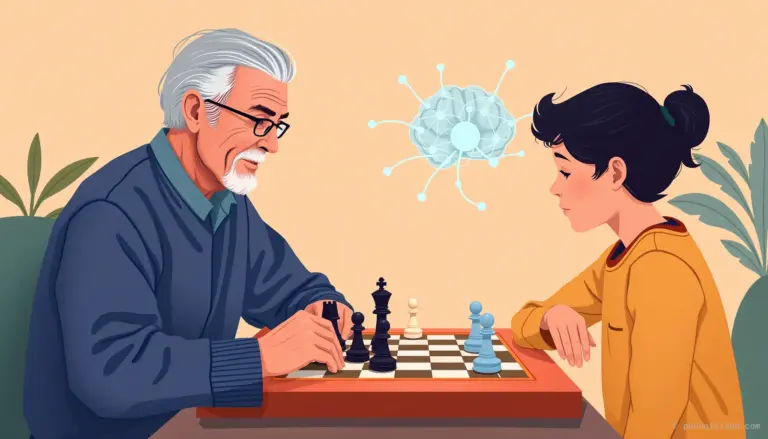
Chess is not just a calculation game; It is a psychological battlefield where the human mind is revealed in its purest form.. At an interfaith tournament, This dimension takes on an almost therapeutic nuance. Studies on therapeutic chess show that the game reduces anxiety and improves empathy, essential skills in stressful contexts. In Jerusalem, each game became an exercise in mutual recognition: the rival was no longer “the other”, but a human being with weaknesses, strengths and, above all, the same capacity for error.
A revealing detail was the absence of verbal language during the games. In a place where words are often weapons, the silence became eloquent. This phenomenon is reminiscent of chess without words, where communication is limited to movements on the board. In Jerusalem, that silence was not empty, but full of meaning: every play was a declaration of respect, each sacrifice a show of trust. The players did not need to say “I am Jewish” o “I am Muslim”; Their strategies spoke for them., and in that tactical dialogue, labels lost relevance.
The legacy of the tournament: Can chess be a diplomatic tool?
First interfaith chess tournament in Jerusalem raised uncomfortable question: If a game can achieve what decades of negotiations have not achieved, Why isn't chess used more as a tool of diplomacy?? The answer is not simple. Chess does not resolve territorial conflicts or historical disputes, but it does offer something equally valuable: a space where differences are temporarily suspended. In a polarized world, where social media amplifies divisions, the chess board emerges as an oasis of rationality.
This tournament also highlighted the potential of chess for silent diplomacy. Unlike traditional sports, where physical contact can exacerbate tensions, chess requires concentration and self-control. There is no place for physical aggression, only for intellectual aggression, what, ironically, may be more effective in dismantling prejudices. In Jerusalem, the players not only competed; were also observed, were studied and, in many cases, they admired each other. That respect, forged in the stillness of a game, It is the first step towards any reconciliation.
The challenges of scaling the model: Is it replicable in other conflicts?
The success of the Jerusalem tournament does not mean that chess is a magic solution to global conflicts. Its impact depends on specific conditions: a neutral space, clear rules and, above all, the willingness of the participants to sit in front of the board. In contexts like that of Israeli and Palestinian children, where chess has served as a bridge, the results have been encouraging, but also limited. The game can break the ice, but it doesn't melt centuries of mistrust.
Besides, Chess faces its own challenges in conflict environments. In some cases, as in dictatorships, the board has become a symbol of resistance, but also a target of repression. In others, like in prisons or war zones, chess has been a rehabilitation tool, but its scope remains marginal. So that the Jerusalem model is replicable, it takes more than tournaments: infrastructure that includes education is required, access to boards and, above all, the political will to allow the game to flourish.
The future of chess as a catalyst for peace
The first interfaith chess tournament in Jerusalem was not an isolated event, but the reflection of a global trend: chess as a tool for inclusion and social transformation. In a world where divisions seem insurmountable, the board offers a radical alternative: the possibility of competing without hating, to win without humiliating, and to lose without resentment. This tournament showed that, even in the most divided places, chess can be a beacon of humanity.
However, His true legacy does not lie in the games played, but in those to come. If chess can unite Jews, Muslims and Christians in Jerusalem, Why couldn't it be done in other conflict scenarios?? The answer is not in the game itself, but in those who play it. The board is neutral, but the players don't. It is up to them—and those who promote these spaces—to turn chess into something more than a sport.: in an act of faith in the human ability to find common ground, even in the most adverse situations.
In the end, the Jerusalem tournament was not just about checkmate, but about checking prejudices. And in that bold move, chess showed, one more time, that his true power is not in defeating his rival, but to remind us that, on the other side of the board, there is a human being. As the great teacher Savielly Tartakower wrote: “Chess is the art that illustrates the beauty of logic”. In Jerusalem, that logic was dressed in hope.