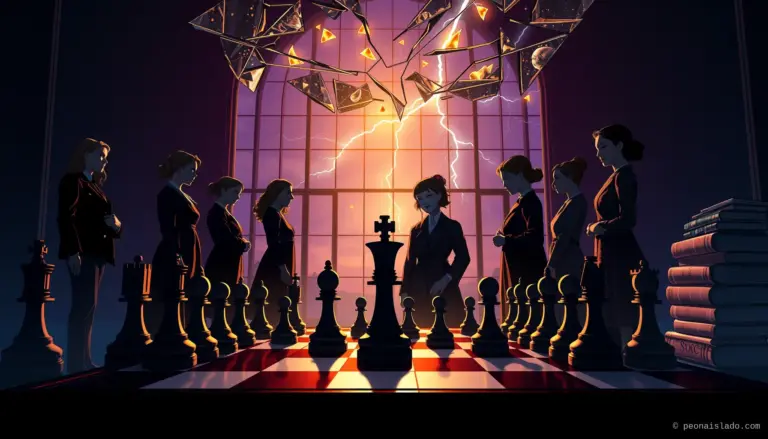
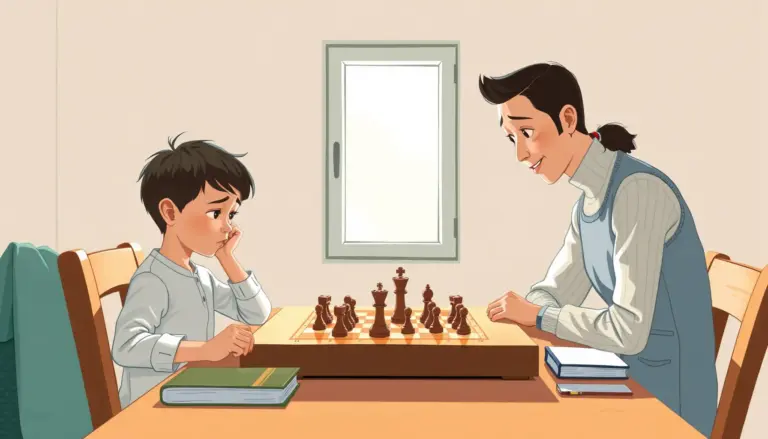
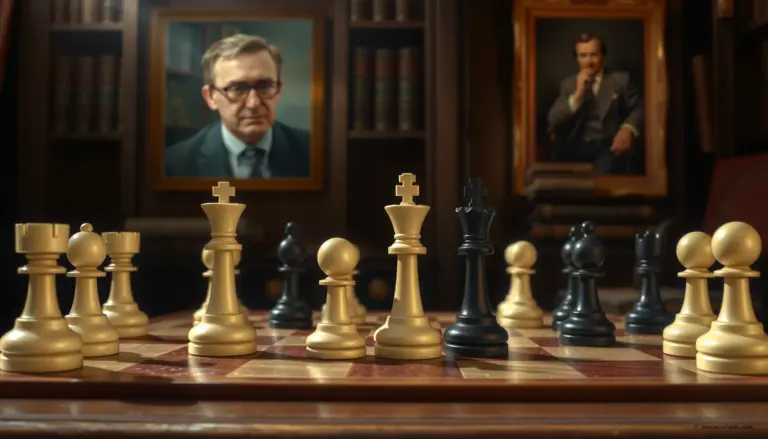
Chess has been a mirror of the human condition for centuries, a microcosm where the most intimate battles and the most audacious strategies are reflected. But what happens when this ancient game is moved to a setting as hostile as a prison?? behind bars, where time seems to stop and second chances are scarce, the board 64 Casillas becomes a territory of redemption, a space where the mind can free itself even when the body cannot. This article explores how chess, beyond being a simple hobby, becomes a rehabilitation tool, a universal language that breaks barriers and offers a new perspective to those who have lost their freedom, but not hope.
Chess as a mental escape in confinement
Prisons are places where time is distorted, where the days get longer and monotony can become a more dangerous enemy than the walls themselves. In this context, chess emerges as an intellectual oasis, an activity that requires absolute concentration and that, for a few moments, allows inmates to escape from their reality. It's not just about moving pieces on a board, but to immerse yourself in a universe where every decision counts, where patience and strategy can make the difference between defeat and victory.
Studies carried out in prisons in countries like Spain, The United States and Argentina have shown that chess reduces stress and anxiety levels among inmates. The reason is simple: the game forces you to focus on the present, to analyze each movement carefully and anticipate the consequences of each action. In an environment where impulsivity can lead to conflicts, chess teaches you to think before acting, a lesson that transcends the board and applies to everyday life. As the article on therapeutic chess, This practice not only improves mental health, but also fosters essential social skills, such as empathy and non-verbal communication.
But chess in prison goes beyond individual therapy. In many penitentiary centers, Internal tournaments are organized that generate a sense of community among inmates. These events not only break the routine, but also create a space of mutual respect, where personal differences are relegated to the background. In a place where hierarchy is often marked by force or intimidation, chess introduces a new dynamic: that of intellectual merit. Winning a game does not depend on physical condition, but the ability to think, plan and adapt, skills that are valued equally, regardless of each player's past.
Strategy as a metaphor for life
chess is, in essence, a decision game. Every move is a choice that can lead to success or failure., and this dynamic resonates deeply with those who have made mistakes in the past. For many inmates, the board becomes a metaphor for their own lives: a series of decisions that, at the time, they seemed correct, but that led them to a dead end. However, unlike real life, chess offers the possibility of restarting the game, to learn from mistakes and try new strategies.
This ability to reflect is especially valuable in an environment where recidivism is a recurring problem.. According to data from prison rehabilitation programs, Inmates who participate in activities such as chess show a lower recidivism rate upon release. The reason is that the game teaches them to evaluate the consequences of their actions, to consider alternatives and develop critical thinking that allows them to make more informed decisions. In this sense, chess acts as a bridge between confinement and social reintegration, preparing inmates to face the challenges of the outside world with a more strategic and less impulsive mindset.
Besides, chess fosters resilience. Losing a game is not the end of the world, but an opportunity to analyze what went wrong and how to improve in the next. This growth mindset is critical for those seeking to rebuild their lives after prison.. As mentioned in the article on hidden chess lessons for life, the game teaches that failure is not permanent, but a necessary part of learning. In an environment where self-esteem is usually on the floor, This lesson can make the difference between hopelessness and motivation to change.
Chess as a tool for social reintegration
One of the biggest challenges prisoners face upon regaining their freedom is reintegration into society.. The stigma, The lack of job opportunities and the difficulty in rebuilding personal relationships are obstacles that can lead to recidivism.. However, Chess has proven to be an effective tool to facilitate this process.. In many countries, programs have been implemented that use chess as part of preparation for life outside of prison, teaching inmates not only the rules of the game, but also skills transferable to other areas, like problem solving, time management and decision making under pressure.
A notable example is the program “Chess for Freedom” (Chess for Freedom), that operates in prisons in several countries, including the United States and the United Kingdom. This project not only teaches chess to inmates, but also prepares them to participate in external tournaments, where they can interact with players from the community and demonstrate their skills. Participating in these events not only improves your self-esteem, but also gives them an opportunity to rebuild their public image, showing that they are capable of contributing positively to society.
Besides, Chess can open doors in the workplace. In some cases, inmates who excel at the game have been hired by chess clubs or even as coaches, which provides them with a source of income and a sense of purpose. As the article on chess in prisons, the game not only offers a creative outlet, but also a way for social and economic reintegration.
The board as a space for dialogue and reconciliation
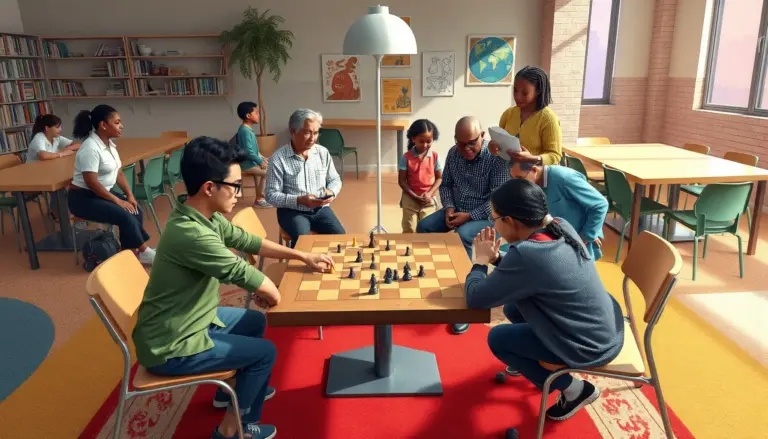
In prisons where tensions between groups are frequent, Chess can act as a catalyst for dialogue and reconciliation. Unlike other games or sports, Chess does not require physical contact or athletic skills, making it an activity accessible to everyone, regardless of your physical condition or age. This facilitates the participation of inmates from different backgrounds and cultures., creating a space where differences can be put aside in favor of a common goal: the intellectual challenge.
In some penitentiary centers, tournaments have been organized between inmates and guards, breaking down traditional barriers between both groups. These initiatives not only humanize inmates in the eyes of officials, but also foster an environment of mutual respect. chess, in this context, becomes a universal language that transcends hierarchies and labels, reminding all participants that, at the end of the day, They are human beings with similar abilities and emotions..
In addition, Chess can be a tool to address internal conflicts. In prisons where gangs or rival groups generate constant tensions, Chess tournaments have served as a way to channel competitiveness in a peaceful way. Instead of resolving their differences with violence, Inmates learn to compete in a controlled environment, where respect for the rules and the opponent is essential. This experience can be the first step towards a more harmonious coexistence within the prison and, possibly, in society.
The future of chess in prisons: challenges and opportunities
Despite the obvious benefits of chess in prisons, its large-scale implementation faces several challenges. One of the main ones is the lack of resources. Many prisons lack boards, pieces or personnel trained to teach the game. Besides, in some cases, There is resistance from the authorities, who do not always recognize the therapeutic and educational value of chess. However, Nonprofit organizations and volunteers have managed to overcome these barriers, donating materials and offering free workshops in prisons around the world.
Another challenge is the sustainability of the programs. For chess to have a real impact on the rehabilitation of prisoners, It is necessary that the programs be continuous and not limited to specific initiatives. This requires a long-term commitment from prison authorities., as well as the active participation of the external community. In this sense, collaboration with local chess clubs, universities and companies can be key to guaranteeing the viability of these projects.
Finally, It is important to highlight that chess is not a magical solution to the problems of the prison system.. Its effectiveness depends on a comprehensive approach that combines play with other forms of therapy., education and psychological support. However, as a complementary tool, chess has proven to be one of the most powerful, capable of transforming lives and offering a second chance to those who need it most.
Chess in prison is much more than a game. It is a window to mental freedom, a school of patience and strategy, and a bridge towards social reintegration. In a world where second chances are rare, the board 64 Casillas offers inmates the chance to reinvent themselves, to learn from their mistakes and discover that, even in the most adverse circumstances, the mind can be your greatest ally. As Grandmaster Garry Kasparov said: “Chess is life in miniature”. and in prison, this miniature becomes a reflection of hope, a reminder that, no matter where we are, there is always room for growth and redemption.