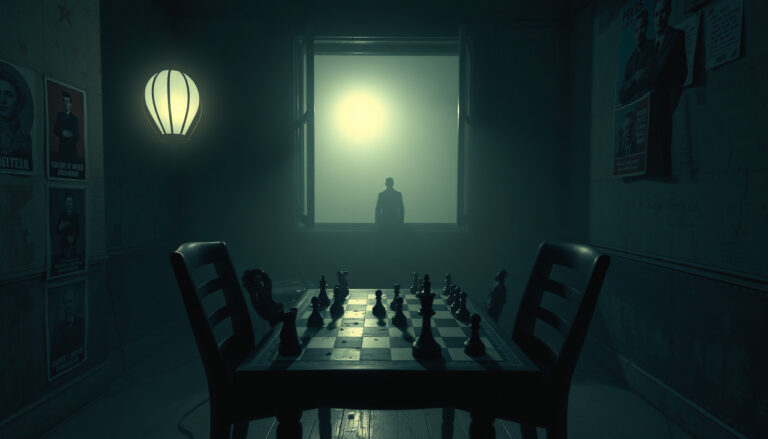
blitz chess, known as blitz, is a modality that condenses the essence of the game in a time limit that oscillates between 3 and the 10 minutes per player. Unlike classical chess, where deep reflection and long-term strategy dominate the game, he blitz requires a unique combination of instinct, tactical memory and psychological resistance. But beyond speed, This variant introduces special rules that redefine the dynamics of the board, transforming each game into a duel of precision and adaptability. What rules govern this format and how do they influence decision making??
The clock as judge and executioner: the time rule in blitz
The most distinctive element of blitz chess is, definitely, the clock. Unlike classical chess, where time is an abundant resource, in blitz every second counts. The time management becomes a skill as crucial as the calculation of variants. But there is a rule that few master: he flag fall, the flag fall. In official tournaments, if a player runs out of time before completing the required moves (generally 40 in items with increase), automatically loses, even if your position is winning. This rule forces players to maintain a constant pace, avoiding getting obsessed with a single play. Great masters like Hikaru Nakamura have perfected the art of “play with the clock”, sacrificing quality in secondary positions to ensure that time does not become your worst enemy.
Another peculiarity is the time increase, a mechanism that adds additional seconds after each movement. This system, popularized on platforms such as Chess.com or Lichess, mitigates countdown stress and allows for more balanced games. However, its psychological impact is ambivalent: while some players see it as an opportunity to breathe, Others fall into the trap of relaxing too much, losing the intensity necessary for the blitz. The strategy with increase requires a hybrid approach, where speed is combined with minimal planning to avoid catastrophic errors.
The rule of “hand on the clock”: a gesture that defines games
In blitz chess, the simple act of pressing the watch takes on a strategic dimension. The rule states that a player must move first and then operate the clock with the same hand, a rule designed to avoid confusion and ensure fairness. However, Its application in practice reveals psychological nuances. Experienced players use this rule to their advantage.: A quick movement followed by a tap on the watch can convey confidence, while a prolonged pause before activating it can generate doubts in the rival. It is “body language” It is especially effective in face-to-face games, where eye contact and gestures amplify pressure.
But there is a detail that many overlook.: If a player touches a piece and then hesitates, the clock keeps ticking. This can lead to absurd situations where a chess player, when trying to fix an error, ends up losing due to time. The solution is clear: in blitz, indecision is as dangerous as a tactical error. This rule reinforces the importance of concentration, where every gesture must be deliberate, even under the pressure of the clock.
Checkmate and surrender: when time is not everything
In classical chess, surrender is an act of recognition of defeat, but in blitz, its meaning changes. Given the shortage of time, many players choose to give up clearly lost positions to save seconds and avoid additional errors. However, This practice has a hidden risk: in the heat of the game, It is easy to underestimate tactical resources such as counterattack or the zugzwang. Historically, legendary games like “Immortal Departure” de Anderssen vs. Kieseritzky (1851) showed that even in desperate positions, Creativity can turn the game around. In blitz, this lesson is even more relevant, since speed can cloud judgment.
Another controversial rule is that of checkmate in stalemate positions.. In classical chess, the drowned man is a tie, but in some variants of blitz, especially on online platforms, The player with advantage is allowed to claim victory if his opponent has no legal moves. This standard, although minority, reflects the unforgiving nature of the format, where technical precision prevails over tradition. For the purists, This may seem like an aberration., but for the players of blitz, It is a necessary adaptation to the speed of the game.
He “touch-move” and the ethics of the blitz: between the rule and the trap
The rule of touch-move —which forces a piece to move if it is touched—is sacred in chess, but in blitz, Its application generates ethical debates. In face-to-face games, players usually respect this rule, but in the online environment, where there are no referees, the attempts to “retract” are common. Platforms like Chess.com have implemented systems to detect illegal movements, but the line between genuine error and deliberate cheating remains blurry.
An emblematic case occurred in the Blitz World Championship 2018, where Magnus Carlsen was accused of taking advantage of a mistake by his rival, Sergey Karjak too, who touched a piece but did not move it. Although the referee validated Carlsen's movement, The incident reignited discussion about whether the blitz certain rules should be relaxed in favor of the fluidity of the game. The answer is not simple: while some argue that speed justifies flexibility, others insist that the rules must be maintained to preserve the integrity of chess.
The psychology of the blitz: when the mind plays against itself
Blitz chess is not just a test of technical skill, but also mental resistance. Time pressure activates psychological mechanisms that rarely appear in classical chess. One of the most studied is the tilt, a state of frustration that leads players to make chain errors after a loss or an unfortunate move. This phenomenon is so common that platforms like Lichess have developed tools to detect erratic play patterns and suggest breaks..
The emotional management in blitz requires specific techniques. Players like Alireza Firouzja, Known for his dominance in quick games, use controlled breathing between movements to stay calm. Others, as Levon Aronian, prefer to adopt an approach “detached”, treating each game as an independent exercise to avoid the accumulation of stress. The key is to understand that, in blitz, the mind is as important as the board.
Besides, he blitz exposes a fascinating paradox: while speed reduces deep computing capacity, also sharpens intuition. Great teachers like Mikhail Tal, famous for his aggressive style, They showed that in quick games, Creativity and calculated risk can be more effective than memorizing openings. This duality between precision and chaos is what makes the blitz a unique modality, where chess is closer to art than science.
Conclusion: the blitz as a mirror of the human mind
Blitz chess is much more than an accelerated variant of the classic game. Your special rules—from time management to touch-move— create an ecosystem where technology, psychology and ethics are uniquely intertwined. In this format, Players not only compete against a rival, but also against the clock, your own emotions and, sometimes, the loopholes in a rules system designed for speed.
Master the blitz requires more than theoretical knowledge: requires adaptability, intuition and a resilient mindset. As Garry Kasparov once said, “chess is a reflection of life, but he blitz It is a reflection of life in real time”. In a world where immediacy dominates our decisions, This modality not only entertains, but also teaches valuable lessons about how to think under pressure, accept imperfection and, above all, enjoy the game in its purest form.