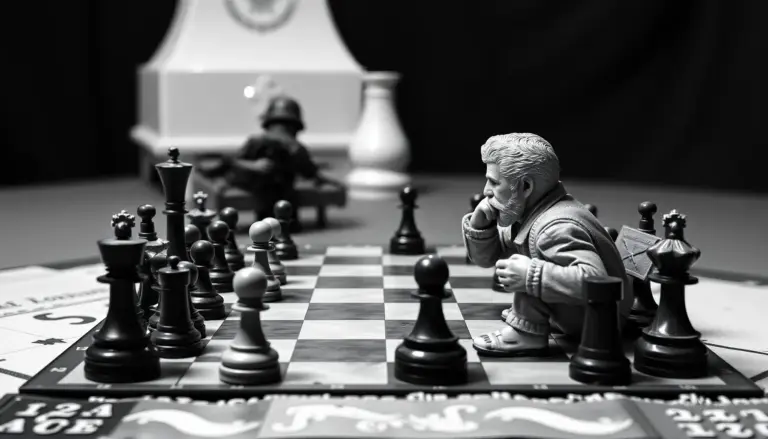
fast chess, also known as blitz or bullet, has become enormously popular in recent years thanks to digital platforms such as Chess.com, Lichess or the rise of streamers who practice it. This format, where players have just a few minutes (the seconds) to make your movements, offers a dynamic and exciting experience, but it has also generated a recurring debate: Does speed chess damage deep thinking? Some argue that excessive speed encourages superficiality, while others argue that it can be a useful tool to improve certain skills. In this article, We will explore the effects of rapid chess on analytical skills, its impact on players of different levels and whether it really compromises the strategic depth that characterizes the classic game.
The nature of rapid chess and its contrast with classical chess
Rapid chess is defined by short time limits, generally between 1 y 10 minutes per player for the entire game. in the blitz (3+0 o 5+0), Players must make decisions in a matter of seconds, while in the bullet (1+0 or even less), time pressure is extreme. In contrast, classical chess grants at least 60 minutes per player, allowing a more detailed analysis of each position.
This fundamental difference not only affects the gaming experience, but also the cognitive processes involved. In classical chess, players can:
- Evaluate multiple variants in depth.
- Consider long-term strategic plans.
- Anticipate your opponent's intentions more accurately.
- Correct calculation errors through constant review.
Instead, rapid chess prioritizes:
- Intuition and memorized patterns.
- The ability to react to immediate threats.
- Efficient time management under pressure.
- Simplifying positions to avoid complications.
This dichotomy raises a key question: Does the brain adapt to think differently depending on the format, or speed chess “train” bad habits that are later transferred to the classic game? The answer is not binary, But it is true that both styles require different cognitive skills., and its exclusive or unbalanced practice can have consequences.
The impact on analysis capacity: superficiality or efficiency?
One of the most recurring arguments against rapid chess is that encourages a superficial style of play, where players rely more on memory and reflexes than deep calculation. Studies in neuroscience and cognitive psychology suggest that, under temporary pressure, the brain tends to resort to heuristics (mental shortcuts) instead of a comprehensive analysis. This translates into:
- Automated patterns: In quick games, Players often repeat familiar openings and structures without questioning their validity in the specific context of the game.. This can limit creativity and adaptation to unique positions..
- Errors of omission: Lack of time prevents evaluating all options, leading to overlooking critical plays or hidden tactics. A study from the University of Barcelona (2018) found that blitz players committed a 30% more tactical errors than in classic games.
- Confirmation bias: Under pressure, players tend to look for information that confirms their first impressions, ignoring alternatives that could be superior.
However, not everything is negative. Rapid chess too develop valuable skills, as:
- Processing speed: The ability to identify threats and opportunities in seconds is crucial in tournaments with tight time controls.
- Mental toughness: Play quick games in sequence (like in blitz marathons) improves concentration and stress management.
- Positional intuition: Not being able to calculate all the variants, Players learn to trust their “sense” of the game, which can be useful in complex positions where exact calculation is impossible.
The problem arises when a player solo practice fast chess, neglecting deep analysis. Then, your ability to carefully evaluate positions is likely to be affected, especially in long games where patience and precision are key.
Can speed chess improve deep thinking?
Although rapid chess is often associated with superficiality, some experts argue that, used correctly, can be a tool to improve deep thinking. The key is how it is integrated into the training routine. For example:
- As a complement to the study: Playing quick games after analyzing openings or endings can help consolidate concepts. Repetition under pressure strengthens long-term memory.
- To identify weaknesses: Blitz errors often reveal gaps in calculation or positional evaluation that can then be worked on in more detail..
- Intuition training: Great teachers like Magnus Carlsen have highlighted that the blitz helps them “to feel” complex positions, a skill that they then apply in classic games.
A study published in Frontiers in Psychology (2020) analyzed players of different levels and found that those who combined speed chess with deep analysis showed a improvement in your calculation ability compared to those who only played long games. This suggests that the blitz, in moderate doses, can enhance certain cognitive abilities.
Nevertheless, the risk is in the excessive dependency. Players who prioritize blitzing over structured study can fall into the trap of believing that “per” a position because they have played it many times, without really understanding its nuances. This is especially dangerous at intermediate levels, where the lack of theoretical foundations is compensated by practical experience, but without a solid foundation.
The effect on players of different levels
The impact of rapid chess varies significantly depending on the level of the player. A beginner is not the same as a great master., and the consequences of its practice can be radically different.
Beginners (HOW MUCH < 1500):
- Advantages: The blitz helps them become familiar with the rules, Basic openings and elementary mates. Repetition speeds up learning simple tactical patterns.
- Risks: They can develop bad habits, like moving pieces without a plan or ignoring basic threats. Lack of time prevents them from learning from their mistakes, perpetuating strategic errors.
Intermediate players (HOW MUCH 1500-2000):
- Advantages: The blitz allows them to apply theoretical concepts in a dynamic environment, improving your reaction capacity. It also helps them gain confidence in tactical positions..
- Risks: They can stagnate by not going deeper into openings or endings. Reliance on intuition over calculation can limit your progress in classic games.
Advanced and masters (HOW MUCH > 2000):
- Advantages: The blitz helps them stay “sharp” tactically and try new ideas without the risk of a long game. Great teachers like Hikaru Nakamura have shown that blitz can be a high-performance tool.
- Risks: Even at this level, excessive blitzing can lead to predictable play or underestimating theoretical preparation. Some masters have pointed out that blitz makes them lose patience in classic games, where depth is crucial.
An interesting case is that of Fabiano Caruana, who has stated that the blitz helps him improve his calculation speed, but who always complements his training with in-depth analysis. This suggests that, even in the elite, balance is essential.
Conclusions: Does rapid chess harm or enrich??
The debate over whether rapid chess harms deep thinking has no absolute answer., but we can draw conclusions based on the evidence and experience of players of all levels. First of all, It is undeniable that the blitz and the bullet prioritize different skills to those of classical chess: while the latter requires patience, detailed calculation and strategic planning, rapid chess rewards intuition, speed and adaptation under pressure. Both formats are valuable, but their impact depends on how they are integrated into the player's practice.
The real risk is not in rapid chess itself, but in his unbalanced use. Players who neglect deep study, game analysis or theory of openings and endings in favor of quick games may reduce your ability to accurately evaluate positions. However, when combined with structured training, the blitz can be a powerful tool: improves processing speed, reinforces tactical patterns and helps identify weaknesses that can then be worked on in more detail.
The key is in the balance. Great teachers such as Magnus Carlsen or Fabiano Caruana have shown that it is possible to master both formats without one harming the other.. For amateur players, the recommendation is clear: use rapid chess as a complement, not as a substitute. Analyze quick games, Identifying recurring errors and dedicating time to in-depth study are practices that mitigate their possible negative effects..
Ultimately, speed chess does not harm deep thinking by itself, but You can do it if it becomes the only way to practice. As in many aspects of life, virtue is in the middle: enjoy the excitement of blitz without losing sight of the beauty and depth of classic chess.