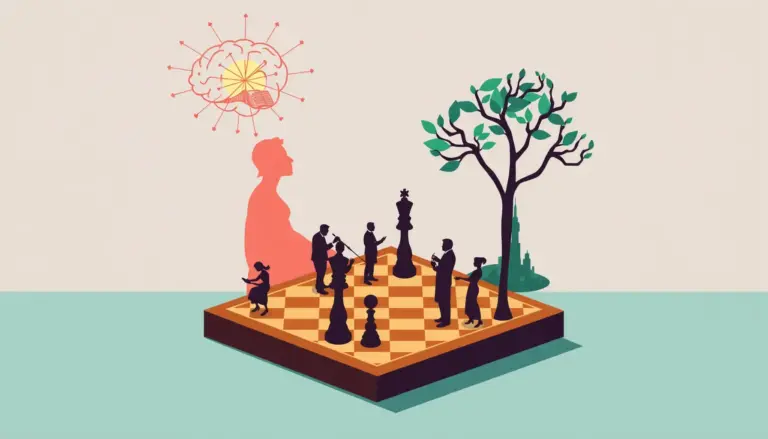
Chess is much more than a strategy game: It is a powerful tool that transcends cultural boundaries, social and cognitive. In recent years, Its relationship with neurodivergence has gained attention, not only for its ability to improve cognitive skills, but also for its therapeutic and inclusion potential. The neurodivergence, covering conditions such as autism, ADHD, dyslexia or Asperger's syndrome, poses unique challenges in developing social skills, emotional and executive. However, Chess emerges as a bridge between these differences and opportunities for personal growth..
This article explores how chess can be an ally for neurodivergent people, analyzing its benefits from psychological perspectives, educational and social. From improving concentration to building confidence, going through its role in therapeutic settings, We will discover why this ancient game has become a valuable resource for those who think and perceive the world differently.. Besides, We will address the challenges that remain and how the chess community can adapt to be more inclusive..
Chess as a cognitive development tool in neurodivergence
The neurodivergent brain processes information differently, which can translate into unique strengths, like an exceptional memory, advanced logical thinking or an ability to focus intensely on areas of interest. chess, being a game that requires planning, anticipation and analysis, naturally aligns with these skills. Studies have shown that people with autism, For example, They may excel at chess due to their ability to recognize patterns and maintain attention on specific details..
However, Chess not only enhances these strengths, but also helps compensate for areas of difficulty. For someone with ADHD, whose mind tends to wander, the game acts as a “anchor” that trains sustained concentration. Clear board structure and defined rules provide a predictable framework, which reduces anxiety in people with sensory sensitivity or difficulties adapting to chaotic environments. Besides, Constant practice improves working memory, essential for everyday tasks such as following instructions or managing time.
A key aspect is how chess encourages cognitive flexibility, the ability to adapt to change and consider multiple perspectives. For many neurodivergent people, This skill can be challenging., especially in social situations or when faced with unforeseen events. chess, by requiring the player to anticipate opponent moves and adjust their strategy in real time, exercise this flexibility in a gradual and controlled way. This not only has benefits on the board, but it is transferred to daily life, improving the ability to solve problems and make decisions.
Chess as a social bridge for neurodivergent people
One of the biggest obstacles for many neurodivergent people is social interaction. chess, however, offers a universal language that makes it easy to connect with others, regardless of cognitive differences. Unlike informal conversations, where social norms may be ambiguous or overwhelming, chess provides a structured context for interaction. The games allow you to communicate through movements, strategies and, in many cases, comfortable silences that do not generate pressure.
In environments such as chess clubs or tournaments, Neurodivergent people find a space where their abilities are valued. This contrasts with other social spheres, where they may feel judged for not meeting neurotypical expectations. For example, a child with Asperger syndrome who has difficulty maintaining a fluent conversation may excel in a chess tournament, gaining recognition and self-esteem. These types of experiences are essential to build a positive identity and reduce isolation..
Besides, chess encourages strategic empathy, that is to say, the ability to understand the opponent's intentions and anticipate his actions. For people with autism, who may have difficulty interpreting nonverbal social cues, This skill is indirect training for theory of mind. (the ability to attribute mental states to others). Although it does not replace traditional social interactions, Chess offers a safe starting point to develop these skills.
Nevertheless, It is important to note that inclusion in chess is not without challenges. Some competitive environments can be overwhelming due to noise, crowds or pressure to perform. For this reason, It is crucial that chess clubs and organizations implement adaptations, like flexible schedules, quiet spaces or alternative play formats, to ensure that everyone can participate without stress.
Chess in therapeutic and educational contexts
Chess has gained ground in therapies and educational programs designed for neurodivergent people, thanks to its ability to address specific needs in a playful way. In the therapeutic field, It is used as part of interventions to improve executive skills, like planning, impulse inhibition and emotional self-regulation. For example, in children with ADHD, Chess can be a tool to work on patience and impulse control, since each movement requires reflection before acting.
In the educational context, Chess has been integrated into schools as part of cognitive enrichment programs. For students with dyslexia, who may have difficulty with sequential information processing, Chess offers a visual and tactile way to learn, where the pieces and their movements represent abstract concepts. Besides, the game promotes metacognition, that is to say, the ability to think about one's own thinking, which is especially useful for students who need personalized learning strategies.
A notable example is the use of chess in programs for young people with autism.. Organizations like Chess4Life o Autism Chess have developed methodologies that combine play with therapeutic objectives, how to improve communication or reduce anxiety. These programs often include adaptations, such as boards with contrasting colors to facilitate visual perception or visual guides that explain the rules step by step. The results are encouraging: many participants show improvements in their ability to follow instructions, work as a team and manage frustration.
However, The success of these initiatives depends largely on the training of professionals. Therapists and educators must be trained to adapt chess to individual needs, avoiding rigid approaches that can generate frustration. For example, for a person with sensory sensitivity, the sound of moving parts can be annoying, so magnetic or digital boards can be used. The key is to personalize the experience so that chess is a resource for growth, not a source of stress.
Challenges and opportunities in chess inclusion
Despite the benefits of chess for neurodivergence, There are still barriers that limit its accessibility. One of the main ones is the lack of awareness about how to adapt the game to different needs.. Many clubs and tournaments operate under standardized rules that do not consider the particularities of neurodivergent players.. For example, Time limits in quick games can generate anxiety in people with ADHD or autism, They need more time to process information.
Another challenge is stigmatization. Some neurodivergent people may feel excluded or belittled in competitive environments, where performance is prioritized over the learning process. This is especially true for players with intellectual disabilities., that are often underestimated or relegated to separate categories. To overcome this, It is essential to promote a culture of inclusion that values the diversity of playing styles and celebrates individual achievements, beyond the results.
On the other hand, the opportunities are vast. Technology has opened new doors for inclusion, with online chess platforms that allow you to play from home, avoiding physical or social barriers. Besides, initiatives such as adapted tournaments or mentoring programs, where neurodivergent players are guided by peers or professionals, are proving to be effective in encouraging participation. An inspiring example is the case of Jonathan Carlstedt, a chess player with autism who has competed internationally, breaking stereotypes about the abilities of neurodivergent people.
To move forward, A paradigm shift is necessary in the chess community. This includes training referees and organizers in neurodiversity, create accessible spaces and promote narratives that highlight the success stories of neurodivergent players. Only in this way can chess fulfill its potential as a tool for inclusion and empowerment..
Chess and neurodivergence share a complex and fascinating relationship, where play acts as a catalyst for personal and social growth. Throughout this article, We have explored how chess not only enhances cognitive skills such as concentration, memory and mental flexibility, but also offers a safe space for social interaction and emotional development. For neurodivergent people, This ancient game can be a refuge where your differences become strengths, allowing them to shine in an environment that values strategy and creativity over social conventions.
However, The path to full inclusion still has obstacles. The lack of adaptations in tournaments, Stigmatization and poor training in neurodiversity are challenges that require attention. Fortunately, the opportunities to overcome them are just as great, from therapeutic programs to technological initiatives that make chess more accessible. The key is to recognize that cognitive diversity enriches the game, providing unique perspectives that can inspire the entire chess community.
In conclusion, chess is not just a game, but a tool of transformation. For neurodivergent people, represents an opportunity to develop skills, build trust and connect with others in a universal language. For society, is a reminder that inclusion is not about homogenizing differences, but to celebrate them and adapt to them. The board is ready: We just need to all sit down and play with the rules of diversity.