The term zugzwang It is a word of German origin that has transcended the chess board to describe situations in which any decision you make worsens your position.. Although its best-known use comes from the world of chess, where a player is forced to move a piece even if it hurts him, The concept has fascinating applications in everyday life. From work decisions to personal relationships, he zugzwang reminds us that, sometimes, The lack of favorable options can be as strategic as the abundance of them. In this article, We will explore what the zugzwang, how to identify it in common situations and why understanding it can help us better navigate life's dilemmas. Through practical examples and deep reflections, we will discover that, although the term sounds complex, Its essence is universal and applicable to almost any area.
The origin of the zugzwang: beyond chess
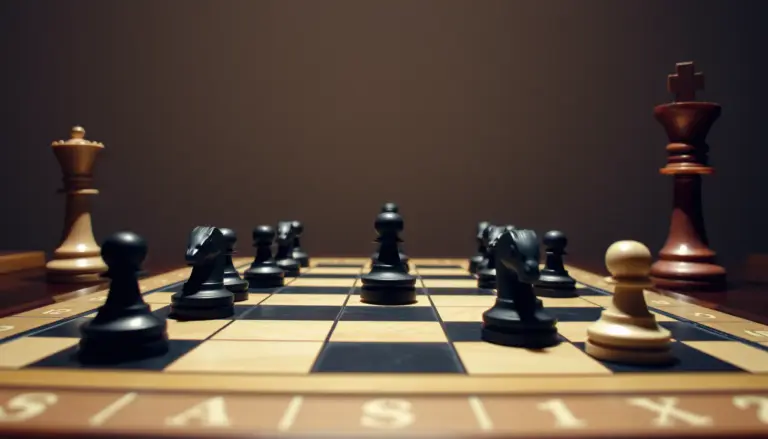
He zugzwang born in chess, but its meaning goes far beyond a simple forced movement. on the board, occurs when a player has no advantageous moves and any move he makes weakens his position. For example, if a king is cornered and all squares around him are threatened, moving it will only make your situation worse. However, the rules of chess force you to move, so the player is caught in a paradox: doing nothing would be ideal, but it's not an option.
This idea of “detrimental obligation” has been extrapolated to other contexts. In game theory, he zugzwang is studied as a scenario where the action, although necessary, leads to a suboptimal result. Even in philosophy, It has been used to analyze ethical dilemmas where any choice has negative consequences. The interesting thing is that, in real life, there is not always a “opponent” that forces us to act, but the circumstances - such as deadlines, social pressures or economic limitations—can create a similar effect.
Understand the origin of zugzwang helps us recognize that it is not always a defeat, but of a situation that requires creativity. in chess, great teachers look for ways to avoid it or even use it to their advantage. in life, something similar happens: Identifying these situations allows us to anticipate and look for alternatives that break the cycle of forced decisions..
Zugzwang at work: when every option seems bad
The workplace is fertile ground for zugzwang. Imagine that your boss assigns you a project with a tight deadline and limited resources.. If you accept, you know that the result will be mediocre and will affect your reputation. If you reject, you could be seen as uncooperative. In this case, any decision seems harmful, But the key is how you frame the problem..
A classic example is an employee who discovers that his company is engaging in unethical practices.. It is reported, You could lose your job or be isolated by your colleagues. If you shut up, its integrity is compromised. Here, he zugzwang It's not just a matter of options., but of values. The solution is not to choose between two evils, but to look for a third way: document irregularities, look for allies within the company or even prepare for a job transition before acting.
Another common scenario is that of promotions. Sometimes, Accepting a position with more responsibility means sacrificing personal time or taking risks that you are not sure you can handle.. Reject it, instead, can stagnate your career. In these cases, he zugzwang it's not a trap, but an opportunity to negotiate. Can you accept the promotion with conditions, such as a support team or an adaptation period? Flexibility is the tool that breaks the cycle of forced decisions.
Personal relationships and the art of navigating emotional zugzwang
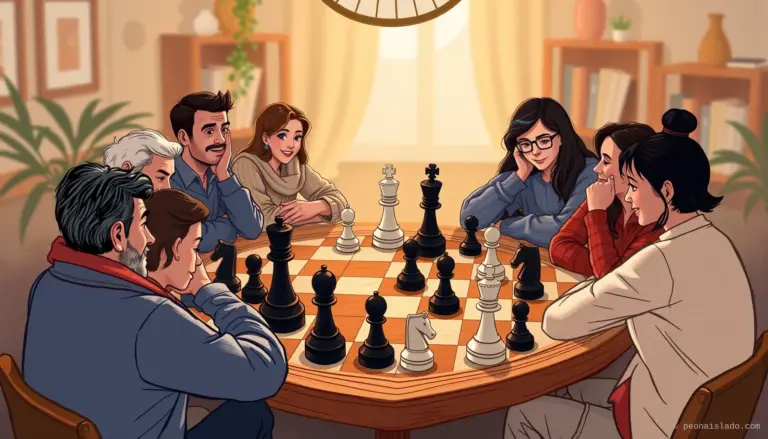
Human relationships are full of moments where any action seems to make things worse.. Think about a couple's argument where both feel hurt.. If you give in and ask for forgiveness, you might feel like you betray your feelings. If you stand firm, tension could escalate. This is a zugzwang emotional: communication becomes a minefield where every word has the potential to harm.
An everyday example is that of a friend who asks you for a favor that you know you will not be able to fulfill.. If you say no, you could hurt their trust. If you accept, you will end up failing to comply and generating resentment. The solution is not to choose between two uncomfortable options, but in redefining the problem. Instead of saying “I can't”, Could you offer an alternative?: “I can't now, but how about we do it in two weeks?”. So, you transform a situation zugzwang an opportunity to strengthen the relationship.
Even in more complex situations, like family conflicts, he zugzwang may appear. For example, Whether a parent must choose between disciplining a child strictly or being permissive, Both options have consequences.. The key is to understand that the zugzwang it is not a sentence, but a sign that you need to change focus. Instead of reacting, you could seek a dialogue that addresses the causes of the conflict, not just your symptoms.
Zugzwang in everyday decision making
You don't have to be in a crisis to experience the zugzwang. Seemingly simple decisions, like what route to take to avoid traffic or what to buy on a budget, can become situations of zugzwang If we frame them incorrectly. For example, if you are stuck in a traffic jam and all alternative routes seem equally slow, Stress can make you feel like any choice will make things worse.
An illustrative case is that of Christmas shopping.. If you leave everything for the last minute, you will face inflated prices and lack of stock. If you buy in advance, You might regret not waiting for an offer.. Here, he zugzwang it is not inevitable: you can break it by planning ahead, but leaving room for adjustments. The key is not to see decisions as binary (buy now or later), but as a spectrum of possibilities.
Another example is food.. If you are on a diet, every meal can feel like a zugzwang: if you eat something “forbidden”, you feel guilty; if you deprive yourself, you could end up with cravings that lead you to overeat. The solution is not in extreme restriction, but in a flexible approach that allows guilt-free enjoyment. So, he zugzwang It becomes an opportunity to develop more sustainable habits.
Conclusions: transform zugzwang into a strategic advantage
He zugzwang It is not just an abstract concept of chess, but a powerful metaphor to understand how we face decisions in life. From work to personal relationships, going through the small everyday choices, This phenomenon reminds us that, sometimes, the best strategy is not to choose between bad options, but to reframe the problem. Recognize a zugzwang It's the first step to get out of it: If you identify that you are trapped in a cycle of forced decisions, you can look for creative alternatives, negotiate conditions or even change the framework of the situation.
The most important thing is to understand that the zugzwang it is not a sentence, but an invitation to think differently. in chess, Expert players not only avoid falling into it, but they use it to pressure their opponent. in life, we can do something similar: instead of seeing decisions as obstacles, we can turn them into opportunities to innovate, communicate better or even redefine our objectives. The next time you are faced with a situation where all the options seem bad, remember that the zugzwang it's not the end, but the beginning of a new strategy.
In the end, he zugzwang teaches us that freedom is not always about having many options, but in the ability to create new. Whether on the chess board or in real life, True mastery lies in turning limitations into advantages..