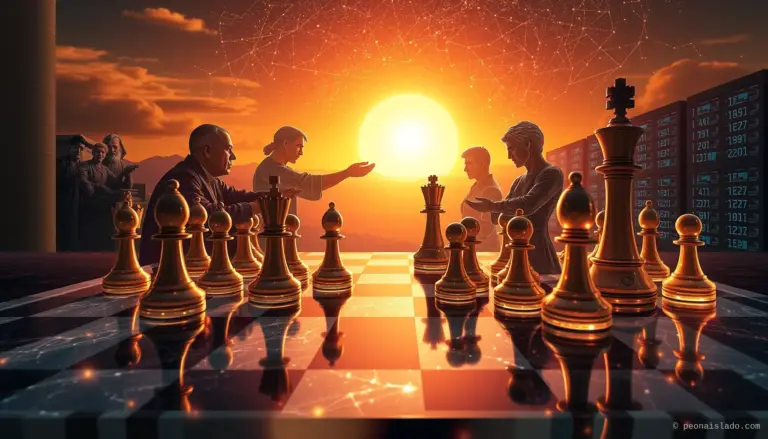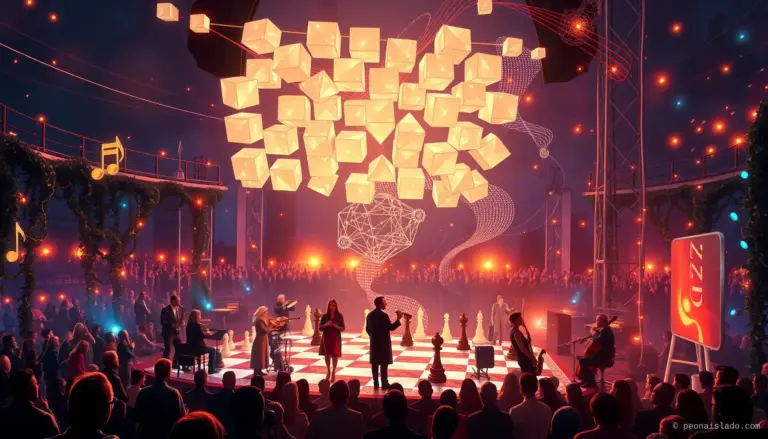
chess, more than a strategy game, has transcended throughout history as a symbol of resistance, intelligence and social protest. From silent departures in oppressive regimes to its use as a tool of denunciation in cultural movements, the board has become a stage where norms are challenged, Systems are questioned and rights are claimed. But, How can an ancient game become an act of rebellion?? What makes it so powerful to convey political and social messages without the need for words??
In this article, We will explore how chess has served as a form of protest, analyzing historical cases, its role in popular culture and its ability to unite marginalized communities. We will discover that, behind every pawn move or checkmate, a deep criticism of power structures can be hidden, a call to reflection or even a cry for freedom.
Chess as a mirror of social inequalities
chess, in its essence, It is a game of controlled inequalities: each piece has a different value and movement, reflecting hierarchies that, in many cases, they imitate those of society. This characteristic has made it a recurring metaphor to criticize unjust systems.. A paradigmatic example is the resistance chess during apartheid in South Africa. In the years 80, black players like Kobese people They challenged segregationist norms by competing in tournaments where, by law, they shouldn't have been. Kobe, who would later become South Africa's first black International Grandmaster, He used the board to demonstrate that talent has no color and that oppression could be defeated with strategy and patience..
But chess not only reflects inequalities; also plays them. In many countries, access to the game is limited by economic and cultural barriers. For example, in the United States, he 93% of chess players in national tournaments are white, according to a report from the US Chess Federation (2022). This disparity has led to initiatives such as Chess in the Schools, that seek to democratize gaming in African American and Latino communities, using chess as a tool to develop critical thinking and break cycles of poverty.
The metaphor of the board has also been used to denounce labor exploitation. In 2019, company workers Amazon in Spain they organized a giant chess game in a strike, where each piece represented an employee and the movements symbolized the company's tactics to avoid unions. “Chess is like our job: they make us believe that we have options, but in the end they always win”, declared a spokesperson for the movement.
Historical games that challenged power
throughout history, Some chess games have transcended the sporting sphere to become acts of political defiance.. One of the most emblematic cases is Match of the Century between Bobby Fischer y Boris Spassky in 1972, during the cold war. More than a sporting duel, It was an ideological battle: Fischer, the american genius, represented capitalism, while Spassky embodied the Soviet system. The Nixon administration used Fischer's victory as propaganda, but behind the game there was a deeper message: chess as a space where two antagonistic systems could confront each other without weapons.
In more repressive contexts, chess has been used as a code to evade censorship. During the Iranian Revolution 1979, dissidents played games in public places as a form of silent protest. The Ayatollah regime banned chess because it was considered “western and corrupting”, but the Iranians practiced it secretly, using play to keep cultural resistance alive. Hoy, Iran is a chess power, with figures like Sara Khadem, who in 2022 She defied norms by competing without a hijab in an international tournament, a gesture that was interpreted as an act of rebellion against mandatory clothing policies.
Another notable example is that of Viktor Korchnoi, who in 1976 He defected from the USSR during a tournament in Holland. Korchnoi, one of the best players in the world at that time, used his game against Anatoly Karpov at the World Championship 1978 as a platform to denounce political persecutions in their country. Every movement on the board was a veiled criticism of the regime, and their final defeat was seen as a metaphor for Soviet oppression.
Chess in popular culture: from music to cinema as protest
Chess has found a prominent place in popular culture as a symbol of resistance, especially in music and cinema. In it hip-hop, artists like Nas y Wu-Tang Clan have used the game as a metaphor for life in the slums. in the song “The Chessboxin’” (1995), the rapper GZA compare chess to boxing, arguing that strategy is needed in both to survive. “It's not just a game, It's a life lesson”, it says in the lyrics, reflecting how chess teaches you to think before acting, a crucial skill in violent environments.
in the cinema, movies like “Searching for Bobby Fischer” (1993) y “The Queen’s Gambit” (2020) have explored chess as a tool for personal improvement, but also as social criticism. In “The Queen’s Gambit”, the protagonist, Beth Harmon, Challenges gender stereotypes by becoming a champion in a male-dominated world. The series, based on the novel by Walter You, shows how chess can be a space of empowerment for women and minorities, although it also reflects the barriers that still persist.
In Latin America, chess has been used as a form of artistic protest. In 2019, the Mexican collective lapis lazuli created an installation in Oaxaca where a giant chess board represented the struggle between the government and indigenous peoples. Each piece was a carved wooden figure that symbolized community leaders., while the movements of the game recreated episodes of repression and resistance. “Chess is a universal language to talk about justice”, one of the artists explained.
Community chess: when the board unites the marginalized
In recent decades, Chess has ceased to be an elitist game and has become a tool for social inclusion.. Projects like Chess for Freedom in the United States they teach chess to prisoners as part of their rehabilitation, demonstrating that gambling can reduce recidivism in a 43%, according to a study by the University of Texas (2021). “Chess teaches you to think about the consequences of your actions, something many of us have never done before”, an inmate comments on the program.
In Africa, initiatives such as Chess in Slums in Nigeria they have taken the game to poor neighborhoods, using the board to teach mathematics, conflict resolution and self-esteem. Babatunde Onakoya, project founder, explains: “In a place where children do not have access to education, chess gives them the tools to change their reality”. In 2022, the program organized a tournament in Makoko, one of the poorest floating communities in the world, where children competed against professional players, proving that talent has no borders.
In Europe, chess has been used to integrate refugees. In Germany, the project Chess for integration teaches the game to migrants as a way to break cultural barriers. “Chess is a language we all understand”, says a Syrian participant. “Here it doesn't matter where you come from, it only matters how you think”. These programs not only teach strategy, but they create spaces for dialogue in increasingly polarized societies.
Conclusions: chess as an act of freedom
chess, in its apparent simplicity, It's much more than a game: It is a mirror of inequalities, a weapon of resistance and a tool of social transformation. throughout history, has served to challenge oppressive regimes, denounce injustices and unite marginalized communities. From clandestine games in Iran to tournaments in American prisons, The board has become a stage where real battles are fought, although without violence.
The fascinating thing about chess as a form of protest is its subtlety. No speeches or banners required; just move a piece to send a message. In a world where freedom of expression is increasingly limited, chess offers an alternative: protest through strategic thinking. As he said Garry Kasparov, former world champion and political activist: “Chess is the fight against error”. And in that fight, each game can be a small act of rebellion.
Hoy, chess continues to evolve as a tool of change. Community projects, educational initiatives and cultural movements demonstrate that their power goes beyond entertainment. In a future where inequalities persist, the board will continue to be a space to question, resist and, above all, imagine a more just world. Why, in the end, chess is not just a game: It's a metaphor for life, where every move counts and every player has the chance to rewrite the rules.