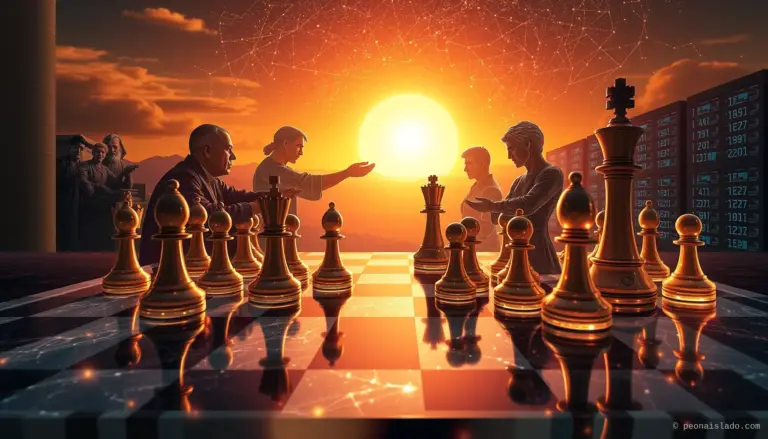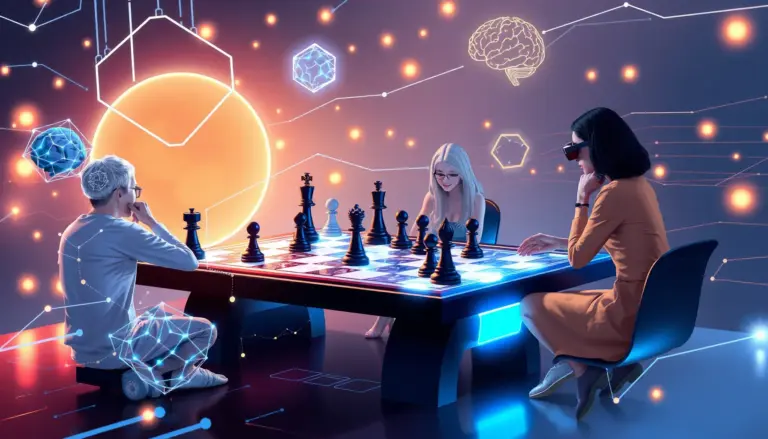
chess, more than just a strategy game, It has become a powerful bridge between generations. throughout history, This ancient pastime has transcended cultural barriers, social and age, uniting grandparents, parents and children under the same board. Its ability to stimulate critical thinking, patience and creativity make it a unique tool to strengthen family ties and transmit essential values. Besides, in the digital age, chess has found a new space on online platforms, where young and old share games, strategies and experiences, demonstrating that its essence goes beyond the pieces and the board. This article explores how chess acts as an intergenerational bond, analyzing its impact on communication, mutual learning and preservation of traditions, as well as its role in adapting to technological and social changes.
A universal language without words
Chess is one of the few games that does not require a common language to be enjoyed.. Its language is the movement of the pieces, tactics and strategy, elements that transcend linguistic and cultural borders. This feature makes it an ideal medium to connect people of different ages, especially in families where generations with very different life experiences coexist. A grandfather who teaches his grandson to play not only transmits the rules of the game to him, but also life lessons: how to anticipate consequences, manage frustration and celebrate small achievements.
Studies show that chess improves cognition and the memory, skills that benefit both developing children and older adults. According to research published in *The New England Journal of Medicine*, older people who play strategy games such as chess reduce by 35% the risk of developing dementia. On the other hand, in children, chess encourages concentration and the logical thinking, skills that translate into better academic performance. This duality makes it an enriching activity for all ages., creating a space where each generation contributes something valuable.
Besides, chess acts as a emotional bridge. In a society where conversations between generations are often limited to superficial topics, a game of chess opens the door to deeper dialogues. Silences during the game are not uncomfortable, but moments of shared reflection. A child can ask his grandfather about a play, and that question can lead to stories about how people played in their youth., what strategies were popular or even personal anecdotes. So, The board becomes a stage where memories are woven and bonds are strengthened.
The transmission of values and traditions
Chess is not just a game; it's a securities vehicle that have been passed down from generation to generation. Concepts like the I respect, the patience, the modesty and the perseverance are inherent to your practice. When a father teaches his son to play, It's not just showing you how to move the pieces, but also how to handle defeat with dignity or how to celebrate a victory without belittling your rival.. These values, that often get lost in the whirlwind of modern life, They find in chess a space to be reinforced.
In many cultures, chess is linked to family traditions. For example, in countries like Spain or Russia, It is common for grandparents to teach their grandchildren to play during family gatherings. These sessions are not only used to pass the time, but they are also a form of preserve cultural identity. in India, chess (o *chaturaanga*, his predecessor) It has ancient roots and is considered a symbol of wisdom. In Europe, during the Middle Ages, It was a game reserved for the nobility, and today it continues to be a legacy that many families keep alive.
However, the transmission of these values is not always simple. In the digital age, where children are used to instant gratification, teaching them to think several moves ahead or wait their turn can be a challenge. This is where chess becomes a pedagogical tool. Educational programs like *Chess in Schools* (implemented in countries such as the United Kingdom and the United States) have shown that integrating chess into classrooms improves not only academic performance, but also the emotional intelligence of the students. Children learn to manage frustration, to be more empathetic with their peers and develop a growth mindset.
Chess in the digital age: threat or opportunity?
The arrival of the internet and digital platforms has transformed the way chess is played. Hoy, millions of people around the world compete online through sites like Chess.com o Lichess, where they can face players of any age and level. This democratization of play has opened up new possibilities for intergenerational connection, but it has also posed challenges.
On the one hand, Technology has allowed young and old to play together regardless of distance. A grandfather can teach his grandson to play from another continent, or a parent can analyze games with their child in real time. Platforms like Twitch have popularized chess among the new generations, with streamers like Hikaru Nakamura o GothamChess attracting millions of viewers. These content creators don't just teach strategies, but they also humanize the game, showing their mistakes and learnings, making it more accessible for beginners.
On the other hand, online chess has generated a generation gap regarding the way of playing. The young people, accustomed to the speed of video games, may prefer quick games (*blitz* o *bullet*), while older people tend to enjoy classic games more, where the time to think is greater. This difference can generate tensions, but also opportunities for mutual learning. A young man can teach his grandfather how to use a digital platform, while grandpa can share his experience in long games, where strategy and patience are key.
Besides, online chess has made it easier to access educational resources. Hoy, Anyone can learn from great teachers through videos, online courses or even artificial intelligence. Tools like Stockfish (a chess engine) allow you to analyze games and improve the game, what was previously only available to advanced players. This has leveled the playing field., allowing people of all ages and levels to compete on equal terms.
Chess as a social and community tool
Beyond the family environment, chess has proven to be a social catalyst that unites entire communities. In parks, squares and cultural centers, It is common to see people of all ages gathered around a board. These spaces not only encourage the practice of play, but they also promote inclusion and the intercultural dialogue. In cities like New York or Barcelona, There are community projects that use chess to integrate immigrants, older people and young people at risk of social exclusion.
A notable example is the program Chess for Peace, that has brought chess to conflict zones like Colombia or Palestine, using play as a tool to encourage dialogue and reconciliation. In these contexts, chess acts as a neutral language that allows people with political or cultural differences to find common ground. In the same way, in nursing homes, Chess has become a therapeutic activity that improves quality of life of residents, reducing isolation and stimulating the mind.
In the school environment, Chess has also proven to be a powerful tool for social cohesion. Schools in countries like Armenia (where chess is mandatory in the school curriculum) o Cuba have integrated the game into their educational programs, not only for its cognitive benefits, but also for his ability to teach teamwork y I respect. In these environments, children learn to play in pairs or teams, which encourages collaboration and communication.
Besides, Chess has served as a bridge between generations in the workplace. Companies like Google or Microsoft have organized internal chess tournaments, where employees of different ages compete and collaborate. These events not only improve the work environment, but they also encourage knowledge transfer between generations. A young employee can learn from the experience of an older colleague, while the latter can benefit from the innovative perspective of the former.
Conclusions: a legacy that lasts
Chess is much more than a game; it's a intergenerational bridge that unites people over time, space and cultural differences. throughout history, has proven to be an invaluable tool for the transmission of values, mutual learning and preservation of traditions. In an increasingly fragmented world, where generations often feel disconnected, chess offers a common space where young and old can meet, share and grow together.
Its ability to adapt to technological changes has kept it relevant in the digital age, allowing new generations to discover its magic while the elderly use it as a means to connect with the modern world. Online platforms, educational programs and community projects have expanded their reach, turning it into a global phenomenon that transcends ages and borders.
However, The true value of chess lies in its humanity. Beyond strategies and tactics, what really matters are the moments shared: the reflective silence before a play, laughter after a mistake, the emotion of a victory or the lesson learned after a defeat. These moments are what build memories and strengthen family and social ties..
In a future where technology will continue to transform the way we relate, chess will continue to be a reminder that, at the end of the day, the most important thing is not the pieces or the board, but the people who sit in front of him. That's why, invite a grandfather, a father or son playing a game is not just a hobby; It is an act of love, learning and connecting with the past, the present and the future.