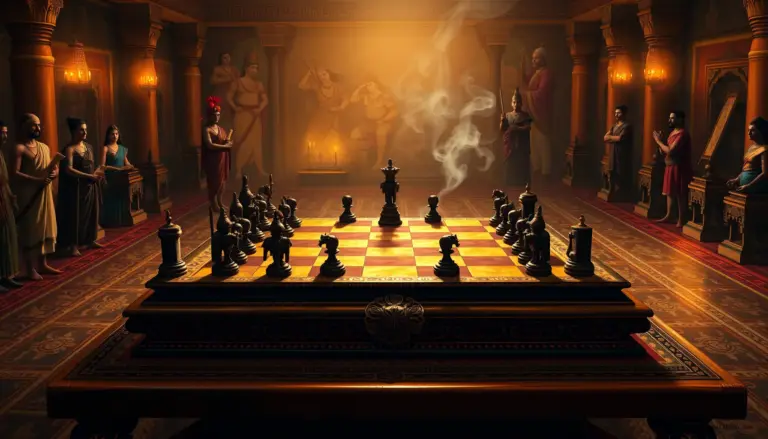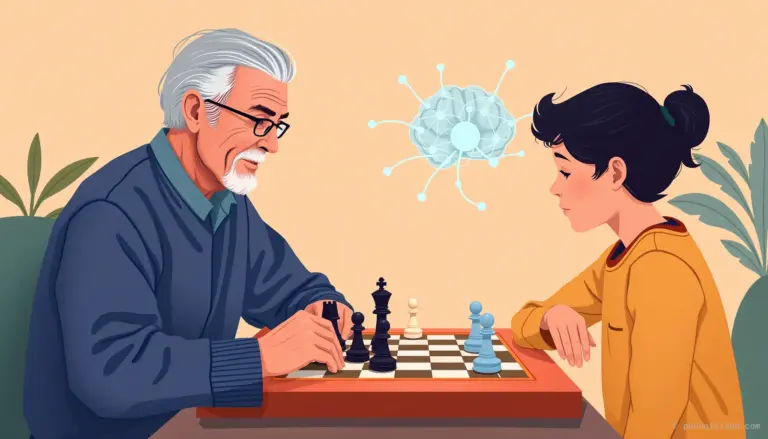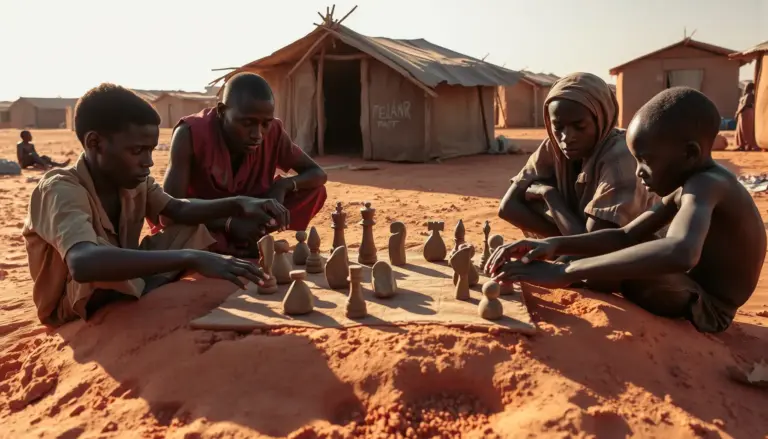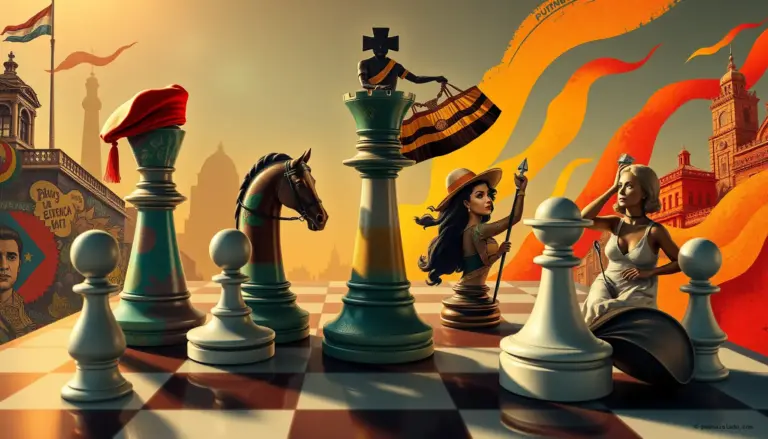
Chess is much more than just a strategy game.; It is a microcosm of symbols, archetypes and hidden meanings that reflect the human condition, the war, power and psychology. Each piece on the board not only fulfills a tactical function, but also embodies a profound metaphor about life, social hierarchy and even spirituality. From the seemingly limited movements of the pawn to the omnipotence of the king, Chess is revealed as a universal language where each figure is a character in an ancient narrative.
Exploring the hidden meaning of each piece is entering a journey that transcends the playful.. It's not just about understanding how rooks move or why the bishop dominates the diagonals., but to decipher what they represent on a philosophical level, historical and psychological. Why does the horse jump instead of moving forward in a straight line?? What does the queen tell us, the most powerful piece, about the role of femininity in society? These questions lead us to discover that chess is a mirror of the culture that created it and, at the same time, a code that remains valid in the modern era.
In this article, We will unravel the symbolism behind each piece, analyzing its evolution over the centuries, its connection with myths and religions, and how its design and movement reflect universal values. From the humility of the pawn to the sovereignty of the king, each figure holds a lesson that goes beyond the board.
The pawn: the essence of sacrifice and transformation
The pawn is, definitely, the most underrated piece in chess, but also the one that contains one of the most powerful metaphors. Represents the private soldier, to the anonymous worker, to the one who advances with determination but with limitations. Its initial movement—two squares forward—symbolizes the impulse of youth or the beginning of a path., while its further advance, step by step, reflects patience and perseverance. However, The most fascinating thing about the pawn is its capacity for transformation: upon reaching the opposite end of the board, can become any other piece, except the king. This mechanism, known as promotion, It is an allegory of personal improvement and reward for effort.
Historically, The laborer has been associated with the lower classes in feudal society, those who, despite its apparent insignificance, They could change the course of a battle. In literature and cinema, The pawn usually represents the “unlikely hero”, as in the case of The seventh seal de Ingmar Bergman, where a squire (a pawn in the medieval hierarchy) questions the meaning of life while his lord (the king) torn between faith and doubt. This duality between the humble and the transcendent is key to understanding its symbolism..
On a psychological level, the pawn embodies the archetype of the initiate, according to Carl Jung's theory. It is the one that begins in the dark (the first row of the board) y, through trials and sacrifices, rise towards the light. His diagonal movement to capture—an exception to his straight advance—suggests that, sometimes, progress requires deviating from the pre-established. So, The pawn teaches us that value is not always in brute force, but in resilience and the ability to adapt.
The tower: the power of structure and immutability
The tower, with its square shape and its movement in straight lines, It is the embodiment of solidity, order and authority. In many cultures, The towers have been symbols of protection and surveillance, as in medieval castles or lighthouses that guide navigators. in chess, Its ability to move without restriction along rows and columns makes it a piece of absolute control, but also rigidity. Unlike the horse, that jumps obstacles, the tower requires a clear path, reflecting its dependence on structure and planning.
From a historical perspective, the tower is linked to military and religious architecture. in India, where chess originated, the towers (ratha) They were war chariots that symbolized the power of the kings. Over time, Its design evolved into its current form, but maintained its essence of strength. In Christianity, Church towers represent the connection between the earthly and the divine, a bridge between heaven and earth. This duality is reflected in chess: The tower can be both a defensive shield and an offensive battering ram., depending on how it is used.
Psychologically, the tower represents the reality principle Freudian: the need for order, rules and limits. Its rectilinear movement suggests a logical and methodical mentality, but it can also be a metaphor for inflexibility. in life, like in chess, a poorly positioned tower can become an obstacle rather than an advantage. That's why, Its symbolism invites us to reflect on the balance between discipline and adaptability.
The horse: creative chaos and intuition
The horse is, definitely, the most enigmatic piece of chess. His movement in “L” —two squares in one direction and one perpendicular—challenges the linear logic of the other pieces, which makes it a symbol of the unpredictable, the intuitive and the creative. Unlike the rook or bishop, that move in straight or diagonal lines, the horse “salta” about the obstacles, which makes him similar to an agent of chaos in a game of order and strategy.
In mythology and folklore, the horse has been associated with freedom, the speed and, sometimes, with the supernatural. In Celtic culture, For example, Horses were considered messengers between worlds, while in the Hindu tradition, The god Vishnu rode a winged steed called Garuda. This connection with the divine and the transcendent is reflected in chess: the horse is the only piece that can “teleport” across the board, ignoring physical barriers. This quality makes it a symbol of intuition, that human ability to perceive patterns where others only see chaos.
From a psychological point of view, the horse embodies the lateral thinking, a concept developed by Edward de Bono that refers to problem solving through unconventional approaches. in chess, a player who dominates the knight is usually one who thinks outside the box, who sees opportunities where others do not perceive them. This piece teaches us that, sometimes, Creativity and audacity are more valuable than brute force. However, your movement can also be a trap: a poorly used horse can leave holes in the defense, reminding us that intuition must be accompanied by strategy.
The bishop and the queen: the duality of spiritual and earthly power
The bishop and the queen, although different in movement and hierarchy, They share a deep symbolism related to power, spirituality and femininity. The bishop, that moves diagonally, represents the connection between the earthly and the divine, while the queen, the most powerful piece on the board, embodies the synthesis of all feminine archetypes: the mother, the warrior, the strategist and the protector.
The bishop, in its Persian origin (fil, what does it mean “elephant”), It was a piece that symbolized wisdom and religion. in India, Elephants were sacred and associated with gods like Ganesha, the obstacle remover. Over time, Its design evolved towards the current figure, but maintained its essence as a spiritual guide. Its diagonal movement suggests an oblique perspective, a way of seeing the world from unconventional angles. in chess, a well-positioned bishop can control the entire board, but its limitation to a single color of squares makes it a symbol of specialization: can't cover everything, but he masters his field with mastery.
the queen, for his part, It is a relatively modern addition to chess (emerged in Europe during the Middle Ages), and its evolution reflects changes in the perception of feminine power. In its beginnings, The piece that we know today as the queen was the visor or king's advisor, a lower ranking male figure. However, over time, she became the queen, acquiring unprecedented power. This change coincides with the rise of female figures in history, like Isabella the Catholic or Catherine de' Medici, suggesting that chess not only reflects society, but it also influences.
The queen combines the moves of the rook and bishop, which makes it an omnipotent piece. However, his power is also his weakness: losing it usually means defeat. This leads us to a reflection on leadership: absolute power can be both a blessing and a curse. In Jungian psychology, the queen represents the anima, the feminine archetype in the masculine unconscious, and its presence on the board reminds us that true strength lies in the integration of the masculine and the feminine., the rational and the intuitive.
the king: the symbol of vulnerability and responsibility
The king is the most important piece in chess, but also the most fragile. Its limited movement—one square in any direction—reflects its nature.: he is not a warrior, but a symbol. Your value does not lie in your physical strength, but in its ability to inspire loyalty and unity. in chess, like in life, The king represents the center around which everything revolves: His capture marks the end of the game, but their survival does not guarantee victory. This paradox makes it a metaphor for the human condition: we are vulnerable, but our existence gives meaning to everything else.
Historically, the king has been associated with the mandala, a spiritual symbol representing the universe in Hinduism and Buddhism. in chess, the king is the center of the board, the point of balance between opposing forces. His slow, cautious movement suggests that true leadership is not based on aggressiveness., but in prudence and long-term vision. in literature, the king is usually a complex character: can be a tyrant (as in Macbeth) or a wise man (like king solomon), but it is always a reflection of the contradictions of power.
Psychologically, the king embodies the yo Freudian, that instance that mediates between the impulses of the id and the demands of the superego. His vulnerability reminds us that, even in positions of power, We are human and subject to errors.. The jack dead, the definitive threat to the king, It's a metaphor for existential anxiety.: the awareness that, whenever, everything can fall apart. However, Chess also teaches us that a well-protected king, surrounded by loyal pieces, can withstand even the fiercest attacks. This lesson is universal: true strength is not in invulnerability, but in the ability to build networks of support and trust.
chess, as a whole, It is a mirror of life: a game where each piece has a purpose, a limitation and a hidden potential. from the pawn, symbolizing sacrifice and transformation, until the king, that embodies vulnerability and responsibility, each figure offers us a lesson about the human condition. The tower tells us about the importance of order, the horse of creativity, the bishop of spirituality and the queen of feminine power. Together, These pieces form a narrative that transcends the board and delves into the mysteries of existence..
Beyond its value as a strategy game, Chess is a symbolic language that has accompanied humanity for centuries. Its evolution reflects cultural changes, politicians and religious of each era, but their archetypes remain unchanged. By understanding the hidden meaning of each piece, we not only improve our skill in the game, but we also deepen our understanding of ourselves and the world around us.
In an increasingly complex and accelerated world, chess invites us to stop, reflect and appreciate the beauty of the seemingly simple. Each game is a metaphor for life: a balance between planning and improvisation, strength and subtlety, sacrifice and reward. And although the board may seem like a battlefield, It is actually a learning space., where every movement, Every mistake and every victory brings us a little closer to wisdom.