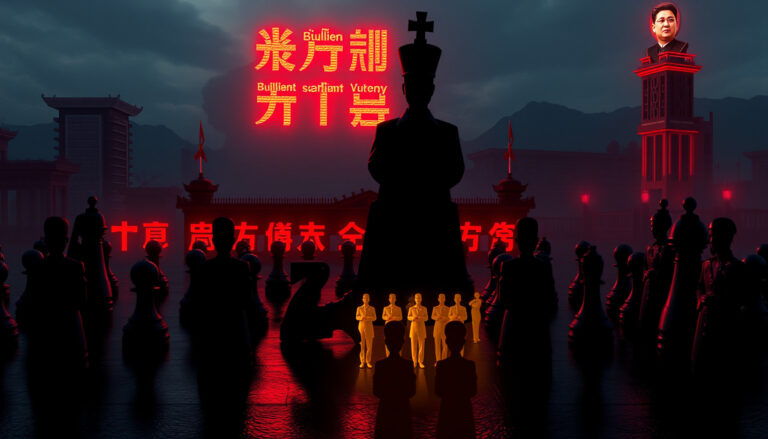
The Latin American school of chess is not just a set of exceptional players or a style of play defined by specific openings.. Es, first of all, a narrative of resistance, creativity and adaptation that has shaped the board with the same intensity with which the continent has forged its identity. While Europe and Asia dominate the headlines with their Russian schools, china and india, Latin America has built a unique chess tradition, where the game transcends the technical to become a reflection of its history: from dictatorships that silenced voices to emerging democracies that found in chess a tool for social transformation. How did a continent marked by inequality and political instability manage to produce figures that challenge the world's great masters?? The answer is not only in the movements on the board, but in the ability to convert adversities into strategies.
Chess as a mirror of Latin American history
Latin America has been a scene of contrasts where chess has served as a metaphor and as an escape. During the 20th century, while countries like Argentina and Cuba lived under authoritarian regimes, chess became a space for intellectual freedom. In Argentina, For example, the military dictatorship (1976-1983) persecuted intellectuals and artists, but chess clubs, like him Buenos Aires Chess Circle, They remained as refuges where the mind could wander uncensored. This phenomenon was not isolated: in Cuba, Chess was promoted by Fidel Castro as a symbol of the revolution, but also as an escape valve for a population subjected to economic blockades. The paradox is fascinating: on a continent where political freedom was limited, Chess offered a board where the rules were clear and the possibilities, infinite.
This duality is reflected in the Latin American style of play. Unlike the Russian school, that prioritizes technical precision, or the china, that emphasizes theoretical preparation, Latin American players have developed a more intuitive and adaptable approach. It is no coincidence that figures like the Argentine Miguel Najdorf or the Cuban José Raúl Capablanca They are remembered for their creativity and their ability to improvise. Najdorf, For example, He survived the Holocaust and found a way to rebuild his life in chess, while Capablanca, nicknamed “the Mozart of chess”, He played with an elegance that seemed to defy the established rules. His legacy is not only sports, but cultural: They showed that chess can be both an art and a sport, and that genius does not always follow a manual.
To delve deeper into how other schools have influenced global chess, we invite you to explore the keys to the mastery of the Russian school, where discipline and systematic preparation have made the difference.
The Cuban revolution: when chess became state policy
Cuba is, definitely, the most emblematic case of how chess can be used as a soft power tool. In 1962, Fidel Castro declared chess as “national sport” and launched an ambitious program to massify it. the island, economically isolated by the US blockade, found in chess a way to project his cultural influence. The result was extraordinary: Cuba became a chess power, producing figures like Leinier Dominguez y Lazaro Bruzón, but also a beacon for players from all over the continent. He Capablanca in Memoriam Tournament, created in 1962, It became one of the most prestigious events in the world, attracting great masters such as Bobby Fischer, who, in a symbolic gesture, visited the island in 1966.
The Cuban model was not limited to sports. The government invested in the training of coaches and the creation of specialized schools, like the Havana Chess School, where children from all over the country received free education. This comprehensive approach not only improved the level of play, but also democratized access to chess, making it a symbol of equality in a country where other resources were scarce. However, the system also had its shadows: The pressure for results and the politicization of sport generated tensions, especially during the Cold War, when chess became an ideological battleground between the United States and the USSR.
The Cuban experience raises an uncomfortable question: Can chess really be free when it is linked to a political project? The answer is not simple, but the truth is that, beyond ideologies, Cuba's legacy in Latin American chess is undeniable. Its model has inspired other countries in the region, like Venezuela and Colombia, to invest in massification programs, although with uneven results. To understand how chess can be a reflection of geopolitics, we recommend you read this analysis on chess and geopolitics, exploring how gaming has been used as a tool of global influence.
Argentina: the cradle of eccentric geniuses
If Cuba represented the institutionalization of chess in Latin America, Argentina embodied its most bohemian and rebellious side. During the first half of the 20th century, Buenos Aires became the chess capital of the continent, attracting figures like Alexander Alekhine y Emanuel Lasker, who found a vibrant intellectual environment in the city. But it was the generation of Argentine players that defined a unique style, marked by audacity and innovation. Miguel Najdorf, Polish by birth but Argentine at heart, is the clearest example. Its opening, the Defensa Najdorf, remains one of the most popular in modern chess, and her life—Holocaust survivor, exiled in Argentina, and later a central figure in world chess—is a testimony of resilience.
But Argentine chess was not limited to the technical. Players like Oscar Cloth y Héctor Rossetto They took the game to the cafes of Buenos Aires, where games were mixed with political and literary debates. This unique cultural environment gave rise to a chess school that valued both creativity and strategic depth.. However, The country's economic decline in recent decades has affected its position in world chess. Despite this, Argentina continues to be a reference, especially in the training of young players, thanks to initiatives such as National School Chess Program.
The Argentine case also illustrates how chess can be a reflection of national identity. While other Latin American countries sought to imitate European or Soviet models, Argentina developed its own style, where the technical and the artistic merged. This uniqueness is a reminder that chess, like any cultural expression, cannot be separated from its context. To explore how other geniuses have left their mark on the game, don't get lost this article about eccentric chess geniuses.
Colombia and chess as a tool for social transformation
In a continent where inequality and violence have marked history, Colombia has found in chess a tool for social transformation. Unlike Argentina or Cuba, where chess had a more organic development, In Colombia, its growth has been linked to social projects that seek to offer alternatives to young people at risk.. Initiatives like Isolated Pawn, in Medellin, have shown that chess can be a bridge to education and social reintegration. This project, founded in 2010, uses the game as a metaphor for life: every move teaches about consequences, planning and resilience.
The success of these programs has taken Colombian chess to a new level. Figures like Andrés Felipe Gallego y Sergio Barrientos They have put the country on the international chess map, but the real impact is in the bases. In neighborhoods like common 13, where violence was the norm for years, chess has become a symbol of hope. Local tournaments not only reward the best players, but also to those who demonstrate values such as teamwork and respect. This approach has led Colombia to be recognized as a model of how chess can be used to build peace..
However, the road has not been easy. The lack of resources and the stigma that chess is a “elite game” have been constant obstacles. Despite this, The country has made significant progress, such as the inclusion of chess in the school curriculum in some regions. This model, that combines sports with social, could be replicated in other countries in the region. To understand how chess can be a tool for change in difficult contexts, we invite you to read this report about chess in the Colombian Amazon.
The future of Latin American chess: challenges and opportunities
Latin American chess today faces a complex scenario. On the one hand, the region has produced world-class players, like the peruvian Jorge Cori or the Mexican Yifan Hou, who have shown that Latin American talent can compete at the highest level. On the other, lack of investment and inequality in access to resources remain important barriers. Unlike Europe or Asia, where chess has state support and private sponsors, In Latin America, players usually depend on their own efforts or community initiatives.
Nevertheless, there are reasons for optimism. The digitalization of chess, accelerated by the pandemic, has allowed players in the region to access platforms such as Chess.com y Lichess, where they can compete and learn from great teachers without having to travel. Besides, the rise of figures like Magnus Carlsen and the impact of series like The Queen’s Gambit have generated renewed interest in the game. In countries like Mexico and Brazil, school chess is gaining ground, and in Argentina, The government has launched programs to encourage its practice in schools.
The biggest challenge, however, is still sustainability. For Latin American chess to reach its maximum potential, It is necessary for governments and the private sector to invest in infrastructure, training of coaches and massification programs. Only in this way can the region consolidate its place in global chess, not as an exception, but as a constant force. The road will not be easy, but as history shows, Latin America has a unique ability to turn adversities into opportunities.
To reflect on how chess can be a reflection of human resilience, we recommend you this article about chess as a symbol of resistance.
The Latin American school of chess is, in essence, a testament to how the game can be much more than a sport. It is a tool of resistance, a space of freedom and a metaphor for life itself. In a continent marked by inequality and instability, chess has shown that, even in the most adverse conditions, the human mind can find ways to create, innovate and transcend. The legacy of figures like Capablanca, Najdorf and the young Colombian players are not just about sports, but cultural: reminds us that the true value of chess is not in the victories, but in its ability to transform lives. Latin America has written its own history on the board, and he has done it with a unique mix of passion, creativity and resilience. The challenge now is to ensure that this story is not just a brilliant chapter, but the beginning of a new era.