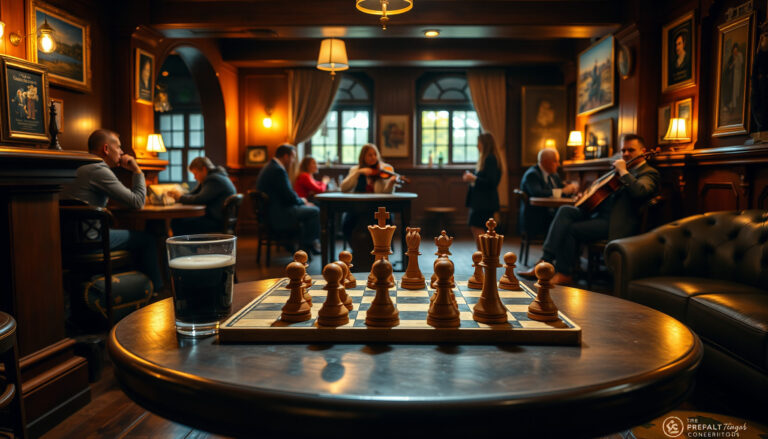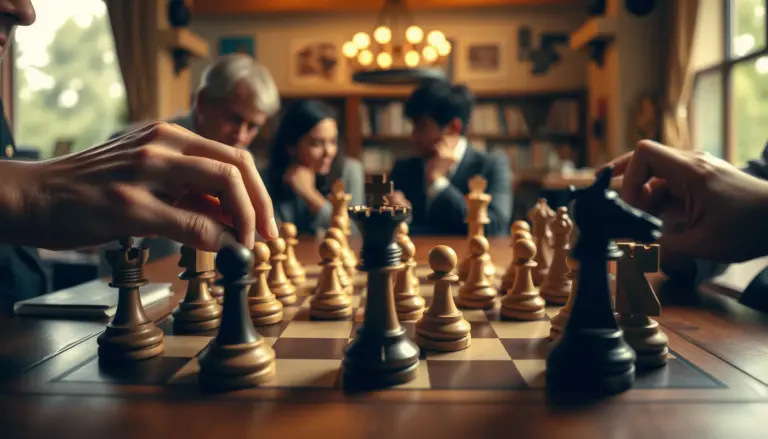
Chess has transcended its status as an ancient game to become a cultural phenomenon that inspires disciplines as diverse as art., cinema and, most recently, fashion. From the marble boards of Renaissance salons to the catwalks of Paris and Milan, chess has proven to be a symbol of strategy, power and intellectuality that luxury and streetwear brands have known how to reinterpret. How has this relationship between chess and fashion evolved?? What messages do the collections that pay tribute to this game convey?? Y, above all, why designers like Versace, Gucci or Supreme have found in their patterns, pieces and metaphors an inexhaustible source of creativity?
This article explores the intersection between chess and fashion, analyzing its impact on contemporary culture, the most iconic collaborations and the meaning behind this fusion. From chess as a statement of status to its role in the democratization of the style, We will discover how a game of 64 Casillas has conquered the world of design.
Chess as a symbol of power and sophistication
Chess has always been associated with the elite. In the Middle Ages, It was a pastime reserved for kings and nobles, who used it not only for entertainment, but as a tool to teach military tactics and governance. This connection with power is reflected in luxury fashion, where brands like Versace have resorted to its elements to transmit opulence and authority. In 2018, The Italian house presented a collection inspired by chess, with dresses that imitated black and white boards, embroidered with Swarovski crystals and golden details that evoked real pieces. Donatella Versace declared that chess represented “the battle between light and darkness, a perfect metaphor for fashion”.
But beyond luxury, Chess also embodies values such as patience, anticipation and strategic intelligence. Brands like Dior They have used their iconography on bags and accessories, like the model “Dior Chess” of 2020, where the board became a minimalist but impactful print. Even Louis Vuitton has collaborated with artists to create limited editions of chess pieces, like the collection of 2019 designed by Japanese artist Yayoi Kusama, who transformed pawns and rooks into pop sculptures.
This association between chess and sophistication is not coincidental. The game requires concentration and discipline, qualities that high fashion brands seek to project. However, Its influence is not limited to the premium segment; chess has also found a place in urban fashion, where its geometric aesthetic and symbolic charge resonate with a younger audience.
From the catwalks to streetwear: chess in popular culture
While chess in luxury fashion focuses on prestige, In streetwear it has become a symbol of rebellion and street strategy. Brands like Supreme have adopted their iconography to connect with a generation that sees the game as a metaphor for urban life. In 2017, Supreme launched a collection in collaboration with The Simpsons which included sweatshirts and caps with checkerboard prints, accompanied by phrases like “Checkmate” o “Game Over”. The campaign, photographed by Terry Richardson, featured models playing chess in everyday settings, breaking with the traditional solemnity of the game.
This democratization of chess in fashion is not an isolated phenomenon. Off-White, under the direction of Virgil Abloh, incorporated checkerboard patterns into sneakers and jackets, while Palace launched a clothing line with references to urban chess, like t-shirts with the slogan “Chess Club” or designs that imitated the plastic pieces of board games. Even Nike joined the trend with sneakers Air Jordan 1 “Black Toe”, whose black and white design evokes a board.
Why does chess resonate so much in streetwear culture?? A possible explanation is its association with street intelligence. In marginal neighborhoods, For decades, chess has been an escape and a tool to develop strategic skills. Figures like Maurice Ashley, the first African American grandmaster, have highlighted how the game can be a bridge between urban culture and intellectual excellence. Streetwear brands, aware of this link, They use it to convey a message of cunning and resistance.
Collaborations and limited editions: when chess becomes art
Fashion has not only adopted chess as inspiration, but has also collaborated with artists and designers to create unique pieces that transcend the functional.. One of the most notable collaborations was that of Gucci with the artist Ignasi Montreal in 2018. The collection “GucciGhost” included garments with surreal prints where chess pieces came to life, mixing with dream elements. Alessandro Michele, Gucci creative director, described the project as “a dialogue between order and chaos”, where chess served as a metaphor for creativity.
Another notable example is the collaboration between Prada and game designer Daniel Weil, who created a chess set for the brand in 2016. The pieces, made of stainless steel and marble, They were true sculptures that combined the minimalism of Prada with the elegance of the game. These types of projects demonstrate how chess can be reinterpreted as a design object., elevating its status from simple game to work of art.
Even in the world of accessible luxury, brands like Zara They have launched collections with prints of chess boards and pieces, although with a more commercial focus. However, What sets high-profile collaborations apart is their ability to merge fashion., art and functionality. For example, the brand Baccarat created in 2019 a hand-cut glass chess set, valued at more than 100.000 euros, which was exhibited at art fairs such as TEFAF.
These limited editions not only reinforce the link between chess and luxury, but they also position it as a collector's item. For lovers of fashion and design, Owning a chess piece signed by a prestigious brand is as valuable as having a work of art at home..
Chess as a metaphor for life: fashion with message
Beyond its aesthetics, chess in fashion also transmits deep messages about life, competition and identity. Designers like Rick Owens have used the game to explore themes such as power and vulnerability. In its autumn-winter collection 2021, Owens presented models with structured garments reminiscent of chess pieces, accompanied by metallic accessories that evoked armor. The designer explained that chess was a metaphor for “the internal battle between control and chaos”, a recurring theme in his work.
In streetwear, brands like A Bathing Ape (BAPE) have used chess to address social issues. In 2020, They launched a collection with board prints and phrases like “Know Your Worth”, linking play with self-affirmation and resilience. This narrative resonates especially in communities where chess has been a tool to overcome adversity., as in the case of chess programs in prisons or schools in disadvantaged neighborhoods.
Even in women's fashion, chess has served to challenge stereotypes. Designers like Maria Cornejo of Zero + Maria Cornejo They have used their iconography to empower women, featuring garments with checkerboard patterns that symbolize “strategy and intelligence as weapons of seduction”. In a world where women's fashion is often associated with passivity, chess offers an alternative narrative: that of the woman as an active player on the board of life.
This metaphorical dimension of chess in fashion makes it more than just a decorative motif.. Brands use it to connect with their audiences on an emotional level, transmitting values such as perseverance, adaptability and creativity. In a context where fashion increasingly seeks to tell stories, chess is presented as a universal language.
Conclusions: chess as a universal language of fashion
The relationship between chess and fashion is a reflection of how cultural symbols evolve and adapt to new contexts. From its origin as a game of kings to its reinterpretation on the streets and catwalks, Chess has proven to be a versatile element that transcends eras and styles.. Luxury brands such as Versace and Gucci have used it to convey sophistication and power., while streetwear has adopted it as a symbol of street intelligence and rebellion.
Collaborations between designers and artists have elevated chess to the category of art, transforming functional pieces into objects of desire. But beyond its aesthetic value, chess in fashion also contains deep messages about life, competition and identity. Whether as a metaphor for the internal battle or as a tool of empowerment, Its presence in contemporary design shows that its influence goes far beyond the 64 checkers on a board.
In a world where fashion is constantly looking for new sources of inspiration, chess is consolidated as a universal language. Its ability to adapt to different narratives—from the most exclusive luxury to urban culture—makes it a bridge between traditions and trends.. And as long as brands continue to find a source of creativity in it, chess will continue to be, in the words of Donatella Versace, “the perfect metaphor for fashion: a game where every move counts”.